What Is Custom Tailoring, Exactly?
A suit can look impressive on a hanger and still fail the man wearing it. The shoulder sits a touch too wide, the chest pulls when he moves, the trouser line collapses by midday. That is usually the moment the real question appears - what is custom tailoring, and why does it feel so different from buying a suit in the usual way?
Custom tailoring is the creation of clothing around an individual rather than around a standard size chart. Instead of asking a man to adapt to a pre-existing shape, the garment is built to reflect his proportions, posture, preferences and the impression he wants to make. At the highest level, it is not simply about measurements. It is about presence.
What is custom tailoring in practice?
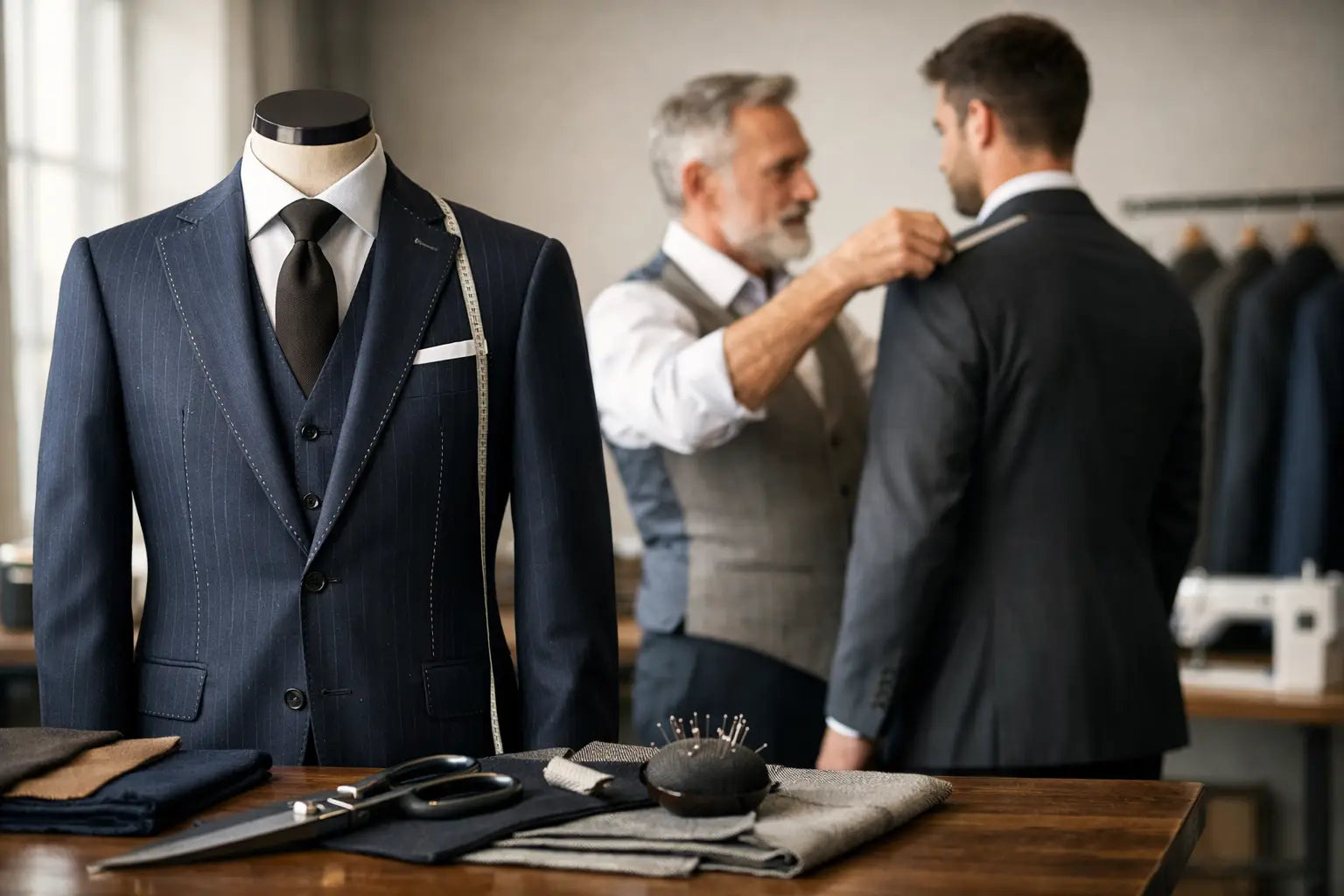
In practical terms, custom tailoring means a garment is made specifically for one client through a guided process. That process usually begins with a consultation, where fit, lifestyle, purpose and aesthetic direction are discussed. Fabric is then selected, measurements are taken, and the garment is shaped through one or more fittings before final delivery.
The key distinction is that the tailor is not merely altering finished clothing. He is creating a piece with intention from the outset. The jacket balance, lapel proportion, sleeve pitch, trouser break and silhouette are considered in relation to the man who will wear them. The result should feel composed rather than generic.
That said, custom tailoring is not one single category. The phrase is often used loosely, and that can blur important differences.
Custom tailoring, made-to-measure and bespoke
Many clients use these terms interchangeably, yet they are not identical. Understanding the difference matters, particularly if fit and exclusivity are priorities.
Made-to-measure usually starts from an existing base pattern. That pattern is then adjusted to suit the client’s measurements and a selection of style options. It can produce a strong result, especially for men whose proportions sit reasonably close to standard sizing. It is more personalised than ready-to-wear, but it still begins with a template.
Bespoke sits at the more exacting end of custom tailoring. A unique pattern is created for the individual client, and the garment is built entirely around the body it belongs to. This allows far greater control over line, balance and movement. It also allows the tailor to address details that standard systems often miss, such as one shoulder sitting lower, a prominent blade, a forward stance, or a preference for a sharper or more relaxed drape.
So when someone asks what is custom tailoring, the most accurate answer is that it includes a spectrum of personalised tailoring methods. But for a client seeking the highest level of precision, bespoke remains the clearest expression of the craft.
Why fit is only part of the answer
Most men first approach custom tailoring because ready-made clothing fits poorly. That is a sensible place to begin, but it is not where the value ends.
A well-tailored garment changes how a man carries himself. The collar sits cleanly at the neck. The jacket follows the frame without strain. The waist is defined without feeling tight. The cloth moves with the body rather than resisting it. Comfort improves, certainly, but so does clarity. A suit that fits properly removes distraction.
There is also the matter of identity. Two men can wear navy worsted suits and project entirely different messages depending on cut, structure and detail. One may want authority and formality. Another may prefer ease, elegance and a less rigid line. Custom tailoring gives shape to those choices in a controlled way. It allows clothing to express judgement rather than trend.
For senior professionals and men in visible roles, this has real value. Dress is not vanity. It is communication. When your clothing is built with precision, the impression is often immediate, even if no one can quite explain why.
The process behind a custom garment
The finest custom tailoring feels considered from the first conversation. The consultation is where the tailor begins to understand not just measurements, but intention. Is the suit for boardroom wear, evening events, frequent travel, or a wedding? Should it command attention or speak more quietly? Does the client prefer a cleaner English line, a softer Italian shoulder, or something between the two?
Fabric selection follows. This is not simply a matter of choosing a colour. Weight, weave, handle and drape all affect how a garment performs. A cloth that looks beautiful in the book may not be ideal for Dubai’s climate, constant movement between meetings, or long hours of wear. A strong tailor will guide this choice with honesty rather than excess.
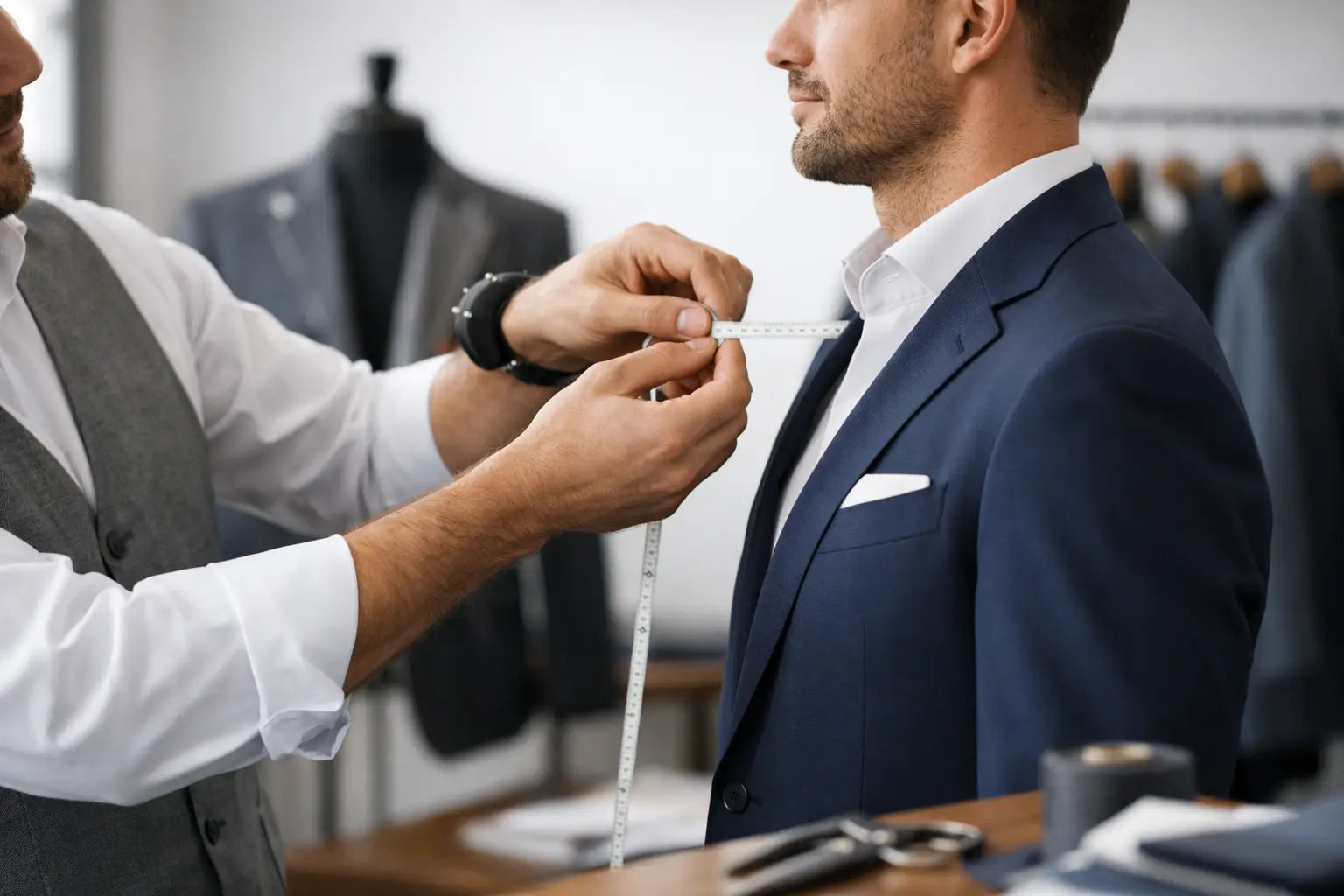
Measurements are then taken, but the best tailors observe more than numbers. They study stance, shoulder position, arm carriage and natural asymmetry. No body is perfectly symmetrical, and garments that ignore this rarely look refined once worn.
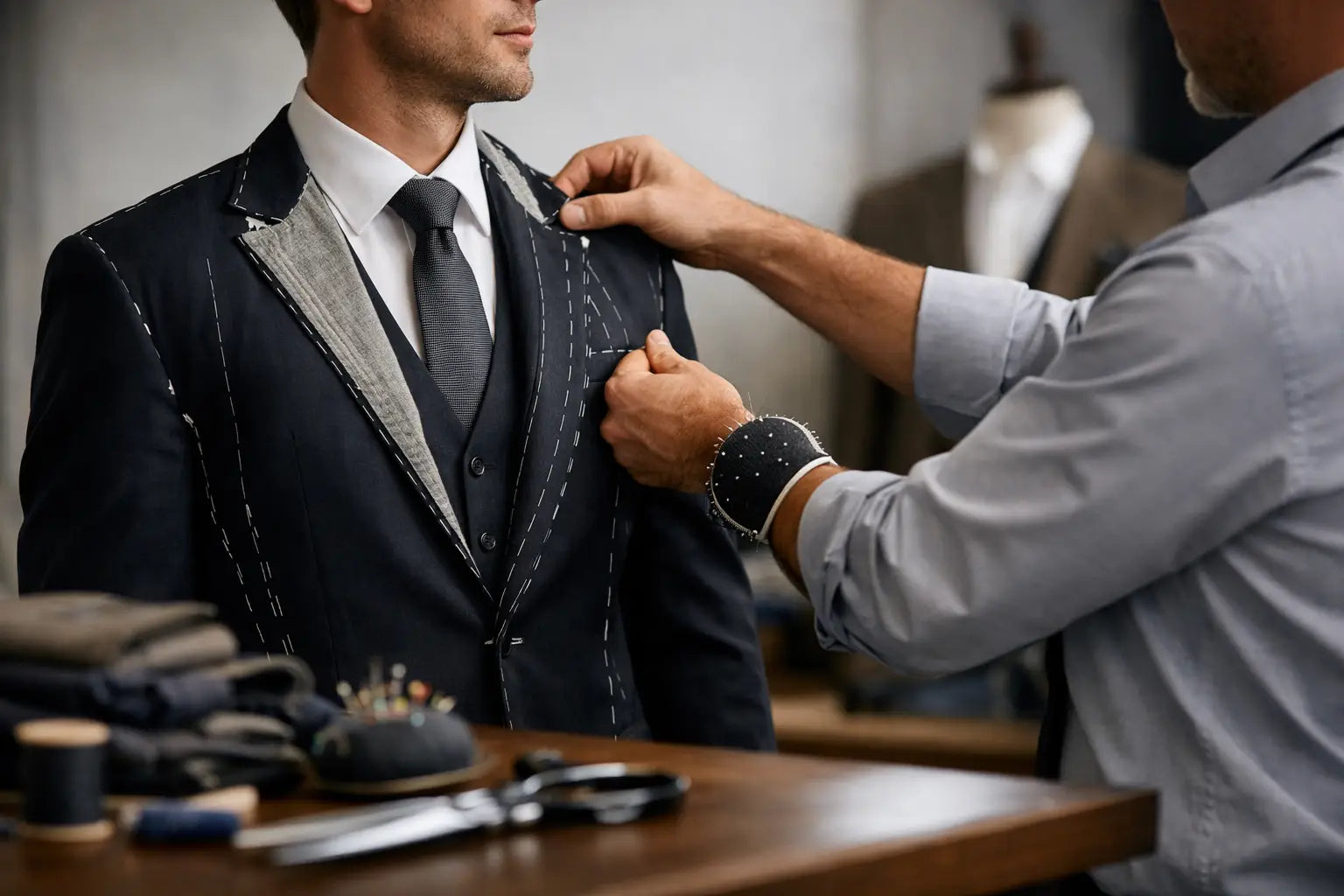
The fitting stage is where precision becomes visible. A first fitting may reveal where more room is needed, where the front balance should be corrected, or how the sleeve should fall when the client stands naturally rather than ceremonially. This is one reason custom tailoring cannot be reduced to measurement alone. It is a conversation between craft and body.
Final delivery should feel effortless. The garment ought to sit as though it belongs to the wearer from the first moment, without the stiffness or compromise that often accompanies off-the-peg clothing.
What custom tailoring can and cannot do
It is worth being candid here. Custom tailoring can dramatically improve fit, comfort and visual proportion, but it is not magic.
A talented tailor can soften the effect of sloping shoulders, create a stronger line through the chest, lengthen the appearance of the leg, or bring better balance to an uneven posture. He can guide a slimmer silhouette or a fuller drape depending on what suits the client. He can also advise when a certain cloth or cut will work against the body rather than flatter it.
What he cannot do is ignore reality. If a client wants a highly sculpted jacket from a cloth too heavy for the climate, or an ultra-slim shape that restricts movement, there will be a trade-off. The best custom tailoring is never about indulgence without judgement. It is about making refined decisions that serve both appearance and wearability.
That balance is especially important for men who need one wardrobe to work across different contexts. A suit for daily business use should not be approached in quite the same way as one intended for formal evening occasions. The right tailor will explain those distinctions with confidence.
Who benefits most from custom tailoring?
Custom tailoring is particularly valuable for men who have outgrown standard retail, either physically or stylistically. Tall men, shorter men, athletic builds, men with developed chests or shoulders, and those with pronounced posture variations often struggle with ready-made sizing. A jacket that fits the shoulder may swamp the waist. Trousers that fit the thigh may break poorly at the hem. Repeated alterations can only solve so much.
It also suits men who care about consistency. Once a personal pattern has been developed, future commissions can be refined with confidence. That means less guesswork, a more coherent wardrobe and a standard of fit that becomes recognisable.
Then there is the man who understands that image has consequence. In leadership, private client work, hospitality, finance and entrepreneurship, presentation often forms part of the exchange before a word is spoken. Clothing will not replace competence, but it can reinforce it. Custom tailoring exists for men who recognise that distinction.
The real value of a garment made for one man
Price is often the most obvious difference between custom tailoring and ready-to-wear, yet value is the more intelligent measure. A custom garment asks more at the outset because more thought, labour and skill go into it. The pattern is more exact. The fittings are more involved. The result is more personal.
For some men, that investment makes sense because they wear tailoring frequently and need dependable performance. For others, it is about the emotional quality of wearing something that feels entirely their own. Neither reason is trivial.
A proper tailored garment has a way of becoming part of a man’s public language. He reaches for it not because it is expensive, but because it is reliable. It supports how he wishes to be seen. That is why houses such as DONFIORITO place so much emphasis on consultation and fit rather than simply offering another suit.
If you have been asking what is custom tailoring, the clearest answer is this: it is clothing made with the discipline to reflect the individual wearing it. Not just his measurements, but his standards, his routine and his sense of self. Once you have worn a garment cut with that level of intention, compromise becomes far easier to recognise.