What Is Made to Measure Tailoring?
A suit can look expensive on the hanger and still fail the moment you put it on. The collar lifts, the sleeve breaks awkwardly at the cuff, the waist sits too loose, and the whole impression feels borrowed rather than owned. That is usually the moment a man begins asking what is made to measure tailoring, and whether it offers a better answer than ready-to-wear.
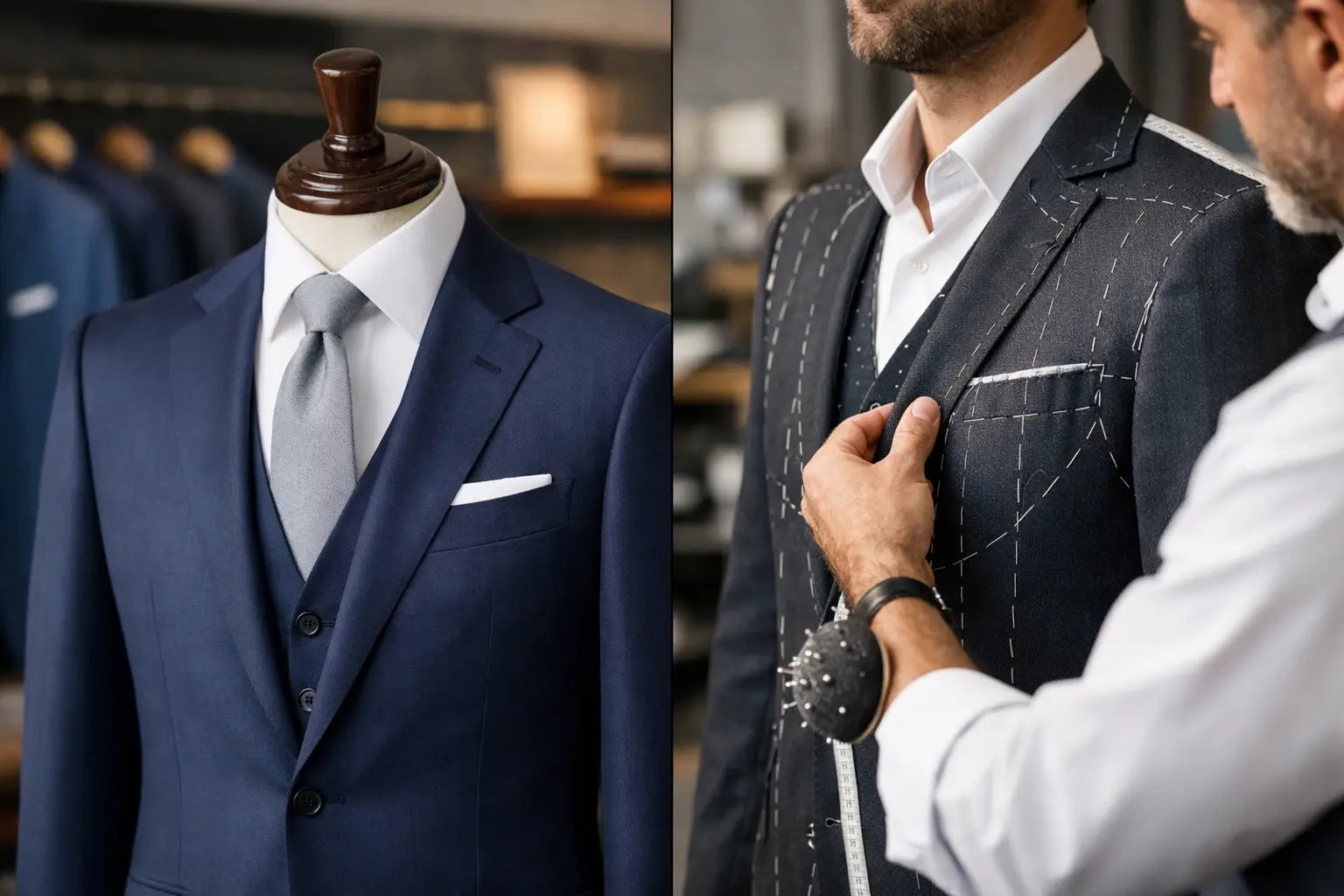
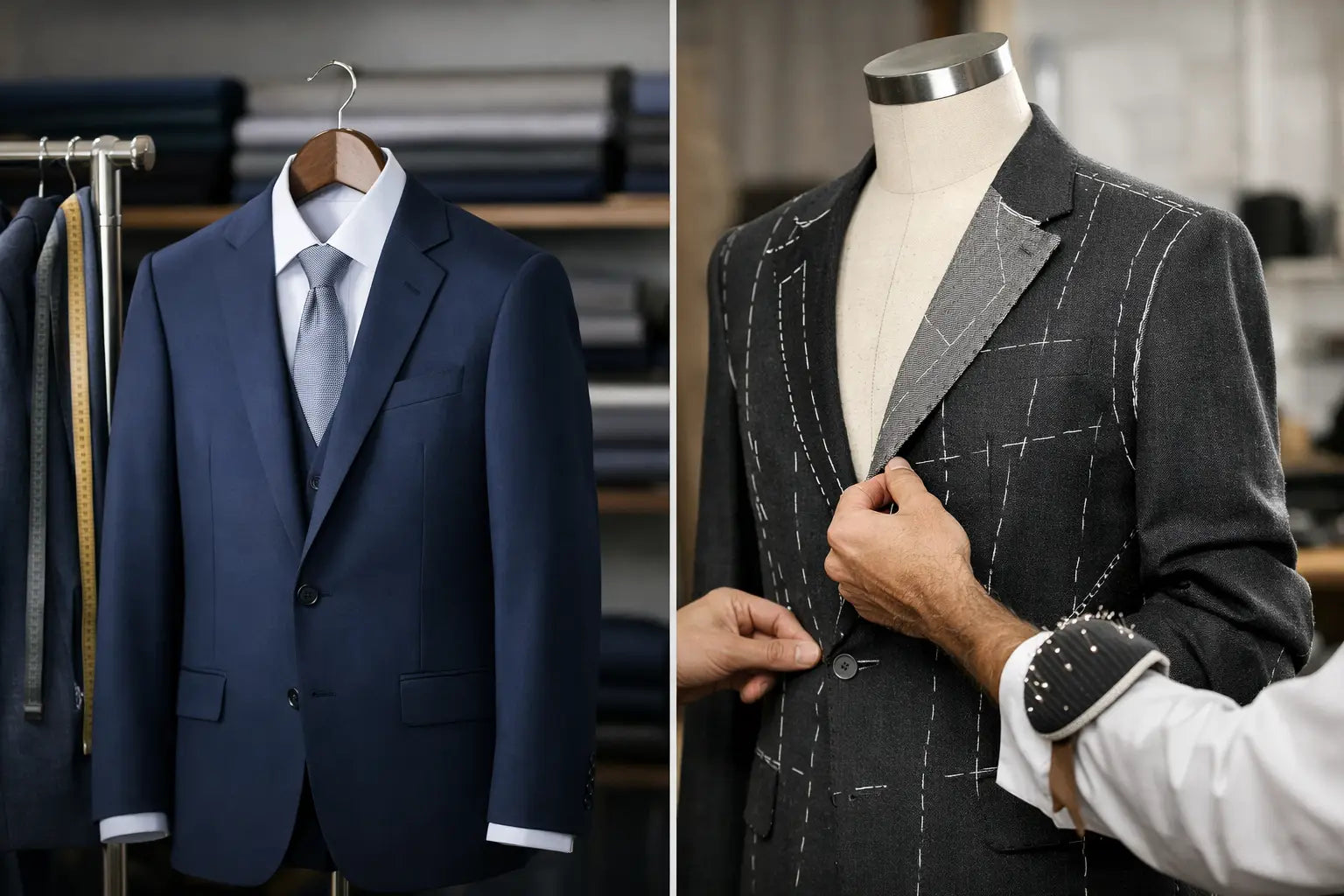
Made to measure tailoring sits between off-the-peg convenience and full bespoke craftsmanship. It is a form of custom clothing in which an existing base pattern is adjusted to reflect the client’s measurements, posture and preferences. The result is a garment that should fit more cleanly than standard retail suiting, while requiring less time and fewer stages than a true bespoke commission.
For many men, that sounds ideal. Yet the term is often used loosely, and not every made to measure service delivers the same standard. To understand whether it is right for you, it helps to know exactly what it is, what it is not, and where its strengths genuinely lie.
What is made to measure tailoring in practice?
In practical terms, made to measure tailoring begins with a pre-existing pattern block. Rather than drafting an entirely new paper pattern for the client from scratch, the tailor or maker starts from a standard model and alters it according to a set of body measurements and style instructions.
That means the coat length can be refined, the sleeve shortened, the waist suppressed, the trouser rise adjusted and the overall silhouette shaped with more precision than a ready-made garment allows. Depending on the house, details such as lapel width, pocket style, lining, cloth, button stance and vent configuration may also be selected.
The appeal is clear. A made to measure garment offers personalisation without the full investment of bespoke. It gives a client more control over fit and appearance, while keeping the process comparatively efficient.
However, the foundation still matters. Because the garment is built from an existing pattern rather than one created entirely around the body it belongs to, there are limits to how precisely it can address unusual posture, strong asymmetry or highly specific fit challenges.
How made to measure differs from bespoke
This is where many clients become confused, particularly in the luxury menswear space where terminology is not always used with discipline.
Bespoke tailoring traditionally means a unique pattern is drafted for one client alone. That pattern is shaped through fittings, observations and hand adjustments over time. The garment evolves around the man wearing it. His stance, shoulder line, balance, movement and preferences all influence the cut in a deeper way.
Made to measure is more structured. It customises, but it does not originate in the same way. The pattern is modified rather than born specifically for the individual. A skilled made to measure house can still produce a handsome, elegant result, but it is operating within a framework.
The difference is not merely technical. It affects how the garment behaves. Bespoke has greater capacity to correct balance issues, soften imperfections and create a line that feels natural to the wearer. Made to measure can improve fit substantially, though it may not achieve the same degree of subtlety.
For a client with a relatively standard physique, the gap may feel modest. For a man with one shoulder lower than the other, a prominent seat, forward posture, athletic thighs or a particularly exacting eye, the distinction becomes far more visible.
What is made to measure tailoring best suited to?
Made to measure works best for the man who wants more than retail but does not necessarily require full bespoke intervention. He may be building a professional wardrobe, improving his formal presentation, or seeking a cleaner silhouette for business and evening wear.
It can be especially useful when ready-made suits consistently disappoint in familiar ways. Perhaps the chest fits but the waist does not. Perhaps the trousers are acceptable but the jacket never sits correctly. In these cases, made to measure can offer a meaningful step up.
It also suits clients who value personal choice. Cloth selection, buttoning position, trouser finish and overall profile all contribute to how a man is perceived. In business, image is rarely superficial. It signals judgement, discipline and self-possession. A made to measure garment allows that signal to be shaped more intentionally.
That said, it is not a perfect answer for everyone. Men who expect the absolute highest level of pattern engineering, or who have complex fit requirements, may eventually find themselves drawn towards bespoke.
The made to measure process
A proper made to measure experience should still feel considered. It is not a matter of selecting a size and hoping for the best.
The process usually begins with consultation. This is where the client’s needs are clarified - not only his measurements, but the context in which the garment will be worn. A boardroom suit should behave differently from a dinner jacket. A frequent traveller may require different cloth and construction choices from someone dressing primarily for local meetings and evening engagements.
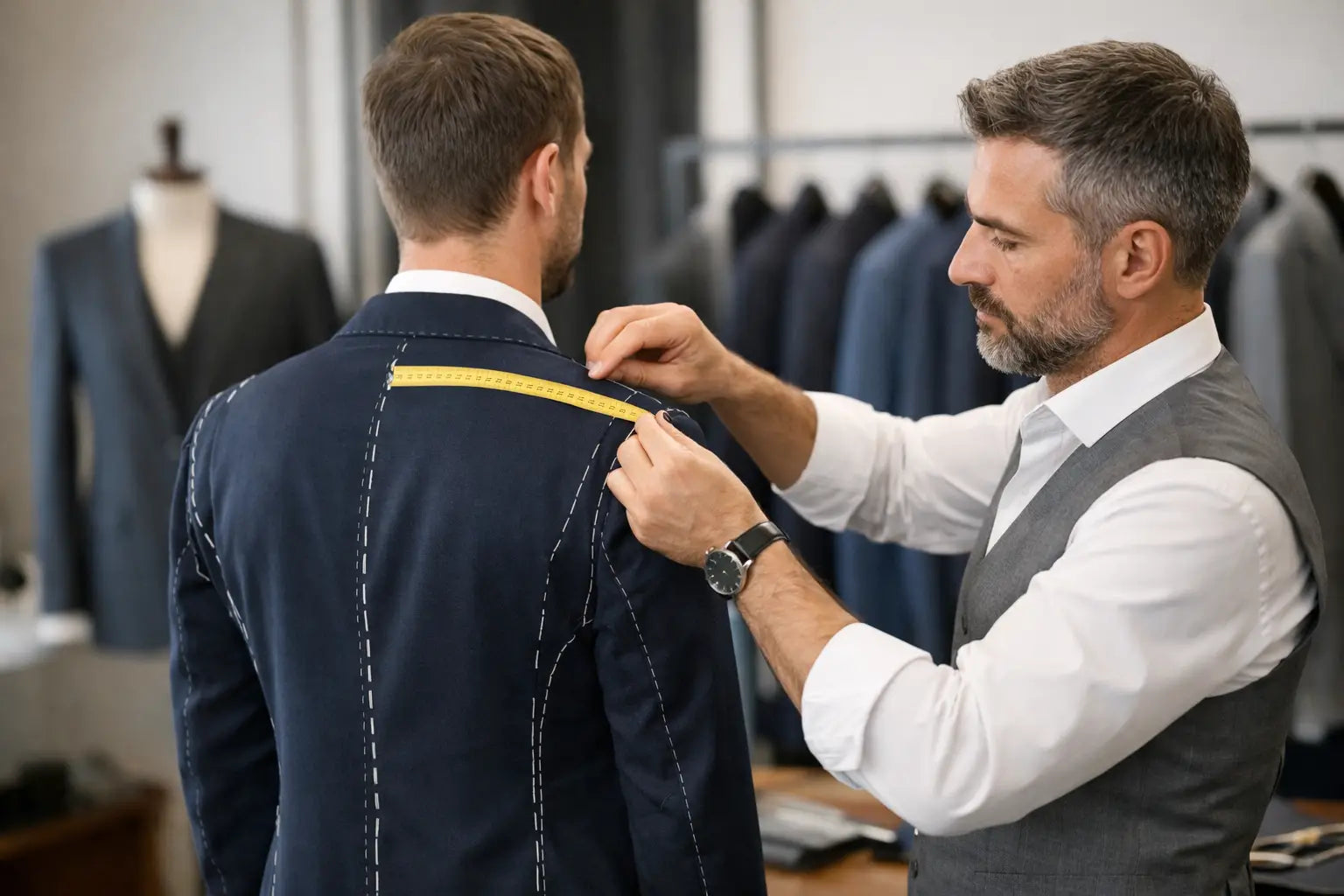
Measurements are then taken, often alongside posture observations and fit notes. The client selects fabric and design details, and the order is placed based on the adjusted pattern.
In many cases, a fitting follows once the garment has been produced. Minor refinements are then completed before final delivery. The exact number of fittings varies by maker, and this is one of the points where service quality can differ significantly.
A serious tailor will pay attention not only to circumference and length, but to proportion, balance and presence. That is the difference between a garment that merely fits and one that carries authority.
Where made to measure can fall short
The strongest made to measure programmes are disciplined, precise and aesthetically intelligent. The weakest are little more than altered factory sizing dressed up in luxury language.
The first limitation is structural. Because the underlying pattern is pre-existing, the service can only adapt so far. If the client has pronounced asymmetry, a difficult shoulder expression or a very distinctive body shape, alterations to a standard block may never fully resolve the issue.
The second limitation is inconsistency. Some houses offer genuine tailoring insight. Others rely heavily on software inputs and standardised production with minimal human judgement. Two businesses may both use the phrase made to measure while delivering entirely different outcomes.
The third concerns expectation. Clients sometimes believe made to measure and bespoke are interchangeable apart from price. They are not. A garment may be personal, refined and well fitted without reaching the level of sculpted individuality that bespoke can achieve.
None of this diminishes made to measure. It simply places it in its proper category.
What to look for in a quality made to measure service
If you are considering made to measure, the quality of the consultation matters more than many clients realise. Measurements alone do not create elegance. The person guiding the process must understand line, drape and how cloth behaves on a moving body.
Ask how the pattern is adjusted. Ask whether a fitting is included. Ask how much can genuinely be customised beyond surface details. A serious house should answer with clarity rather than marketing phrases.
It is also wise to judge the service by its eye for proportion. Does the tailor understand how a jacket should frame the shoulders without force? Can he advise on lapel width in relation to your build? Does he consider how you wish to be seen, not just what size you are?
That final point matters. The best tailoring, whether made to measure or bespoke, is never only about measurement. It is about presence. A man may want to appear more authoritative, more composed, less conventional, more discreetly powerful. The garment should support that intention.
Is made to measure worth it?
Often, yes. For many professionals, it offers a persuasive balance of fit, personalisation and efficiency. It can deliver a far superior result to ready-to-wear, particularly for men who care about presentation and are tired of compromise.
But worth depends on the standard of the maker and the expectations of the client. If you want a suit that feels distinctly yours, and your fitting needs are relatively straightforward, made to measure can be an intelligent choice. If you want a garment shaped with the highest degree of individuality and technical refinement, bespoke remains the higher discipline.
That is why the right question is not simply what is made to measure tailoring, but what level of tailoring serves you best. In a place such as Dubai, where appearance often speaks before you do, that distinction is not academic. It affects confidence, comfort and the way a room receives you.
A well-tailored garment should never feel like a costume or a correction. It should feel settled, assured and unmistakably your own - and knowing the difference between made to measure and bespoke is where that judgement begins.