Article: What Is Bespoke Tailoring, Exactly?
What Is Bespoke Tailoring, Exactly?
The first time a man wears a jacket built from his own pattern, he notices it almost immediately. The shoulder sits cleanly. The collar stays close to the neck. The chest has shape without strain, and the silhouette feels composed rather than forced. That is the clearest answer to what is bespoke tailoring - clothing created from the ground up for one individual, with every decision shaped around his body, posture, preferences and presence.
Bespoke is one of the most overused terms in menswear, which is precisely why it deserves a proper explanation. In its true sense, bespoke tailoring is not simply a suit adjusted to fit better. It is a process of craftsmanship in which a garment is conceived, cut and refined for a specific client, using a unique pattern drafted for him alone. The result is not just superior fit. It is a different standard of personal expression.
What is bespoke tailoring in practical terms?
At its core, bespoke tailoring means a garment is built entirely around the body it belongs to. The tailor does not begin with a standard size block and make minor amendments. He begins with the client.
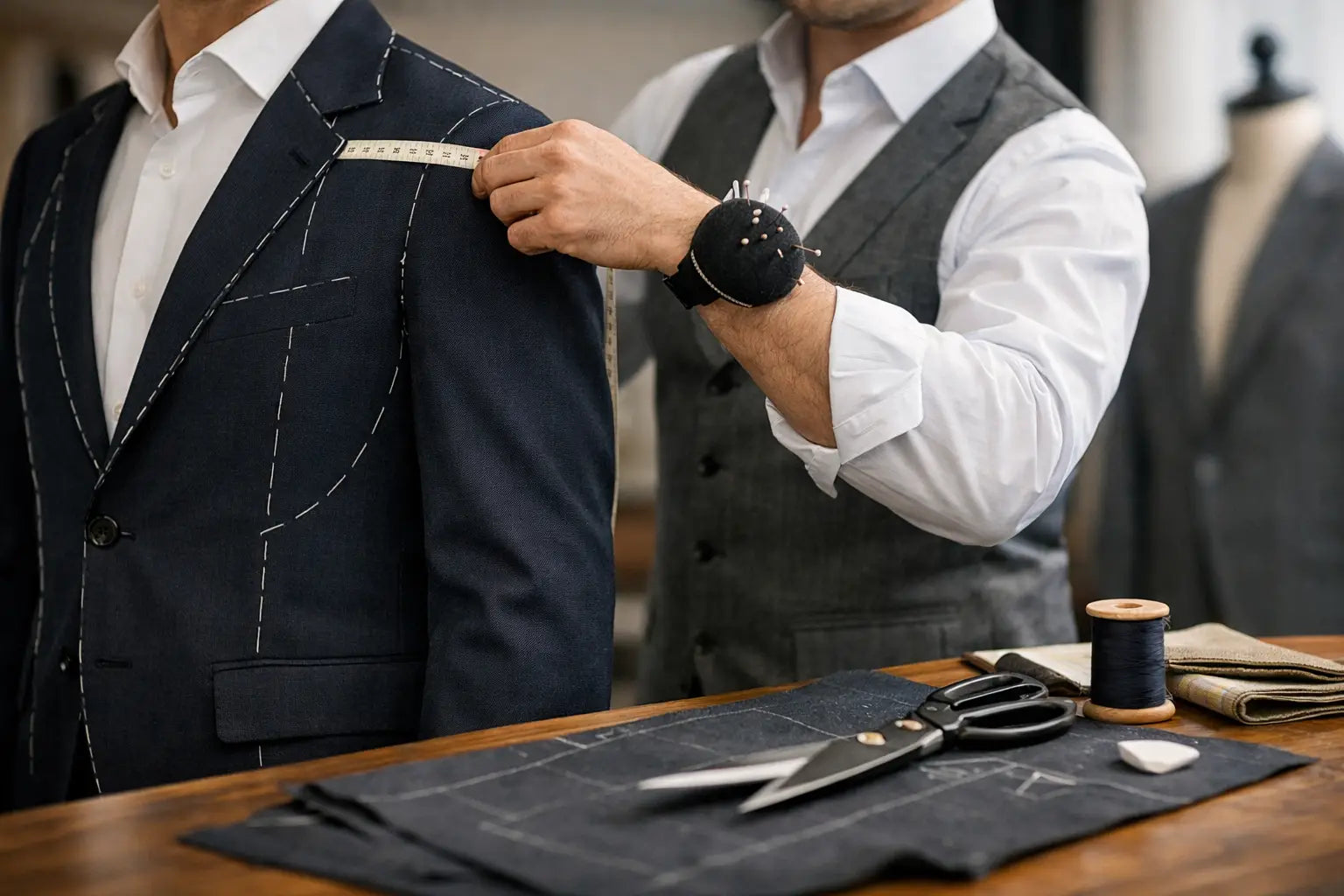
That starts with a detailed consultation. Measurements are taken, but measurements alone are not enough. A skilled tailor studies posture, shoulder line, stance, balance, arm position and the way a man naturally carries himself. Two clients may share the same chest measurement and wear entirely different jackets because their proportions, movement and visual goals are different.
From there, an individual paper pattern is created. This is the blueprint for the garment. Fabric, lining, lapel shape, pocket style, button stance and trouser details are then chosen in line with how the client wants to look and where the garment will be worn. Business, evening, travel and ceremonial wardrobes all call for different solutions.
The suit is then cut and assembled for fittings, where corrections are made by eye and by hand. These fittings are a defining part of bespoke. They allow the tailor to refine balance, drape and silhouette in a way no standard sizing system can match. What emerges is not just a better-fitting suit, but one with clarity of line and ease of wear.
Bespoke vs made-to-measure
This is where confusion tends to begin. Many men ask for bespoke when what they are being offered is made-to-measure. The two are not the same, and the difference matters.
Made-to-measure usually starts from an existing base pattern. That pattern is altered according to a client’s measurements, with some choice over fabric and style details. A good made-to-measure garment can be elegant and useful, especially for men with relatively straightforward proportions or limited time. It can offer a clear improvement on ready-to-wear.
Bespoke goes further. The pattern is drafted uniquely for the client rather than adapted from a pre-existing template. There is greater scope to address asymmetry, posture and individual balance. The fittings are also more involved, because the garment is being shaped through the process rather than selected from an existing framework.
The distinction is not about prestige for its own sake. It is about what the garment is capable of achieving. If a man has one shoulder lower than the other, a prominent seat, forward shoulders, a fuller chest, long arms or a particular preference for how a jacket should frame him, true bespoke can respond with precision. That level of control is the point.
Why bespoke tailoring feels different when worn
Fit is often spoken about as though it were purely technical. In reality, it is visual and psychological as well. A suit that fits correctly changes how a man stands, moves and is perceived.
When the chest is balanced properly and the waist is shaped with restraint, the jacket appears calm. When the sleeve pitch follows the natural position of the arms, the cloth moves cleanly. When the rise and line of the trousers are cut to suit the wearer, the entire silhouette becomes more assured. These are subtle corrections, yet they create a powerful effect.
That effect is especially important for men whose appearance carries professional weight. In business settings, formal events and high-level meetings, clothing does more than cover the body. It communicates judgement, discipline and self-knowledge. A bespoke suit does not need to look loud to be noticed. Often, its authority lies in how little it asks of the eye. Everything simply appears right.
The process behind true bespoke
A genuine bespoke experience is measured, deliberate and personal. It is not rushed because craftsmanship and accuracy require time.
The consultation sets the direction. This is where lifestyle, expectations and wardrobe needs are discussed. Some clients want a boardroom suit with architectural sharpness. Others need a softer garment for long days of travel or warm climates. Bespoke should never be reduced to cloth and measurements alone. It should reflect the man’s world.
After this comes pattern drafting and cutting. The first fitting often reveals more than the measuring tape ever could. The tailor sees how the cloth hangs, where tension appears and how the silhouette works in motion. Adjustments are then made to improve balance and expression.
Further fittings refine the garment until it reaches its final form. The number of fittings can vary. Some bodies are straightforward, while others require more sculpting. This is one of the trade-offs that separates bespoke from faster options. It asks more of the client’s time, but it gives more in return.
For a house such as DONFIORITO, the process is not only about precision. It is also about guiding the client towards decisions that strengthen presence. The finest bespoke tailoring does not overwhelm a man with technical language. It translates expertise into confidence.
What makes bespoke worth the investment?
The value of bespoke lies partly in fit, but not only in fit. It lies in permanence of pattern, consistency of result and the quality of personal attention.
Once a pattern has been developed properly, future commissions become more fluent. The tailor understands how the client likes his jacket to close, how much room he prefers in the trouser thigh, whether he favours a stronger shoulder or a softer line. Over time, the wardrobe becomes more coherent because it is built from understanding rather than guesswork.
There is also the matter of comfort. Many men have worn poor-fitting tailoring for so long that they assume stiffness is normal. It is not. A well-made bespoke garment should feel supportive rather than restrictive. It should follow the body without fighting it.
Then there is image. Luxury clients are not simply buying fabric and labour. They are investing in how they enter a room, how they are remembered and how closely their clothing reflects their standards. The right suit sharpens all of that. It becomes part of personal identity.
Who should choose bespoke tailoring?
Bespoke is not necessary for every man or every occasion. If someone needs a single event suit quickly, or his fit challenges are minimal, made-to-measure may be entirely appropriate. The wiser question is not whether bespoke is objectively better in every circumstance, but whether it is the right choice for the client’s priorities.
It tends to make the greatest sense for men who wear tailoring regularly, men with exacting standards, and men whose bodies do not sit comfortably within standard sizing. It also suits clients who understand that presentation has commercial and social value. For them, bespoke is not indulgence. It is alignment between image and intent.
There is a reason successful men return to bespoke once they have experienced it properly. After wearing garments built around their own proportions and preferences, generic clothing begins to feel generic in every sense.
A better way to understand bespoke
If the term still feels abstract, think of bespoke tailoring as the difference between choosing from what already exists and commissioning what should exist for you. One approach asks you to adapt to the garment. The other asks the garment to adapt to you.
That is why the answer to what is bespoke tailoring goes beyond technique. It is craftsmanship, certainly, but it is also discernment. It is the discipline of creating clothing with intention, so that fit, silhouette and character speak in one voice.
For the man who understands the value of presence, bespoke is not merely about dressing well. It is about being seen exactly as you mean to be seen.