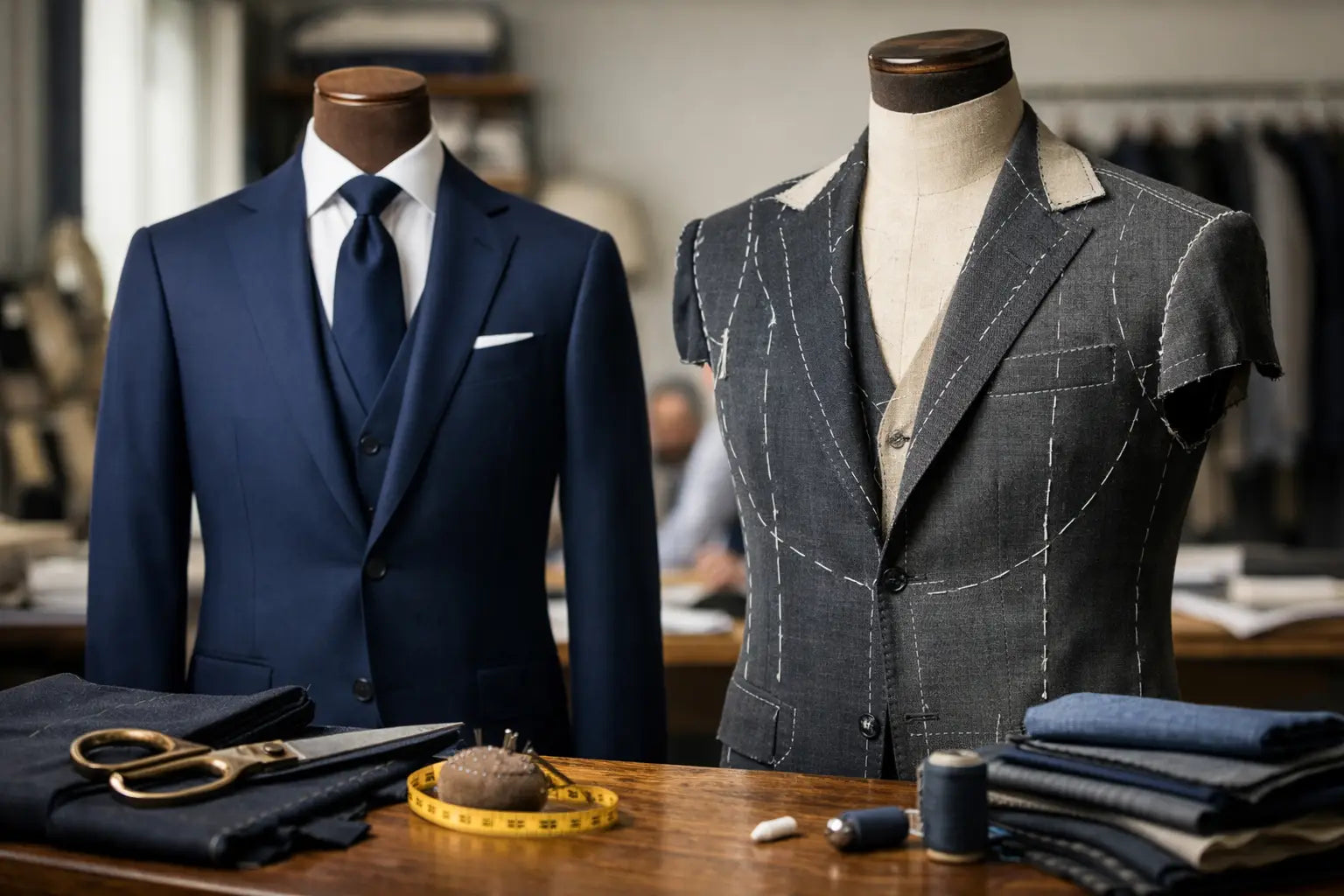
How to Prepare for Tailoring Fitting
The difference between an acceptable suit and an exceptional one is often decided before the first pin is placed. To prepare for tailoring fitting properly is to arrive with clarity - about how you live, how you move, and how you wish to be seen when the garment is complete.
A fitting is not a formality. In bespoke tailoring, it is where proportion, posture, cloth and personality begin to align. The more considered your preparation, the more precise the result. For a man who understands the value of presentation, this stage deserves attention.
Why it matters to prepare for tailoring fitting
A tailoring fitting is not simply about measurements. Measurements are only the starting point. What matters more is how the coat settles across your shoulders, how the trouser line falls when you walk, and whether the finished silhouette reflects your presence rather than merely covering the body.
This is why preparation has such influence. If you arrive rushed, dressed in the wrong footwear, or without a clear sense of how and where the garment will be worn, you introduce uncertainty into a process built on precision. A tailored suit should feel composed, effortless and entirely your own. That outcome depends on details that are easy to overlook.
There is also a practical truth here. Different clients require different solutions. A boardroom suit, a wedding suit and a travel wardrobe may all call for different allowances, cloth weights and styling decisions. A fitting works best when those realities are established from the beginning.
What to wear to your fitting
What you wear to a fitting affects what your tailor sees. Choose clothing that gives accurate visual information and does not distort your natural proportions. A well-fitted shirt is ideal. Avoid oversized casualwear, heavy knitwear or anything bulky around the shoulders and waist, as these can interfere with the reading of balance and shape.
Your shoes matter more than many clients expect. Trouser length and break are judged from the shoe upwards, so attend in the type of shoes you realistically intend to wear with the suit. If the garment is being made primarily for business, wear your usual business shoes. If it is for evening or occasion wear, bring the appropriate pair. A small difference in heel height can change the line of the trouser.
Undergarments should also be considered. Wear what you would normally wear beneath tailored clothing. If you use an undershirt, wear one. If you prefer not to, do not introduce it on the day. Consistency helps the tailor assess the garment in conditions close to real use.
Come with a clear purpose
The strongest fittings begin with a clear brief. Not a mood board, and not a vague preference for something elegant. A useful brief answers a few simple questions. Where will you wear the suit most often? What impression should it create? Do you need ease for long working days, frequent travel, warm weather, formal meetings, or all of the above?
A client who spends most of his time in meetings may prefer a cleaner, more structured silhouette. Someone moving constantly between appointments may need a touch more comfort through the seat and thigh. A man building a formal wardrobe may accept a sharper line that prioritises presence over casual flexibility. None of these choices is universally right. They depend on context.
This is particularly relevant in places such as Dubai, where climate, schedule and social settings often overlap in unusual ways. A suit may need to hold authority in the office and remain comfortable through evening engagements. Preparation allows those demands to be addressed before the garment is shaped around them.
Bring the right references, not too many
If you have examples of what you like, bring them. A photograph of a lapel shape, a jacket length, a trouser finish or a shoulder expression can help create alignment quickly. But precision is more valuable than volume. Ten contradictory references rarely produce clarity.
It is also wise to explain what you respond to in the image. Is it the cleaner waist suppression, the stronger shoulder, the softer drape, or simply the confidence of the man wearing it? Many clients believe they like a certain style when in fact they are responding to posture, styling or photography. A good tailor will interpret this, but your own observations help.
If you already own garments you admire, consider bringing one. Equally, if there is a jacket or pair of trousers you find frustrating, that can be just as useful. Fit problems are often easier to solve when they are seen directly.
Be honest about comfort
Many men assume a superior fit should feel tighter. Not necessarily. A tailored garment should define the frame without restricting it. During the fitting, be candid about what you feel across the chest, at the collar, through the sleeve, and around the trouser waist and seat.
If something feels strained when you sit, mention it. If you dislike excess cloth around the back, say so. If you prefer a sharper trouser line, or a touch more room in the thigh, that is useful information. Silence tends to produce compromise, while honest feedback produces refinement.
There is a balance to be struck. Some clients initially interpret a proper armhole or a shaped waist as unfamiliar simply because they are used to ready-to-wear garments cut with too much allowance. That is where the tailor’s judgement matters. The fitting should respect comfort, but not at the expense of elegance. The point is not to chase tightness or looseness. It is to achieve poise.
How to stand and move during a fitting
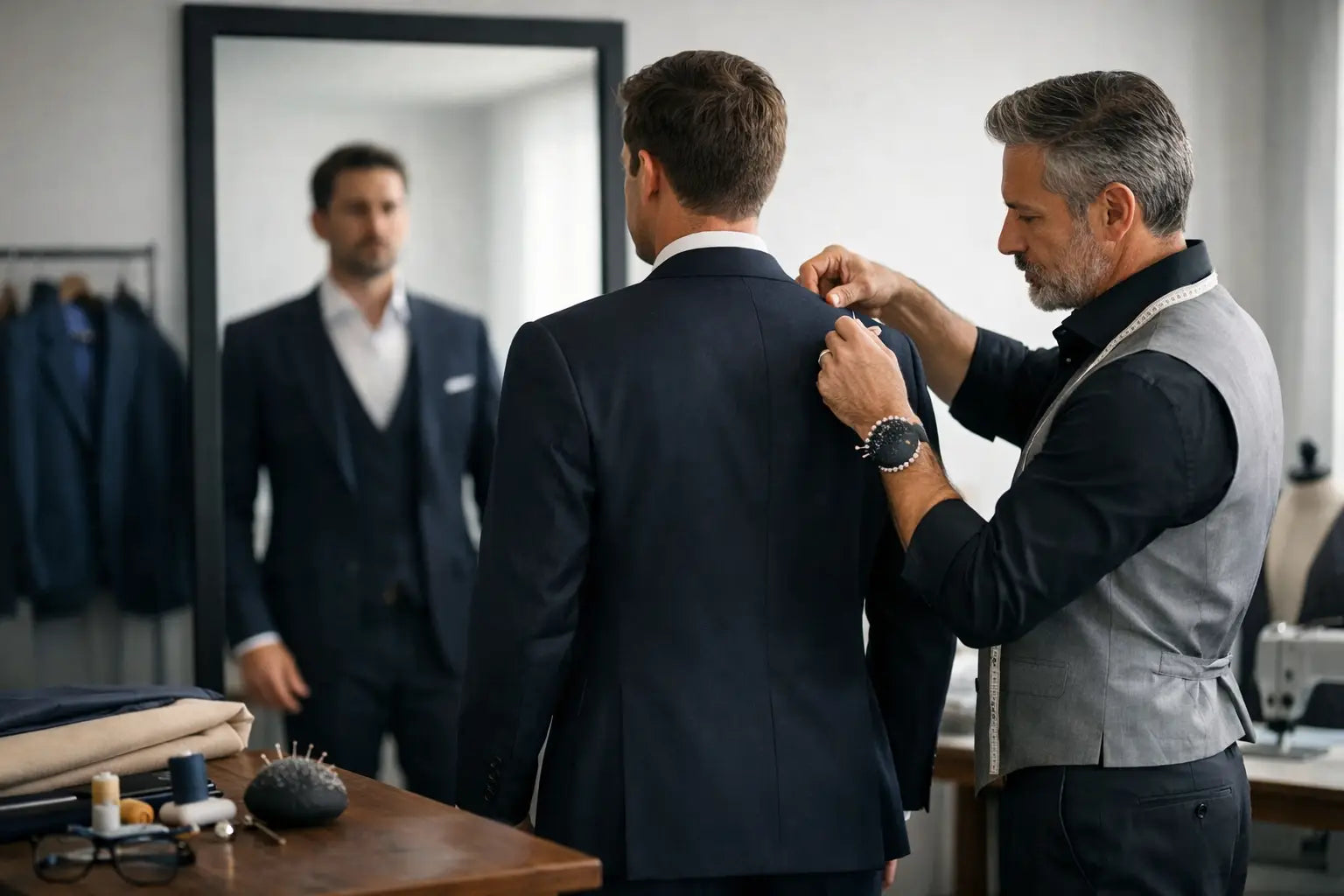
Stand naturally. Do not attempt to improve your posture for the occasion. If you usually carry one shoulder slightly lower, or if your stance shifts weight to one side, that is exactly what the tailor must see. Bespoke clothing is built around the body it belongs to, not an idealised version of it.
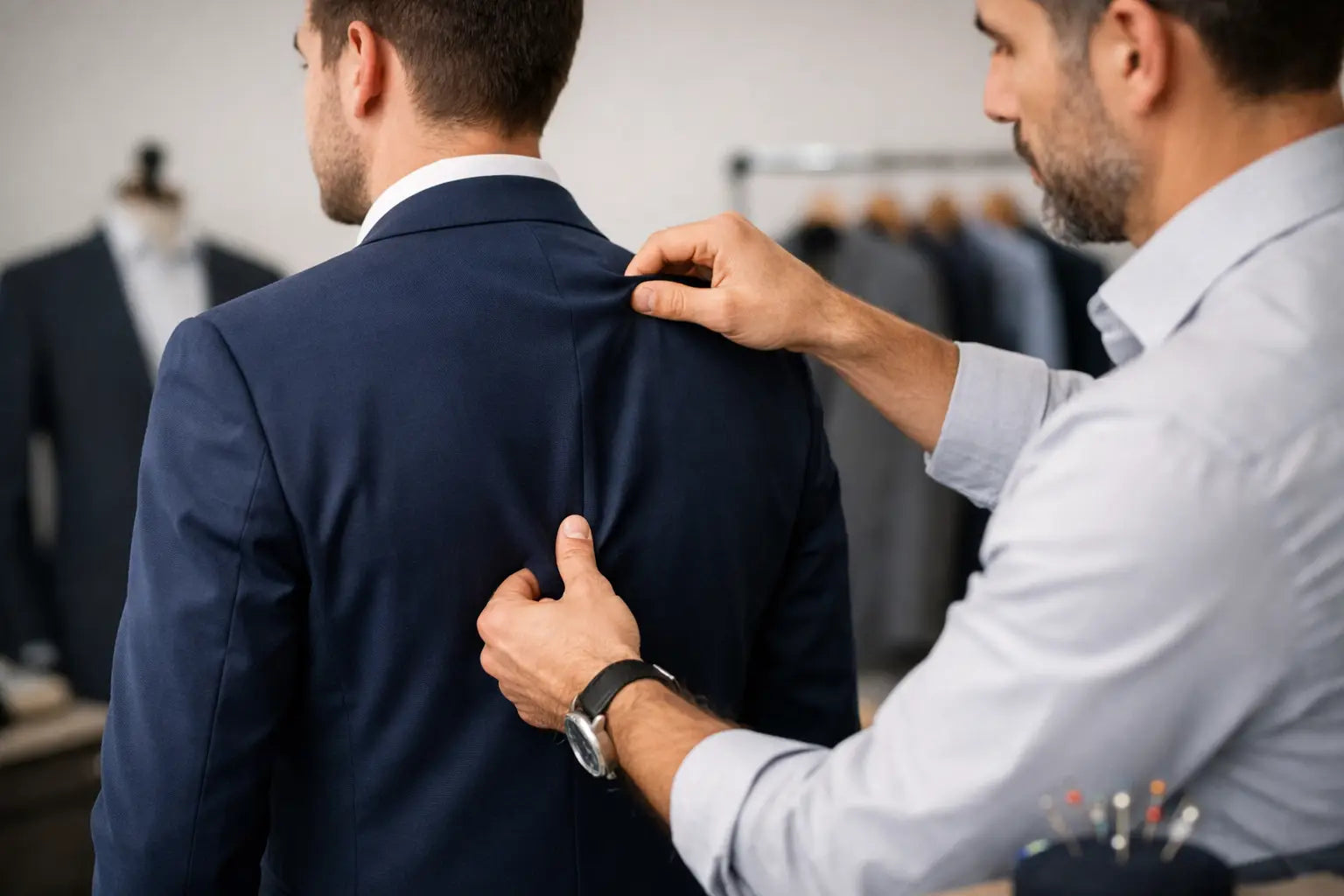
You should also move. Walk a few steps. Sit down. Button and unbutton the coat. Raise your arms as you normally would. A suit lives in motion, and fittings should account for that. A jacket that looks immaculate when standing still but pulls awkwardly in ordinary movement is not yet resolved.
This is one reason fittings require time and attention. Static measurements cannot fully reveal how a client inhabits a garment. Behaviour does. The way you reach, turn and sit tells the tailor where structure should hold and where ease should be granted.
Small details worth deciding before the appointment
Preparation is easier when certain preferences are settled in advance. You do not need a rigid view on every detail, but it helps to know whether you generally favour a more classic or more contemporary expression. That affects lapel width, jacket length, trouser width, cuff treatment and the overall visual language of the suit.
It also helps to think about your existing wardrobe. The most successful bespoke pieces do not live in isolation. They strengthen the wardrobe around them. If you already wear mostly dark business shoes and understated shirts, an excessively fashion-led suit may feel disconnected from the rest of your presentation. If your wardrobe is already sophisticated and varied, there may be more space for stronger personality.
This is where an experienced house such as DONFIORITO brings value. The role of the tailor is not merely to take instructions, but to guide decisions so the final garment feels coherent, intentional and unmistakably personal.
What not to do at a fitting
Do not treat the appointment as a quick errand between other engagements. A rushed fitting often leads to rushed decisions, and bespoke work benefits from calm observation. Give yourself enough time to focus.
Do not overcorrect every millimetre in pursuit of theoretical perfection. The best tailoring is balanced, not obsessive. Cloth has behaviour, bodies are asymmetrical, and elegance often comes from proportion rather than microscopic tightness.
Finally, do not withhold context. If your weight tends to fluctuate, if you travel constantly, if you spend half your day seated, or if you need the suit to perform in extreme heat, say so early. Tailoring is at its best when it responds to reality.
A fitting should leave you feeling more certain, not more confused. Arrive prepared, speak plainly, and allow craftsmanship to do what it does best - translate your standards into a garment that carries authority without effort. When the process is handled properly, the result is not simply a better fit. It is a stronger presence the moment you enter the room.