A Guide to Bespoke Suiting
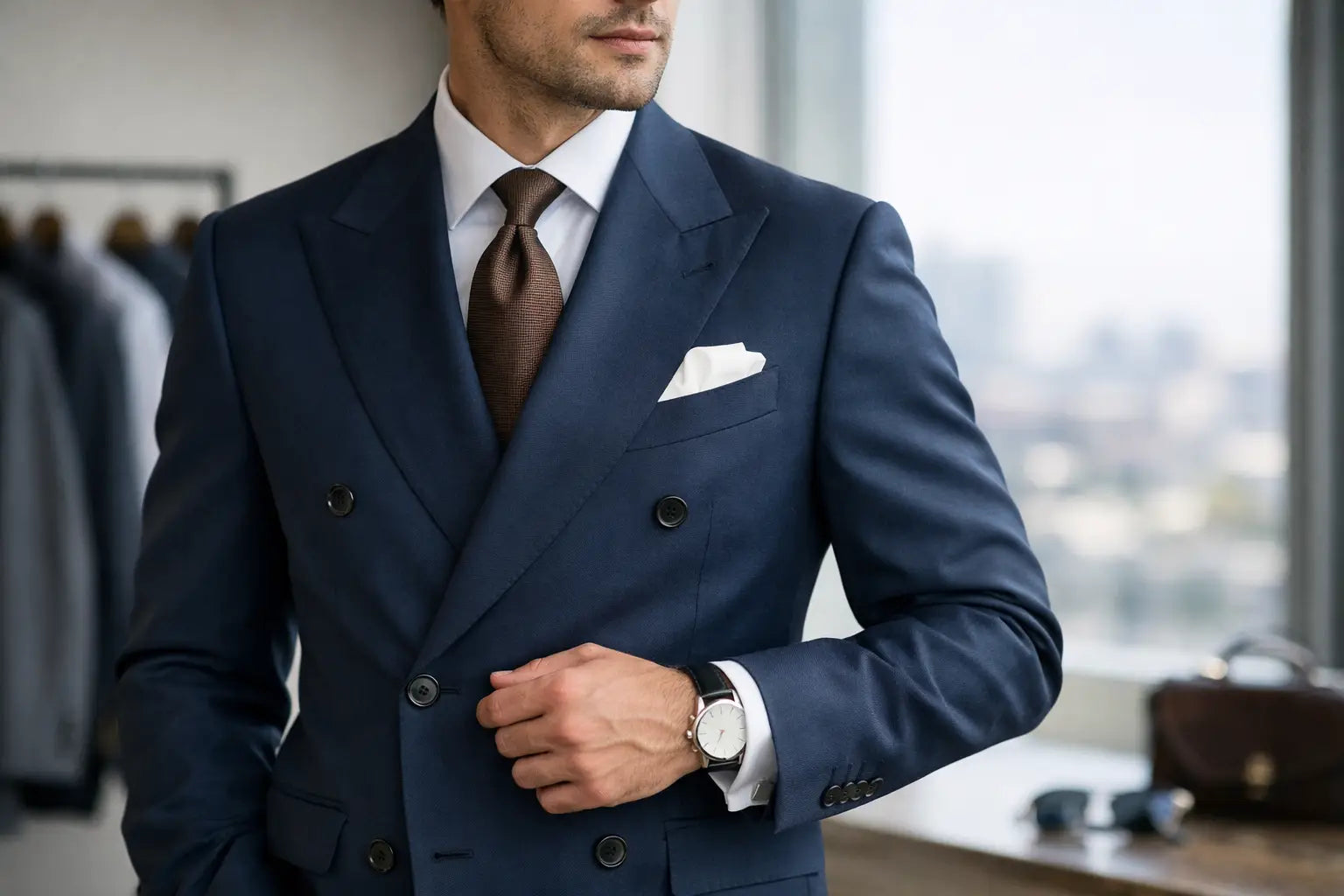
The difference is visible before a word is spoken. A jacket that sits cleanly on the shoulder, trousers that fall with intention, a silhouette that looks composed rather than forced - this is where any serious guide to bespoke suiting should begin. Not with trend, but with presence.
For men whose wardrobe must perform in boardrooms, private meetings, formal dinners and long working days, bespoke is not indulgence for its own sake. It is a disciplined answer to a common problem: most suits are made to fit a market, not a man. Even expensive ready-to-wear often asks the wearer to compromise on balance, comfort or proportion. Bespoke reverses that logic. The garment is built entirely around the body it belongs to, and around the impression its wearer intends to make.
What bespoke suiting actually means
The term is used loosely, and that causes understandable confusion. Made-to-measure adjusts an existing base pattern. Bespoke begins from the individual. A unique pattern is created for the client, based on his posture, shoulder expression, chest shape, stance and preference for line. That distinction matters because two men of the same height and chest measurement can require entirely different solutions.
A true bespoke suit is not simply smaller or larger in the right places. It is a garment engineered to create harmony. A slightly forward shoulder, one hip sitting higher than the other, prominent blades, a fuller seat, a longer rise - these are not flaws to be hidden. They are realities to be understood and addressed with precision.
This is also why bespoke suiting tends to feel different from the first serious fitting onwards. The comfort comes not from looseness, but from accuracy. When the coat follows the body correctly and the trousers are cut with the right balance, movement becomes more natural and the wearer appears more assured.
A guide to bespoke suiting starts with intention
The first consultation is not only about measurements. It is about purpose. A man commissioning his first navy business suit requires a different conversation from one building a wardrobe for frequent travel, black-tie events or warm-weather formalwear in Dubai.
An experienced tailor will ask how and where the suit will be worn, how often, and what the wearer wants it to communicate. Quiet authority? Formal sharpness? Ease with elegance? These details shape every decision that follows, from cloth weight to lapel width to the degree of waist suppression.
This stage is where many clients realise that bespoke is as much about judgement as it is about craft. Personal taste matters, but taste benefits from guidance. The finest results come from a conversation between the client’s identity and the tailor’s eye.
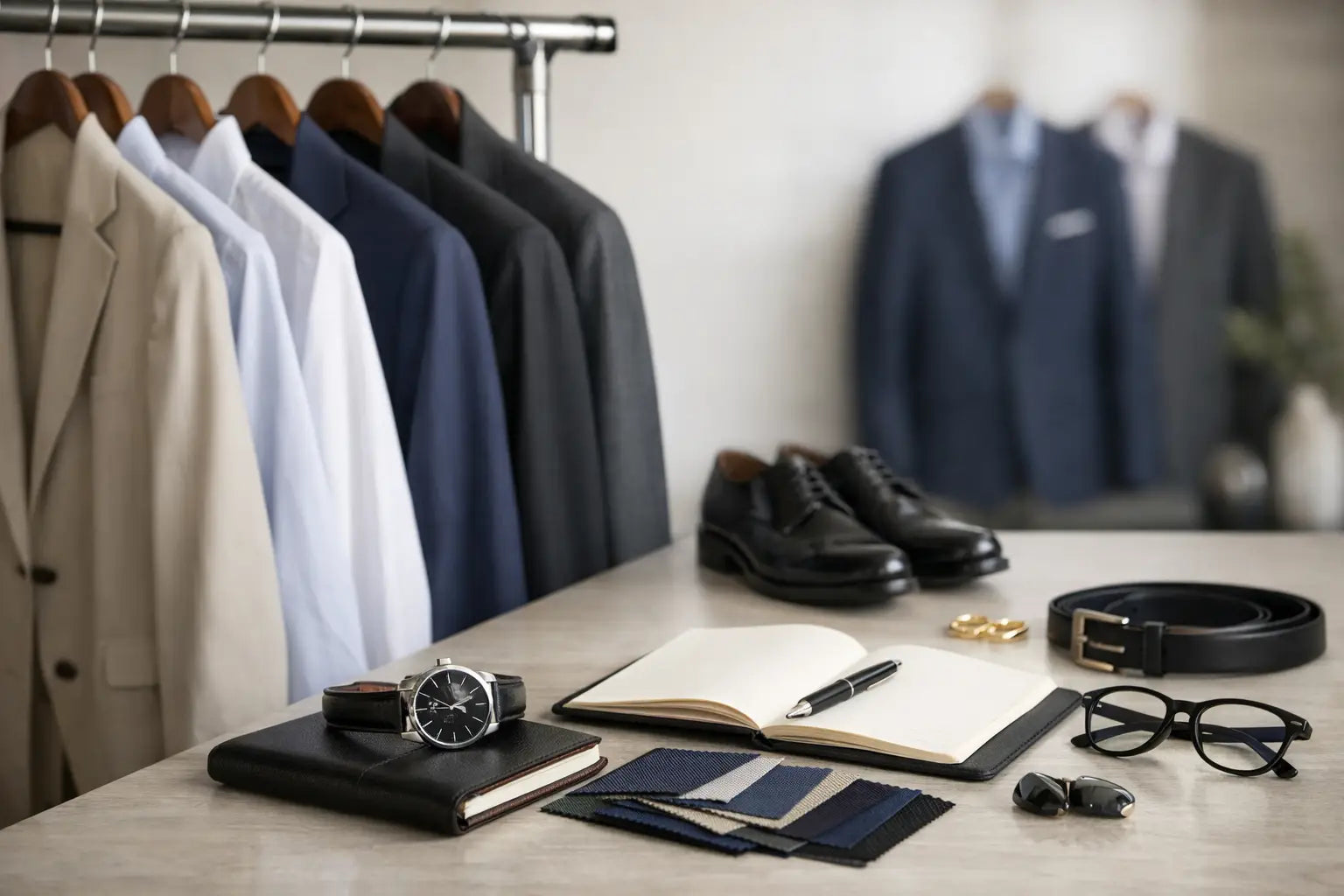
Cloth selection is about performance, not only luxury
Clients are often introduced to fabric through handle and appearance first, but cloth must be chosen for use, not just immediate appeal. A beautiful super-fine wool may feel exquisite in the hand, yet prove less suitable for heavy rotation or a demanding travel schedule. A slightly sturdier cloth may drape better over time and retain its composure more reliably.
Season, setting and frequency all matter. In warmer climates, lighter weights and open weaves can offer comfort, but they may crease more readily. Heavier cloths can hang with remarkable authority, though they are not always practical year-round. Mohair blends can add resilience and a dry, crisp character. Flannel introduces softness and depth, but it signals a different kind of sophistication from a smooth worsted.
Colour deserves the same level of discipline. Navy and charcoal remain foundational because they flatter, adapt and convey seriousness without strain. Mid-grey can be excellent for daylight business use. Earth tones, checks and textured weaves have their place, but they depend on context. The most refined wardrobes are rarely built on novelty.
The pattern is where the garment becomes personal
Measurements alone do not create a distinguished suit. Pattern cutting interprets those measurements into shape. This is where bespoke becomes genuinely individual.
A skilled cutter considers not only size, but posture and visual balance. If a man stands erect, the coat must accommodate that cleanly. If he carries himself with a forward stance from long hours at a desk, the pattern must respond. If he wants a stronger shoulder line, a cleaner waist or a more generous drape through the chest, those choices must be designed into the suit rather than improvised later.
This is also the stage at which style should be handled with restraint. Many details can be customised - peak or notch lapels, pocket treatments, button stance, cuff treatment, vents, trouser pleats - but not every option improves the whole. Bespoke is not the art of adding features. It is the art of selecting the right ones.
Why fittings matter more than most clients expect
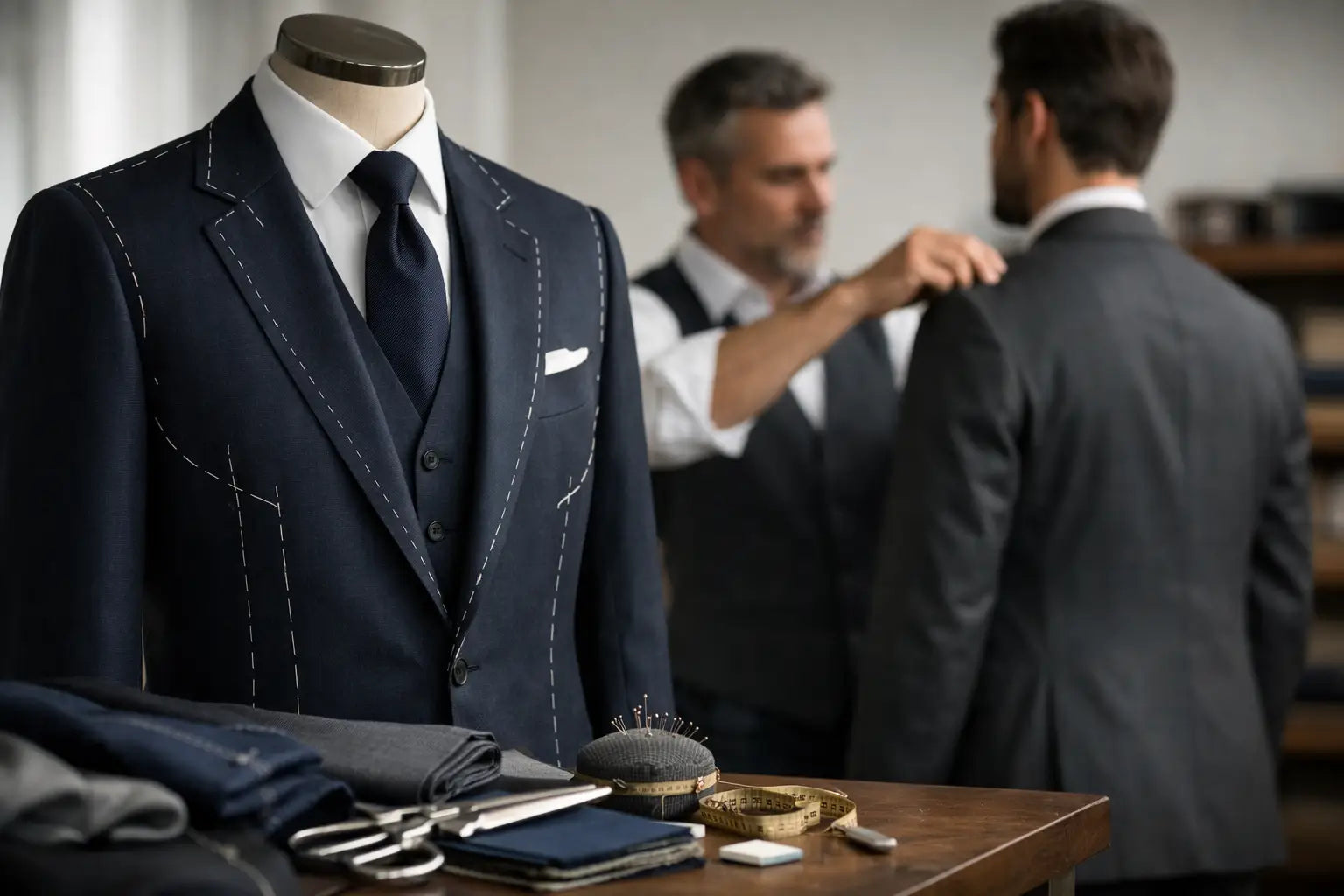
One of the clearest signs of a proper bespoke process is the fitting sequence. Multiple fittings allow the garment to be refined in stages, often beginning with a baste fitting where the suit is partially assembled. At this point, the client can see the emerging shape, while the tailor studies line, balance and movement.
This stage is invaluable because cloth behaves differently on the body than it does on paper. A sleeve may need rotation. The front balance may need adjusting. The suppression at the waist may look elegant standing still but feel too assertive when seated. Small changes at this stage create a dramatically better final result.
Clients sometimes imagine fittings as a formality. They are not. They are the proving ground of bespoke. The best outcome usually comes from patience and precision, not haste. If a house offers a supposedly bespoke suit with minimal consultation and no meaningful fitting process, caution is wise.
Fit is not tightness
Many modern clients arrive with an idea of fit shaped by fashion imagery rather than lived reality. Extremely close-fitting suits can appear sharp in photographs, yet prove restrictive, unflattering or dated in person. A superior bespoke fit gives shape without strain.
The shoulder should sit naturally and cleanly. The chest should allow ease without excess. The waist should define the line of the body, but not imprison it. Trousers should break correctly for the chosen style and shoe, while maintaining comfort through the seat and thigh.
The right silhouette depends on the wearer. A powerful frame may benefit from cleaner, quieter lines rather than aggressive suppression. A leaner man may require structure to create presence. Bespoke allows these decisions to be made intelligently rather than according to a passing ideal.
The emotional value is real
Luxury often gets discussed in terms of materials alone. In bespoke tailoring, the deeper value lies in recognition. A well-made suit can alter how a man enters a room, how long he remains comfortable in demanding settings, and how convincingly he presents authority.
That does not mean every commission must be theatrical or overtly luxurious. Often the most effective bespoke garments are the least conspicuous. They simply look right. The wearer appears settled, considered and entirely himself.
For high-performing professionals, that has practical value. Clothing cannot replace judgement, but it can support it. When a suit fits precisely and reflects the man wearing it, one distraction is removed and one advantage is quietly gained.
How to judge whether bespoke is worth it for you
The answer depends on what frustrates you about suiting now. If off-the-peg garments fit acceptably and you wear tailoring only a few times a year, bespoke may be unnecessary. If, however, standard sizing consistently fails at the shoulders, collar, waist or trouser balance, bespoke becomes easier to justify.
It is also worth considering whether your wardrobe plays a strategic role in your life. For executives, entrepreneurs and men whose appearance is part of how they lead, negotiate and represent themselves, bespoke is often less about fashion than consistency. The suit becomes a reliable instrument rather than an occasional purchase.
A house such as DONFIORITO understands this distinction. The process is not centred on selling a garment quickly, but on shaping one with deliberation - through consultation, cloth selection, fittings and final refinement - so that the result carries both precision and character.
What to expect from your first commission
A first bespoke suit should usually be versatile. Dark navy or charcoal, clean in line, adaptable across business and formal use. It should teach you what you value: more room in the chest, a stronger shoulder, a higher rise, a fuller trouser, a softer construction. Once that foundation is established, further commissions become more expressive.
You should also expect the process to take time. That is not inefficiency; it is part of the discipline. Bespoke rewards men who prefer permanence over impulse.
The right suit does more than fit. It settles the relationship between body, cloth and identity in a way standard tailoring rarely can. If you approach the process with clarity, patience and a willingness to be guided, bespoke suiting becomes less about acquiring another garment and more about defining how you wish to be seen.