How to Build Executive Wardrobe Strategy
The men who are remembered in a boardroom are rarely the loudest dressed. More often, they are the most considered. To build executive wardrobe strategy is not to collect expensive clothes for their own sake. It is to shape a visual language that supports authority, discretion and personal distinction every time you enter the room.
For an executive, wardrobe is not a side concern. It sits alongside speech, timing and posture as part of professional presence. The difference between dressing well and dressing strategically is intent. One aims to look polished. The other ensures that every garment reinforces how you wish to be perceived - by clients, investors, colleagues and peers.
Why build executive wardrobe strategy at all?
A wardrobe strategy creates consistency where many men otherwise rely on habit or urgency. Without one, even a successful professional can end up with a rail of disconnected purchases: jackets that do not work with existing trousers, shirts bought in flattering colours but unhelpful proportions, and suits that appear respectable until they are examined in motion. The result is often expense without clarity.
An executive wardrobe should reduce friction, not create it. It should allow you to dress quickly, travel well and appear composed in a range of settings, from private meetings to formal dinners. That requires more than taste. It requires structure.
There is also the matter of credibility. Senior men are often judged before a word is spoken. The line of a shoulder, the length of a sleeve, the weight of a cloth and the harmony of the whole outfit all suggest something about standards. Not vanity - standards. In high-level business, that distinction matters.
The foundation of a wardrobe strategy is role, not trend
The first mistake many men make is building around aspiration instead of reality. They buy for the version of life they imagine rather than the one they lead each week. A sound strategy begins with an honest reading of your calendar.
If you spend most days in private client meetings, your wardrobe needs quiet authority. If you divide your time between travel, presentations and evening hospitality, your wardrobe must hold its shape across changing demands. If your role requires visibility, your clothes need to signal refinement without looking performative.
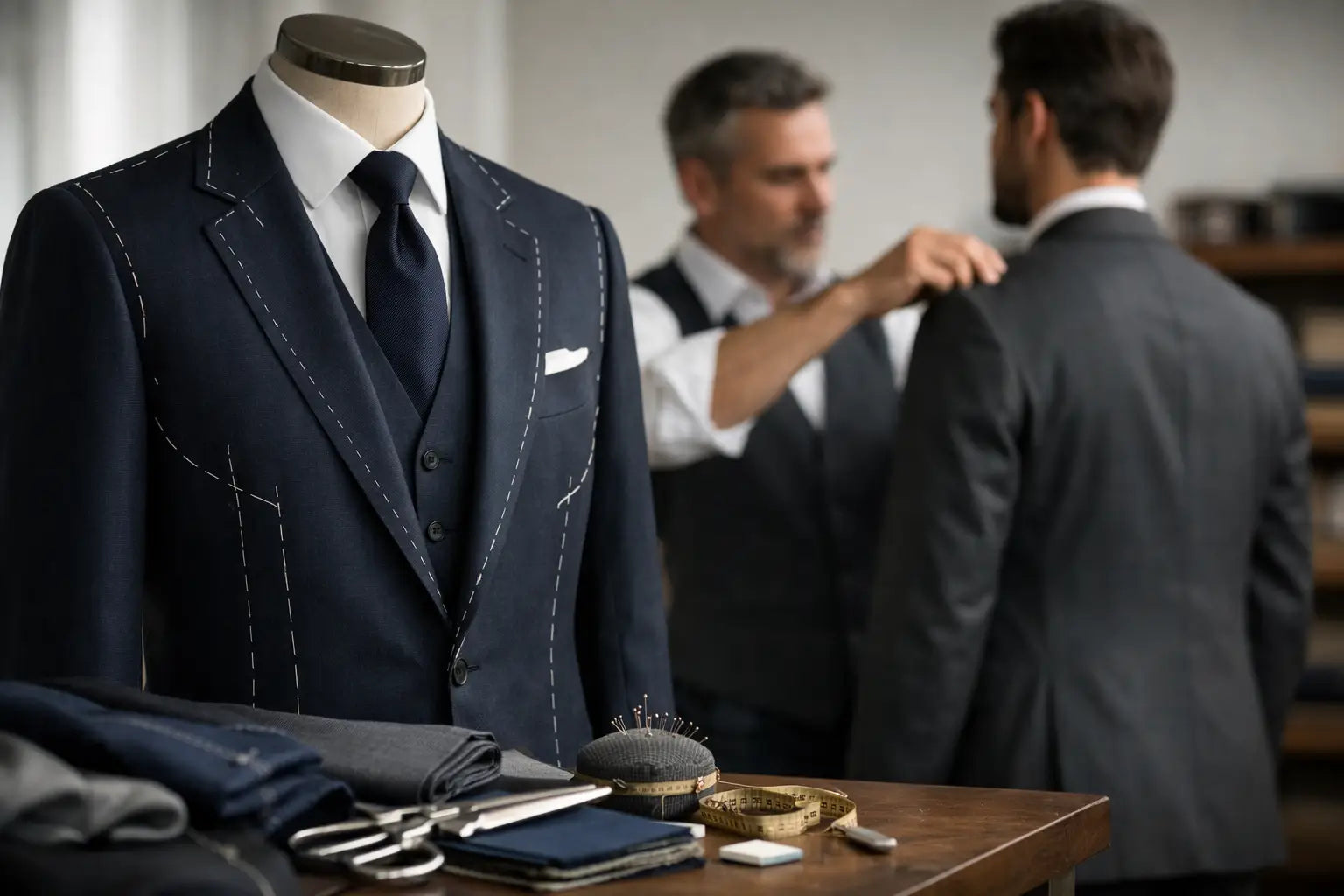
This is where a bespoke approach changes the conversation. Rather than starting with a rack of predetermined options, the process begins with your body, your schedule and the impression you want to create. The garment is then built entirely around the body it belongs to and the life it will serve.
Start with the core uniform
The strongest executive wardrobes are not large. They are disciplined. Most men need a core uniform before they need variety.
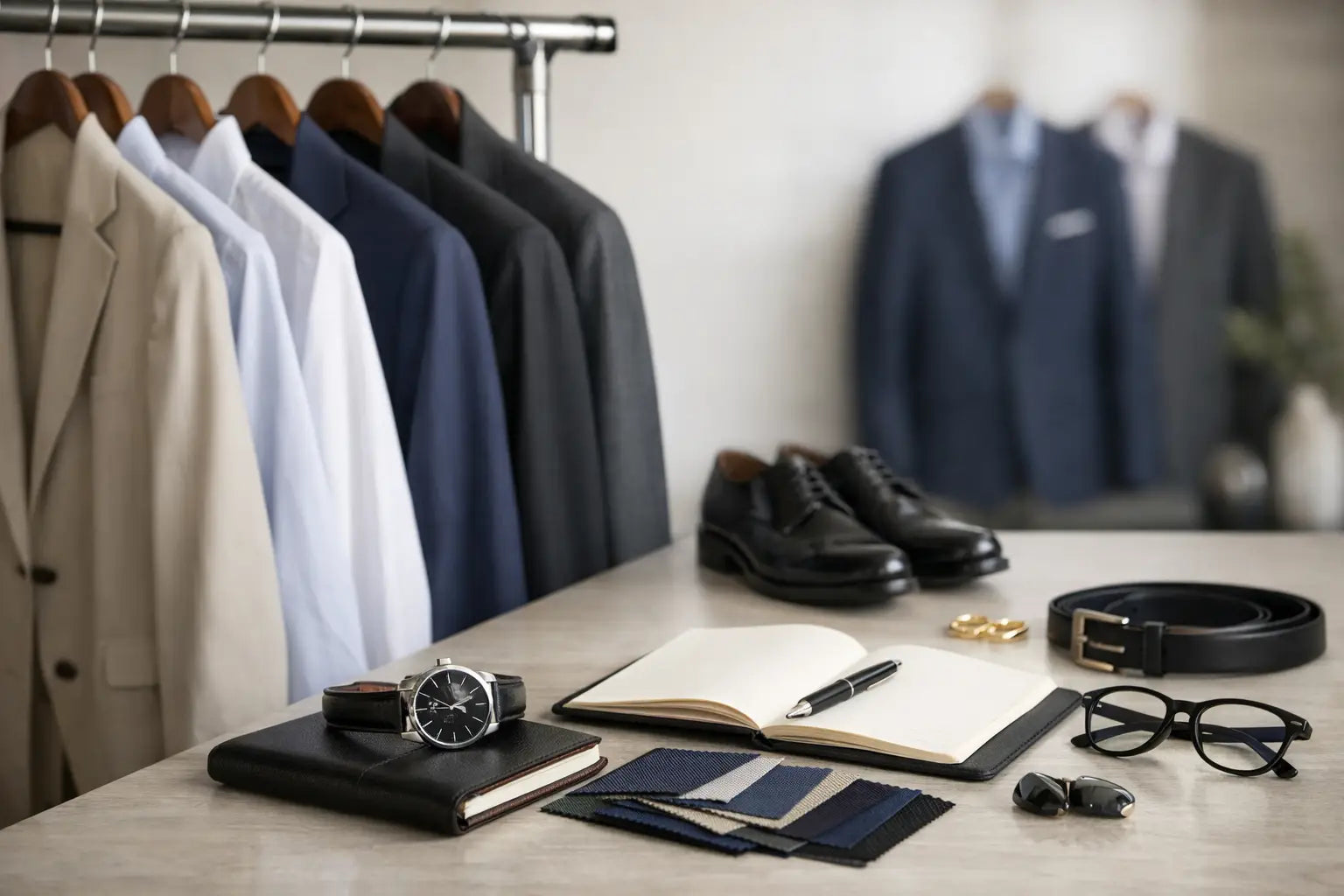
For some, that means a sequence of dark and mid-tone suits in navy, charcoal and deep grey, each cut with subtle distinction. For others, particularly those whose business dress has become slightly less formal, it may mean a combination of tailored jackets, refined trousers and sharply cut shirts that can move between office, lunch and evening appointments.
The key is repeatability. A suit should not be a one-time statement. It should be part of a coherent rotation where each piece has a purpose and complements the rest. Once that structure is in place, personality can be introduced with greater confidence.
That personality should come through in proportion, cloth, texture and detail rather than novelty. Executives do not need wardrobes that chase attention. They need wardrobes that hold attention.
Fit is where authority becomes visible
Luxury in menswear is often misunderstood as fabric alone. Fine cloth matters, of course, but authority is most clearly seen in fit. A poorly balanced suit in an exceptional wool still looks uncertain. A properly cut garment changes posture, presence and ease.
The shoulder must sit cleanly. The chest should have shape without strain. The waist should suggest structure, not tightness. Trousers must fall with intention, neither clinging nor collapsing. Sleeves and jacket length should feel proportionate to the man, not simply correct by formula.
This is why executives who have spent years compromising with ready-made clothing often feel an immediate difference when they move into bespoke tailoring. The garment stops fighting the body. Instead, it follows it. That shift is not merely visual. It alters confidence in a very practical way. You stop adjusting, pulling and second-guessing. You simply wear the suit.
Fabric choice should reflect climate, schedule and temperament
Cloth is where strategy becomes more personal. The right fabric depends not only on season, but on workload, travel frequency and how formal you prefer to appear.
In a city such as Dubai, for example, cloth must perform under heat without losing composure. Lightweight wools, open weaves and breathable constructions become far more valuable than heavy finishes designed for colder business capitals. Yet lighter fabric should not mean a casual result. The finest cloths retain elegance while offering relief and movement.
Temperament matters too. Some men are most convincing in crisp, structured materials that sharpen the silhouette. Others require softer drape and quieter texture to feel natural. The objective is not to impose a costume. It is to create alignment between the garment and the man wearing it.
Colour follows the same principle. Navy remains indispensable because it carries authority without severity. Charcoal communicates seriousness and restraint. Mid-grey offers flexibility. Beyond that, subtle variation - a muted prince of wales, a tonal check, a dark brown suit for less conventional settings - can deepen a wardrobe without disrupting its coherence.
Build in layers of use, not categories alone
Many wardrobes fail because they are sorted by garment type rather than by occasion and frequency. A more intelligent method is to think in layers.
The first layer is high-frequency business wear - the suits, shirts and ties you rely on repeatedly. The second is transitional dressing - pieces that soften formality while preserving precision, such as a beautifully cut jacket with tailored trousers. The third is ceremonial or high-visibility dressing - garments for speaking engagements, gala dinners, weddings or significant client events.
This layered approach prevents overinvestment in pieces that are admired but rarely worn. It also reveals where value truly lies. A man may need fewer statement items than he assumes, but far more attention paid to the garments he wears two or three times each week.
Precision in detail is what separates expensive from distinguished
At executive level, refinement is usually found in restraint. Lapel width, button stance, pocket style, shirt collar shape and trouser break are not minor choices. They determine whether a wardrobe feels coherent and elevated or merely costly.
A narrow lapel on a broad man can make him appear constrained. An overly dramatic peak lapel in a conservative setting can feel self-conscious. A shirt collar that collapses beneath the jacket weakens the line of the whole look. Even the relationship between shoe shape and trouser opening affects the impression of balance.
None of this suggests rigidity. It suggests authorship. The best wardrobes feel calm because the details have been resolved. Nothing distracts. Nothing apologises. Everything serves the man.
Investment should be measured across years, not purchases
One of the strongest reasons to build executive wardrobe strategy is economic, though not in the obvious sense. Bespoke and high-level tailoring require greater initial investment, but they often produce better value over time because they eliminate repetition, correction and regret.
When a wardrobe is planned properly, each new garment has a defined role. You are no longer buying around mistakes or trying to compensate for poor fit with another purchase. Instead, your collection develops with continuity.
This is also where expert guidance matters. A private consultation can identify what is missing, what should be refined and what should never have been bought in the first place. For clients of DONFIORITO, that process is not about selling volume. It is about creating a wardrobe with precision, where each decision strengthens the whole.
A wardrobe should evolve as your position evolves
The wardrobe that served you at 35 may not serve you at 50. Nor should it. As responsibilities expand, public visibility grows and personal confidence settles, style often becomes more distilled.
That does not mean dressing more conservatively in every case. It means dressing with greater self-knowledge. Some men move towards softer tailoring and richer texture. Others sharpen their silhouette and reduce ornament. The point is not age. It is alignment.
A strong wardrobe strategy leaves room for that evolution. It does not trap you inside a formula. It gives you a foundation from which to become more exacting, more individual and more comfortable in your own standards.
The most effective executive wardrobe is not the one that announces wealth. It is the one that makes success look entirely natural. Build it with care, and your clothing will stop being something you manage and start becoming part of how you lead.