A Guide to Suit Silhouettes for Men
A suit can be made from exceptional cloth, finished by skilled hands and still fail in the only place that truly matters - on the body. The reason is usually silhouette. Any worthwhile guide to suit silhouettes begins here: not with trends, but with proportion, posture and the impression a man intends to create when he enters a room.
Silhouette is the overall shape of the suit once it is worn. It is the line from shoulder to hem, the suppression at the waist, the drape through the chest, the width of the trouser, the break over the shoe. More than any isolated detail, silhouette decides whether a suit appears commanding, relaxed, discreet or severe. For a man whose image is part of his professional capital, that distinction is not decorative. It is strategic.
What suit silhouette really means
Many men confuse fit with silhouette. Fit is whether the garment follows the body correctly. Silhouette is the visual architecture created by that fit. Two jackets may both fit well, yet one may project athletic sharpness while the other suggests ease and old-world authority.
This is why off-the-peg suiting so often disappoints discerning clients. It may be altered to sit better at the sleeve or trouser hem, but the original balance of the garment remains generic. A true silhouette is built from the pattern itself, shaped around the wearer’s frame, habits and intention.
The question is not simply, “Does it fit?” It is, “What does this shape say about me?”
A guide to suit silhouettes and the messages they send
The most effective silhouettes are not chosen in isolation. They are chosen in relation to a man’s build, his profession, his environment and the way he wishes to be perceived.
The structured silhouette
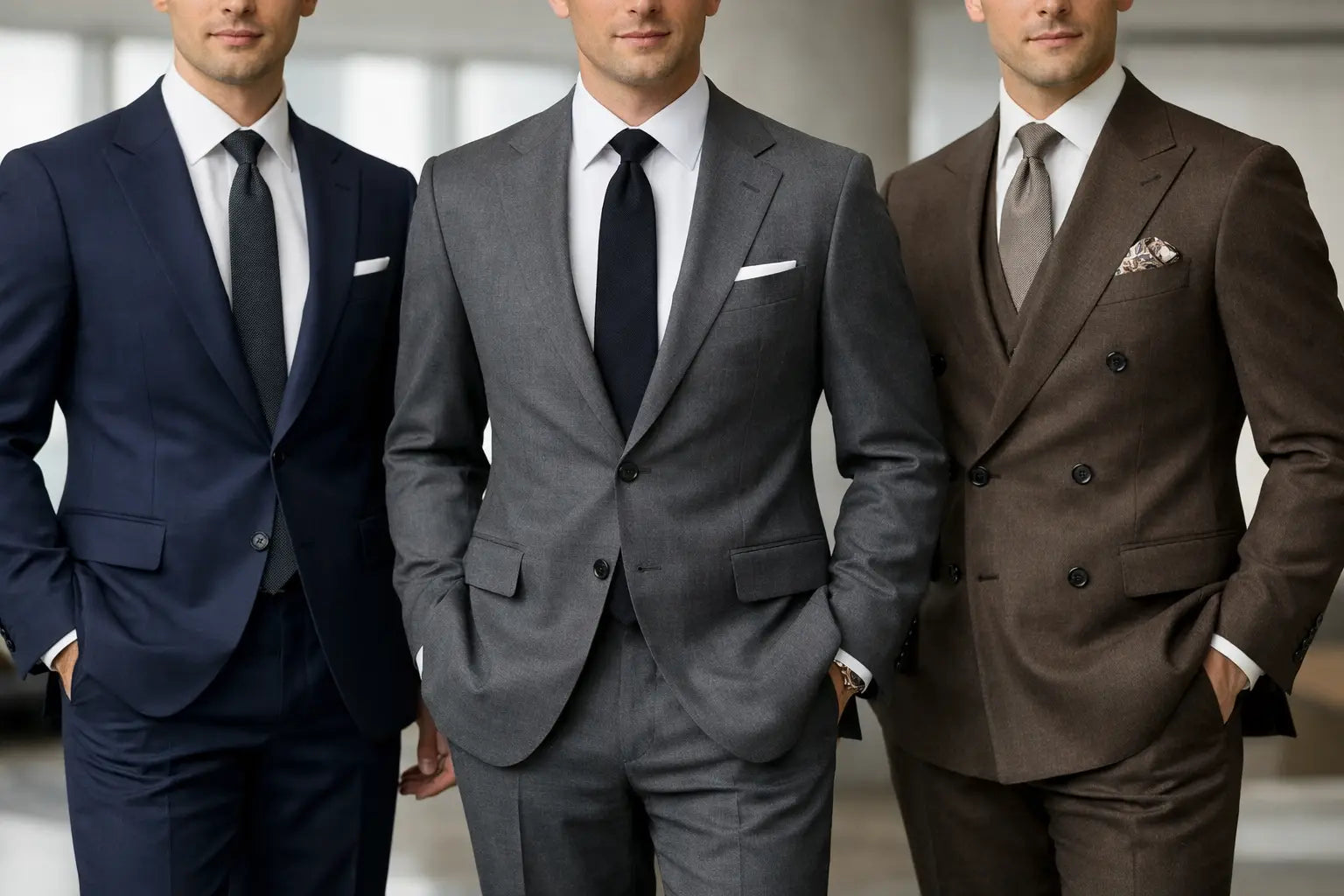
This is the silhouette most associated with authority. The shoulder is clean and defined, the chest is shaped rather than loose, and the waist is gently suppressed to create clarity through the torso. Trousers are balanced and elegant, neither clinging nor pooling.
On the right man, a structured silhouette communicates decisiveness and polish. It works particularly well for executives, founders and professionals who need their clothing to support presence without appearing theatrical. In business settings, especially formal ones, it often gives the most persuasive result because it creates order.
That said, structure must be judged carefully. Too much padding, too much waist suppression or a jacket that is cut too close can make the wearer appear constrained. Authority should never come at the cost of comfort or natural movement.
The soft silhouette
A softer silhouette reduces overt stiffness. The shoulder is more natural, the chest less built up, the line through the body easier and more fluid. This does not mean oversized or casual. It means the suit moves with greater ease and appears less imposed.
For men who prefer understatement, or who spend long days moving between meetings, travel and social engagements, this silhouette can be deeply effective. It suggests confidence without aggression. It also suits men with naturally broader frames, where excessive structure can feel heavy.
The trade-off is visual sharpness. A soft silhouette can look superb in motion and in close conversation, but if it is cut without discipline, it may lose definition from a distance. The difference between elegance and carelessness lies in the precision of the pattern.
The elongated silhouette
Some men benefit from a silhouette that lengthens the line of the body. A slightly longer jacket, a clean button stance and trousers with a fuller, uninterrupted fall can create verticality. This approach is especially useful for men who want to appear taller, leaner or more composed.
But elongation must be handled with restraint. A jacket that is too long can flatten the leg line. Trousers that are too narrow beneath it can make the body appear top-heavy. The eye should travel smoothly, not be pulled abruptly from one proportion to another.
The tapered silhouette
A tapered silhouette narrows from chest to waist and continues with a cleaner line through the trouser. It is popular because it feels modern and energetic. On men with athletic builds, it can look particularly strong, emphasising shape without overt display.
Yet this is also the silhouette most often overdone. When taper becomes tightness, elegance disappears. Fabric begins to pull, pockets flare, movement is restricted and the wearer spends the day adjusting his jacket. The effect is not refined. It is anxious.
A proper taper should suggest discipline, not strain.
How body shape influences the right silhouette
The best tailoring does not force every man into the same ideal. It interprets the body with intelligence.
A taller, slimmer man may need more drape in the chest and a little more weight in the trouser to avoid looking overly narrow. A shorter man often benefits from cleaner quarters, a slightly higher button stance and careful jacket length to keep the leg line strong. Broader men usually look better in suits that create clean verticals and avoid excessive suppression at the waist.
Posture matters as much as size. A man with forward shoulders, a prominent seat or an erect stance requires a different balance through the coat. These are not minor technicalities. They change how the entire silhouette reads.
This is where bespoke tailoring proves its worth. The garment is not adjusted after the fact to disguise proportion problems. It is conceived around them from the beginning, often turning what a client assumes is a limitation into one of his strongest visual assets.
The role of cloth in the final shape
Silhouette is not created by cut alone. Cloth has its own behaviour. A crisp worsted wool holds a line differently from a softer flannel. A heavier cloth can lend authority and drape, while a lighter cloth may feel cooler but reveal more of the body beneath.
In a climate such as Dubai, this question becomes more exacting. Men understandably want breathability, but ultra-light fabrics can collapse if the cut is not perfectly judged. The answer is rarely to choose the lightest cloth available. It is to select a fabric with enough character to support the desired shape while remaining comfortable in the wearer’s real environment.
A powerful silhouette always depends on harmony between pattern, cloth and purpose.
Common mistakes when choosing a suit silhouette
The most common error is dressing for fashion imagery rather than real life. A silhouette that looks striking in a campaign may be unconvincing across a boardroom table. Another mistake is assuming slimmer automatically means better dressed. Precision and narrowness are not the same thing.
Many men also choose a silhouette based on what they wore ten years ago, rather than what suits their current body and role. Success changes how a man carries himself. Age, training, travel and responsibility all affect posture and presence. A suit should evolve with that reality.
Then there is the issue of inconsistency. A sharply waisted jacket paired with trousers cut too full, or a soft Neapolitan-style coat worn with aggressively cropped trousers, creates visual conflict. A strong silhouette requires coherence from shoulder to hem.
Why bespoke changes the conversation
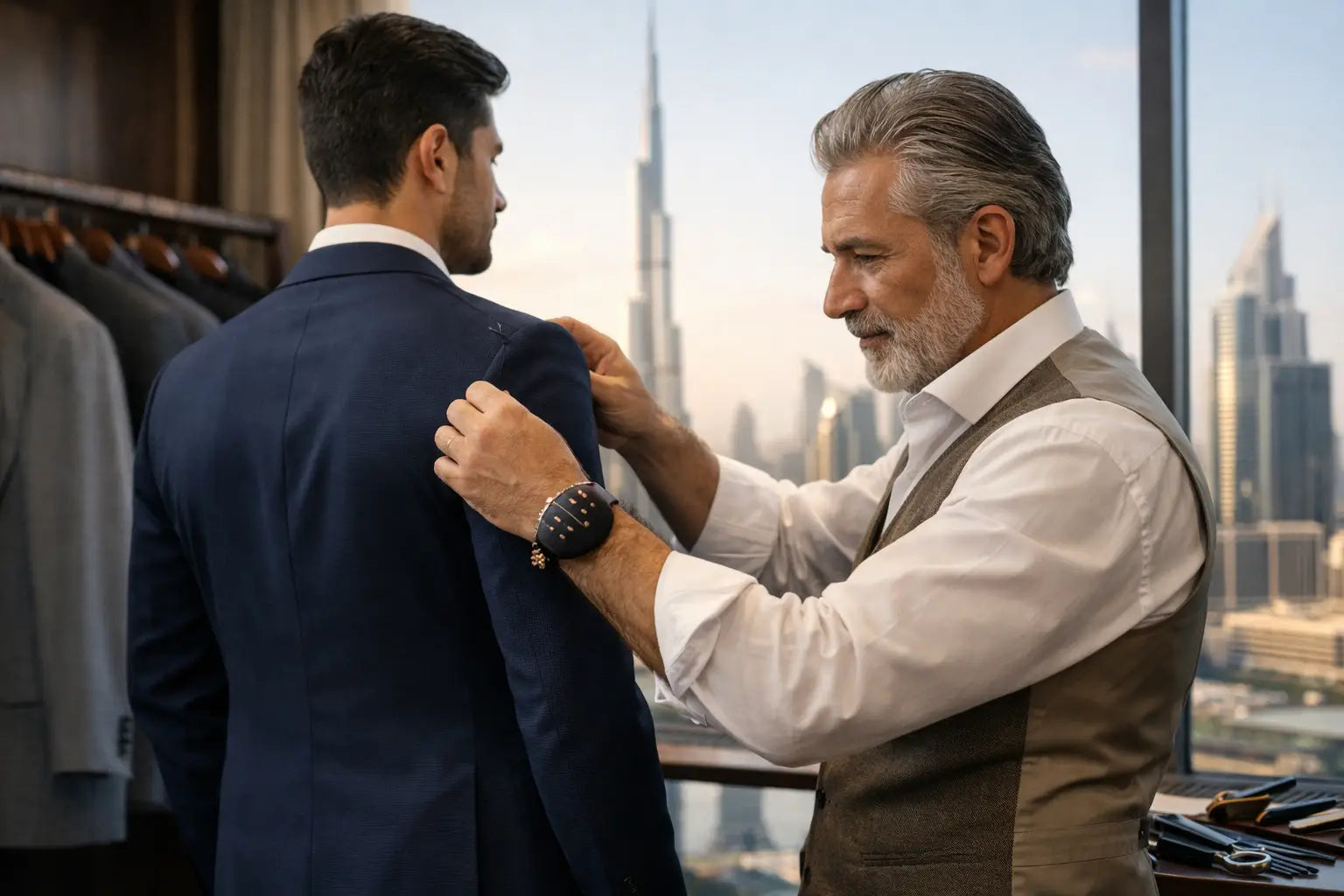
The reason discerning clients gravitate towards bespoke is not simply luxury for its own sake. It is control. A bespoke process allows silhouette to be discussed with clarity before a single cut is made. During consultation, the tailor considers how the client wants to be seen, where the suit will be worn, how he stands, how he moves and what details support that intention.
Fittings then refine the shape in three dimensions. The client can feel whether the coat carries enough authority, whether the waist is too clean, whether the trouser line needs more generosity. What emerges is not a standard style applied to a new body, but a personal silhouette built entirely around the body it belongs to.
For a client who values image, that distinction is profound. The suit ceases to be a garment he tries to inhabit. It becomes an extension of his own presence.
Finding the silhouette that feels like you
The right silhouette is rarely the most extreme one. It is the one that makes a man look settled in himself. Stronger. Clearer. More intentional.
That may mean a cleaner, more structured line for one client and a softer, more fluid approach for another. It may mean correcting proportions that have always felt slightly off in ready-made tailoring. It may simply mean giving proper shape to a man who has spent years wearing suits that were technically acceptable but visually forgettable.
Taste matters, but judgement matters more. A good tailor does not sell a silhouette. He recognises one.
If you are refining your wardrobe, start by asking not which suit is fashionable, but which shape supports the man you are now - and the man others should see the moment you arrive.