Linen or Wool Business Suit?
A boardroom at noon and an outdoor reception at six ask very different things of a suit. That is why the question of a linen or wool business suit is not a matter of trend, but of judgement. The right cloth affects how you carry heat, how cleanly your jacket holds its line, and how confidently you are perceived from the first handshake.
For a man whose wardrobe is part of his professional language, fabric is never incidental. It shapes posture, presence and comfort in equal measure. Linen and wool can both serve business dressing well, but they do so in distinct ways, and the stronger choice depends on where you work, how you move through the day, and what kind of impression you intend to leave.
Linen or wool business suit: what changes in practice
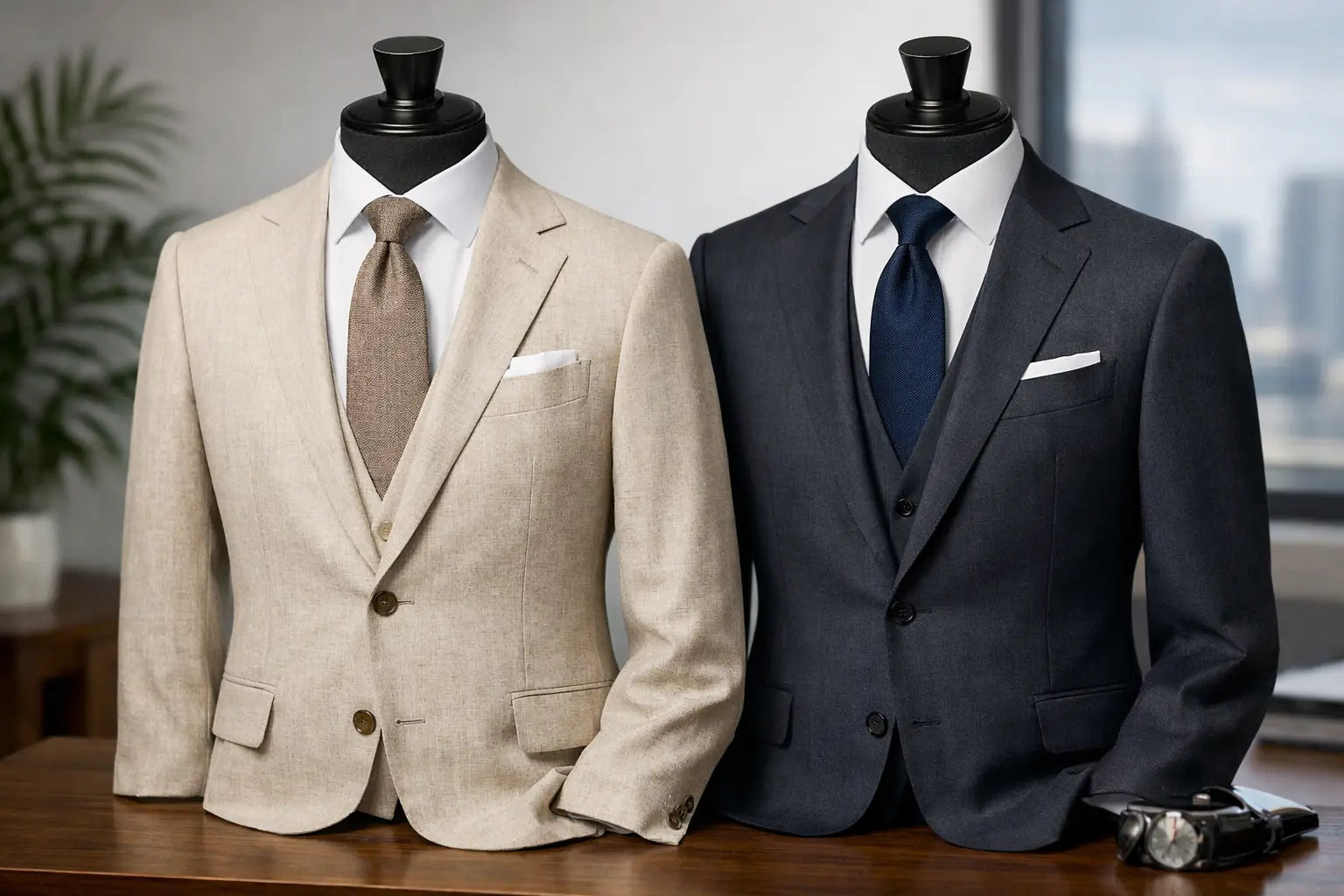
The simplest distinction is this: wool is structured, resilient and more formally persuasive, while linen is airy, textured and naturally relaxed. Both are noble cloths. Neither is automatically superior. The difference lies in behaviour.
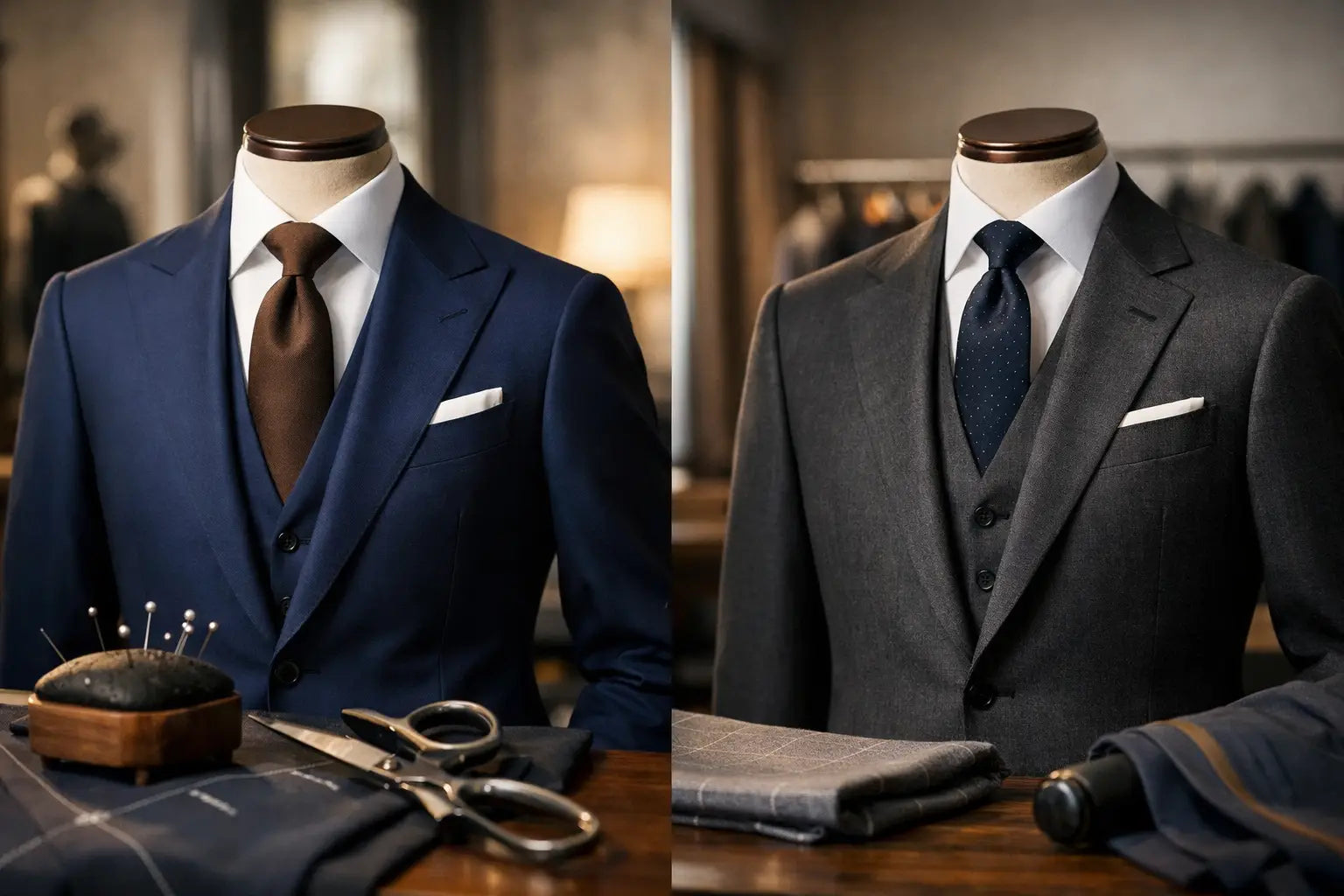
A wool business suit tends to recover well after wear. It resists creasing better, drapes more cleanly through the chest and trouser line, and maintains a composed appearance over a full day of meetings, travel and sitting. This is one reason wool remains the standard for serious business wardrobes. It has authority without effort.
Linen behaves differently. It breathes beautifully and feels distinctly light in warm conditions, but it creases quickly and visibly. That crumpling is part of linen’s charm, though charm is not always the same as polish. In a more relaxed business environment, or for appointments where elegance matters more than strict formality, linen can look intelligent and assured. In a highly conservative setting, it may read as too casual by mid-afternoon.
The choice, then, is less about season alone and more about visual discipline. If your role demands a jacket that remains sharp from morning to evening, wool is usually the safer cloth. If your day takes place in sustained heat, and a little lived-in texture suits the occasion, linen has a rightful place.
When wool is the stronger business choice
Wool earns its reputation because it solves several problems at once. It offers shape, comfort and range. A well-chosen wool cloth can feel cool enough for warmer months, substantial enough for air-conditioned interiors, and refined enough for formal business settings.
For executives, entrepreneurs and frequent travellers, wool often gives the greatest return. It keeps its line better during long periods of wear, and it supports a cleaner silhouette through the shoulders, waist and trouser break. This matters more than many men realise. A business suit is not judged only when you are standing still. It is judged after a car journey, through back-to-back meetings, and when you rise from a chair after several hours.
There is also more variation within wool than many expect. A tropical wool or high-twist wool can perform remarkably well in warm weather. These cloths are woven to allow airflow while preserving the composure associated with business dress. For much of the year, especially in cities where one moves between outdoor heat and heavily cooled interiors, that balance makes wool exceptionally practical.
The visual language of wool is also more adaptable. It can be cut with quiet authority for finance, with softer expression for creative leadership, or with lighter construction for international business in warmer climates. The cloth accepts refinement very well, which is why it remains the foundation of a serious bespoke wardrobe.
Where linen proves its worth
Linen has its own legitimacy, and dismissing it as merely casual misses the point. In the right setting, linen conveys confidence because it does not try too hard. It has character, texture and an ease that can be very persuasive when worn with intent.
A linen suit comes into its own in sustained heat, daytime events, business lunches, resort-adjacent appointments and environments where personal style is allowed a little more air. It can be particularly effective for men who want to appear cultivated rather than rigid. The cloth catches light differently from wool and carries colour with a softer, drier elegance.
That said, linen requires acceptance of its nature. It will crease across the lap, at the elbow and through the trouser thigh. Those creases arrive quickly. On the right man, in the right context, they suggest movement and ease. In the wrong context, they suggest loss of control.
This is why pure linen is rarely the first recommendation for a primary business suit. It excels as part of a wider wardrobe, especially for warm-weather rotations, but it asks more from the wearer. You need the confidence to let the cloth behave as it should, and the discernment to know when that expression serves your image.
The case for wool-linen blends
For many men, the most intelligent answer sits between the two. A wool-linen blend offers some of linen’s dryness and texture with more of wool’s recovery and structure. The result can be highly effective for business in warm climates, especially when a full linen suit would feel too casual and a denser wool too conventional.
This is where bespoke guidance becomes valuable. Blend, weave and weight all affect performance. Two suits may appear similar on a hanger and behave very differently once cut to the body and worn through a demanding day.
How climate, schedule and industry should guide the choice
A cloth should be chosen for the life it is expected to lead. Climate is the obvious factor, but not the only one. If most of your day is spent indoors, in controlled temperatures, the argument for wool becomes stronger. If your schedule involves outdoor arrivals, social business settings or frequent exposure to heat, linen or a linen blend gains appeal.
Industry also matters. In law, finance, private equity and senior corporate leadership, wool communicates steadiness and precision. In design, hospitality, property, media and founder-led businesses, linen can work beautifully, provided the cut remains disciplined and the rest of the outfit is considered.
Then there is frequency. If you are commissioning a first or only business suit, wool is the wiser investment. It is more versatile, more forgiving, and more dependable across seasons and occasions. If you already own a strong wool foundation, linen becomes a useful and sophisticated addition.
Bespoke tailoring changes the equation
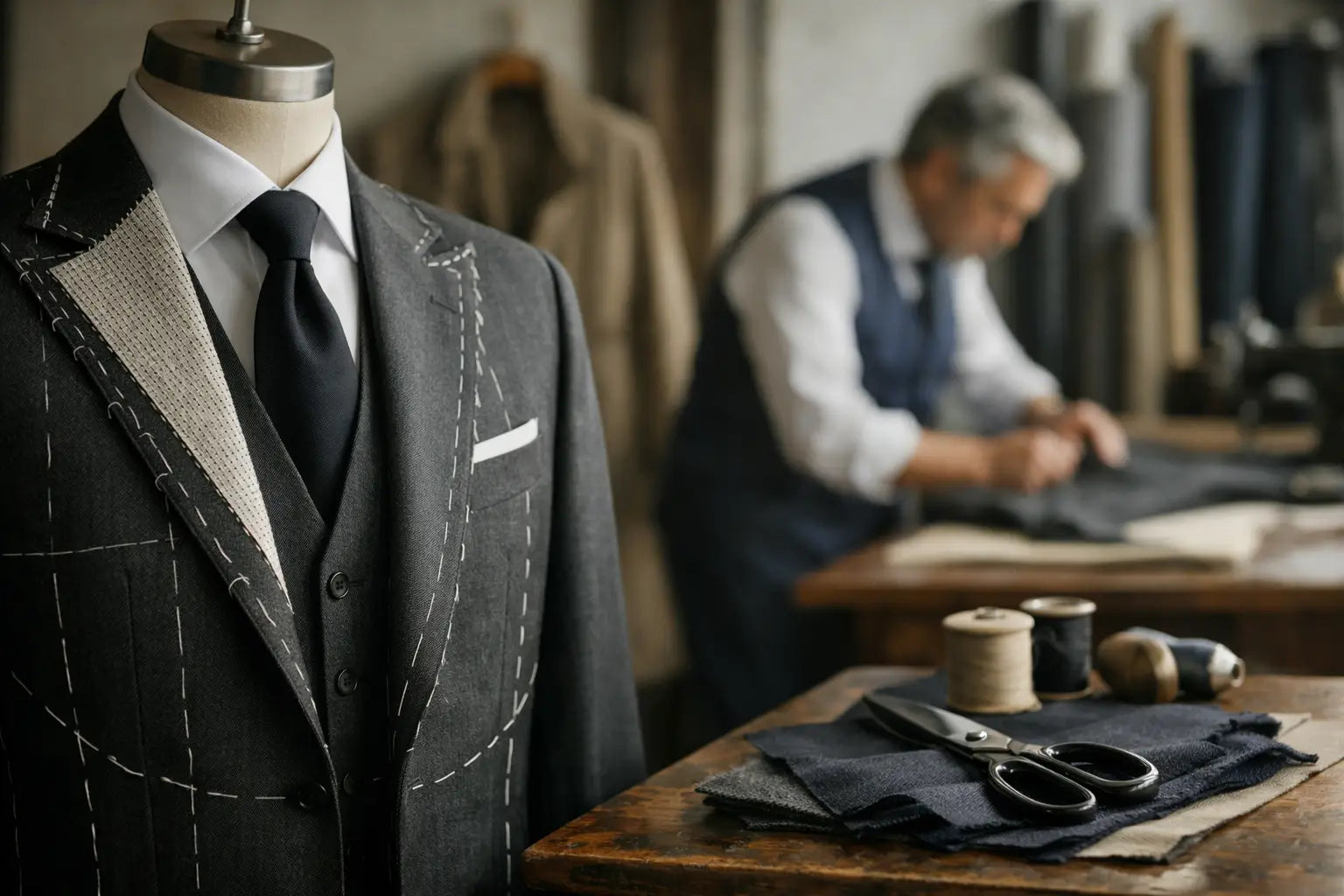
The discussion is not only about fabric. It is about cut. A mediocre linen suit can look careless within hours. A well-made one, built entirely around the body it belongs to, can retain elegance even as it softens through wear. The same is true of wool. Fine cloth alone does not create presence. Balance, proportion and construction do.
A bespoke tailor considers how much structure the jacket needs, how close the coat should sit through the waist, how the trousers should fall, and how the cloth will respond to your posture and daily rhythm. This becomes especially important when choosing lighter fabrics, where every decision is more visible.
In a place such as Dubai, where professional life often moves between heat, hospitality and high-level business settings, these choices become even more precise. The cloth must respect the climate, but it must also preserve authority. That is why many discerning clients favour lightweight wools or carefully judged blends rather than making the decision on fibre alone.
At DONFIORITO, that judgement begins with the man rather than the fabric book. How you wish to be seen, how you work, and how your suit must perform will always lead to a better decision than any generic rule about summer and winter.
Which should you choose?
If your priority is polish, versatility and a suit that holds its shape through demanding business days, choose wool. If your priority is breathability, texture and a more relaxed expression of elegance in warm conditions, choose linen. If you want something between those poles, consider a blend.
The better question is not whether linen or wool is best in the abstract. It is which cloth allows you to look composed, feel comfortable and remain entirely yourself. A business suit should never feel like costume. It should feel inevitable, as though it could only have been made for you.
Choose the fabric that supports that feeling, and the rest of your presence tends to follow.