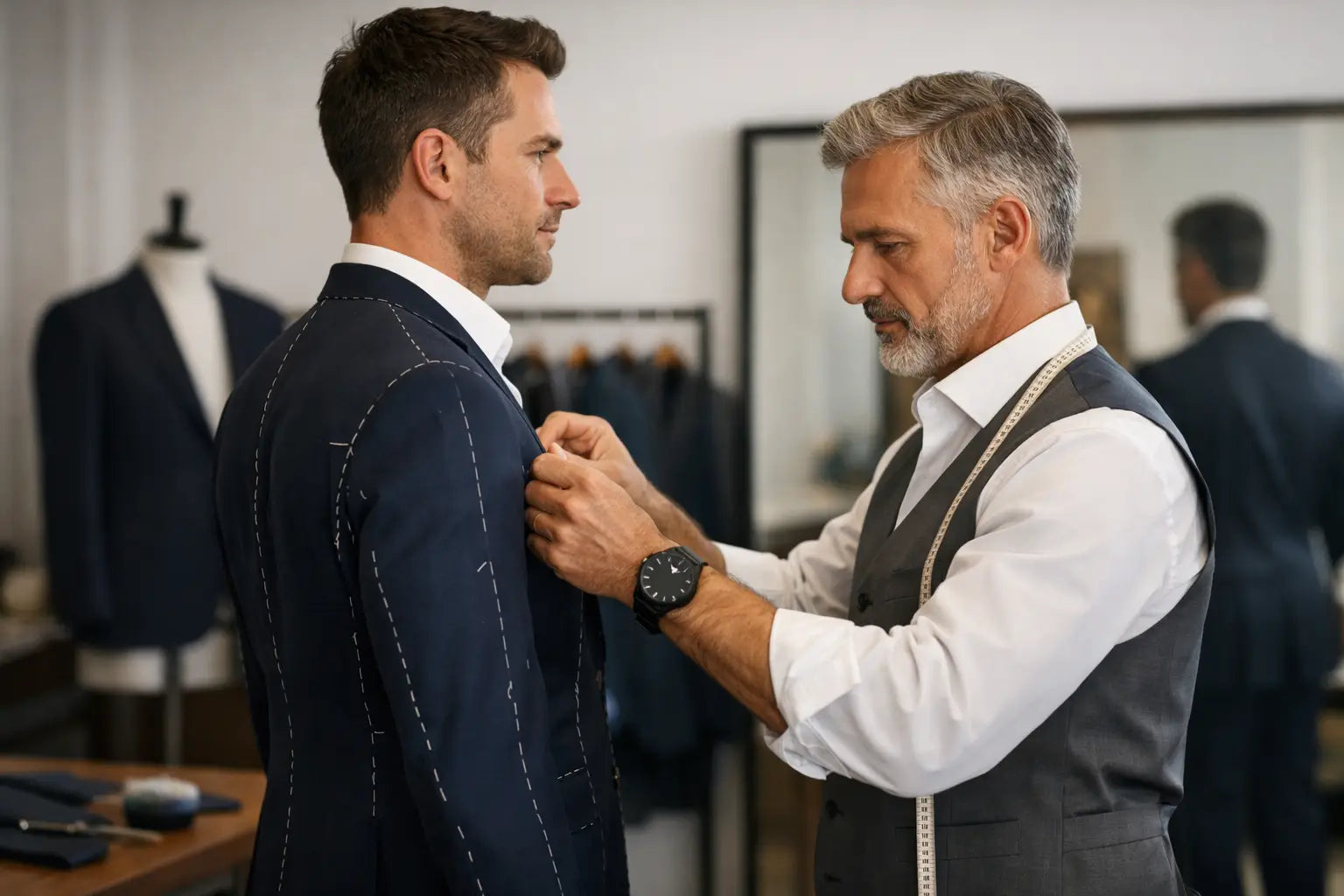
Executive Image Transformation Example
A senior executive can speak with clarity, lead with conviction, and still lose authority the moment his clothing suggests compromise. That is why an executive image transformation example is rarely about fashion in the superficial sense. It is about alignment - between reputation, ambition, body language, and the way a man is seen before he says a word.
For men operating at board level, in investor meetings, or across private client environments, image is not decoration. It is part of professional performance. The right suit does not create competence, but it does frame it correctly. The wrong one can dilute years of achievement in an instant.
What an executive image transformation example really shows
A credible executive image transformation example begins with a familiar problem. The client is accomplished, visible, and discerning, yet his wardrobe has been assembled in fragments. A few off-the-peg suits altered hastily. Shirts that fit acceptably at the collar but pull across the chest. Jackets that appear respectable when standing still, then collapse at the shoulder when seated. Trousers that are either too narrow for ease or too generous for line.
None of these issues are dramatic on their own. Together, they create visual noise. Instead of presence, there is distraction. Instead of precision, there is approximation.
This is where true transformation begins. Not with trend-led styling, but with an honest assessment of what the current wardrobe communicates. For a high-performing man, that message must be coherent. His clothing should suggest judgement, standards, and ease under pressure.
The client before the transformation
Consider a typical case. A forty-eight-year-old founder spends his week between private meetings, formal presentations, and evening engagements. His role has evolved faster than his wardrobe. Ten years ago, his clothing only needed to look professional. Now it must carry greater weight. He is no longer one of many in the room. He is often the person others are reading most closely.
His existing suits are expensive enough, yet they do not serve him well. The shoulders sit too wide, softening his frame. The jacket length shortens his appearance. The sleeve pitch is slightly off, causing creasing through the arm. Dark navy is his default, but the tone is flat against his complexion, and the cloth lacks depth under evening light.
He does not need more clothing. He needs garments built entirely around the body they belong to, and around the life he actually leads.
The first shift: from shopping to commissioning
The most significant change in an executive image transformation example is often psychological. The client stops buying clothes and starts commissioning them.
That distinction matters. Shopping tends to force the man to adapt to what exists. Bespoke reverses the relationship. The garment is shaped around his posture, proportions, preferences, and intent. This creates a different level of confidence because the result is not merely flattering. It feels correct.
At consultation stage, the discussion should move beyond measurements. The right tailor asks how the client wants to be perceived. More authoritative? More refined? More approachable without losing gravitas? These are not abstract questions. They inform cloth weight, lapel balance, jacket structure, trouser line, shirt collar proportion, and even the way the suit performs across a long day.
For an executive in Dubai, for instance, elegance must often coexist with climate, mobility, and a demanding social calendar. That changes fabric choices and construction decisions. A transformation that ignores lifestyle is not a transformation at all.
How the wardrobe is rebuilt
Silhouette comes first
The silhouette determines whether a man appears composed or compromised. In this example, the jacket is recut with cleaner shoulders, a more precise chest, and a suppressed waist that adds shape without strain. The coat length is corrected to restore proportion. The sleeve is redrawn so it falls naturally from the shoulder line, reducing drag and excess crease.
The effect is subtle to the untrained eye, but powerful in person. He looks taller, more settled, and noticeably more intentional.
Cloth changes the message
Many executives rely too heavily on plain business navy and charcoal without considering texture, depth, or light. Bespoke allows greater intelligence here. A deep navy with a refined sheen can convey evening authority. A mid-grey with dry handle and elegant drape may work harder across daylight meetings. A muted Prince of Wales check, if handled with restraint, can project confidence without aggression.
Luxury is often quiet. The best cloths do not shout. They hold their line, move beautifully, and reveal quality through surface and fall.
Shirt and tie proportions are corrected
Transformation rarely succeeds if the suit improves but everything around it remains average. Collar shape must complement the face and work harmoniously with the lapel. Tie width should respect the jacket, not fight it. Cuffs should show with consistency. These are small calibrations, yet they signal discipline.
When these proportions are right, the entire image becomes calmer. Authority appears effortless, which is precisely how it should appear.
Why bespoke makes the difference
Fit is visible, even when people cannot explain it
Most people will never articulate that a sleeve pitch has been corrected or that the shoulder expression is cleaner. They will simply register that the man looks more assured. This is one of the quiet advantages of bespoke. It communicates without announcing itself.
Comfort changes behaviour
There is also the behavioural shift. A poorly cut suit asks for constant management. The wearer adjusts the cuff, pulls the jacket front, shifts the trouser waistband, and becomes subtly self-conscious. A properly made bespoke garment allows him to forget the clothing and focus on the room.
That freedom has commercial value. Better posture, fewer interruptions, and greater physical ease all influence presence.
Consistency becomes possible
One excellent suit is not a full transformation. The real advantage emerges when a personal pattern exists and a wardrobe can be built with consistency. Morning meetings, formal dinners, travel schedules, and public appearances all demand variation, but the underlying image should remain coherent.
This is where a tailor becomes more than a maker of garments. He becomes a custodian of the client’s visual standard.
The result of an executive image transformation example
After the transformation, the executive does not look disguised. He looks more fully himself. That is the mark of success.
In practical terms, colleagues comment that he appears sharper without seeming overdressed. Photographs improve. He moves through formal settings with less effort. He feels appropriately prepared whether addressing a boardroom, hosting investors, or attending a private event. The wardrobe now supports his role rather than lagging behind it.
Just as important, decisions become easier. He no longer wastes time second-guessing which suit might work well enough. He has clothing designed for purpose, season, and context. Precision creates simplicity.
What men often misunderstand about image transformation
A common mistake is assuming image transformation means dramatic reinvention. For serious professionals, that is usually the wrong approach. Sudden change can appear studied or insecure. The stronger route is refinement.
Another misunderstanding is to treat tailoring as a luxury after everything else is in place. In reality, for a man whose visibility affects trust and influence, presentation is part of the infrastructure of success. Not the whole structure, certainly, but an important part of it.
It also depends on stage of career. A younger executive may need polish and authority. A seasoned founder may need greater softness and approachability. A man moving into public-facing leadership may need a wardrobe with more range and distinction. The answer is not one style applied to everyone. It is precision applied to the individual.
When transformation is worth pursuing
If a man feels competent but visually underrepresented, the moment has likely arrived. If he has outgrown ready-made clothing, if fit problems keep recurring, or if his wardrobe no longer reflects the level at which he now operates, bespoke becomes less indulgence and more correction.
At that point, the value lies not only in superior cloth or handwork, though both matter. It lies in being seen properly. For clients who expect exacting standards, that shift can be considerable.
A house such as DONFIORITO understands that the finest garments do more than fit the frame. They shape the impression left behind.
The most persuasive image transformation is never theatrical. It is measured, deliberate, and unmistakable to those paying attention. When a suit is cut with judgement and worn with ease, it does not ask for attention. It earns respect.