Suits for Hot Climates, Cut for Composure
A meeting at 2pm in Dubai can test more than your diary. The wrong suit creases before the first handshake, traps warmth at the shoulders and loses its line by evening. The finest suits for hot climates are not simply made from lighter fabric. They are considered as a whole: cloth, construction, proportion and fit working together to preserve composure when the temperature rises.
For the man whose presence carries weight, looking comfortable is not enough. A suit should retain clarity through a full working day, from the car to the boardroom, from a private lunch to an evening engagement. That is where bespoke tailoring earns its place.
Why most summer suits fall short
Many ready-to-wear summer suits solve one problem while creating another. A very thin cloth may feel pleasant initially but become transparent, crease excessively or lose its shape. An unstructured jacket may reduce weight, yet appear too casual for a formal negotiation. A generously cut garment can encourage airflow, but without careful balance it sacrifices the clean silhouette that gives tailoring its authority.
Heat also exposes poor fit. A tight armhole restricts movement and holds warmth under the arm. Excess fabric across the chest or lower back gathers and crumples. Trouser cloth that is too heavy clings to the leg; too light, and it can look insubstantial. The answer is not to wear less suit. It is to commission a suit in which every decision has a purpose.
Suits for hot climates begin with the cloth
Fabric is the first decision, but not the only one. For business and formal wear, high-twist wool remains one of the most intelligent choices. Its fibres are spun firmly, creating a dry handle, natural resilience and a surface that resists creasing better than many softer cloths. Quality wool also breathes and regulates temperature more effectively than its reputation suggests.
A lightweight high-twist wool in an open weave is often ideal for regular professional wear. It has enough body to hold a sharp line, while allowing air to move through the cloth. It is particularly suited to clients who move between intense outdoor heat and highly air-conditioned interiors, where a linen jacket alone can feel too relaxed or too cool.
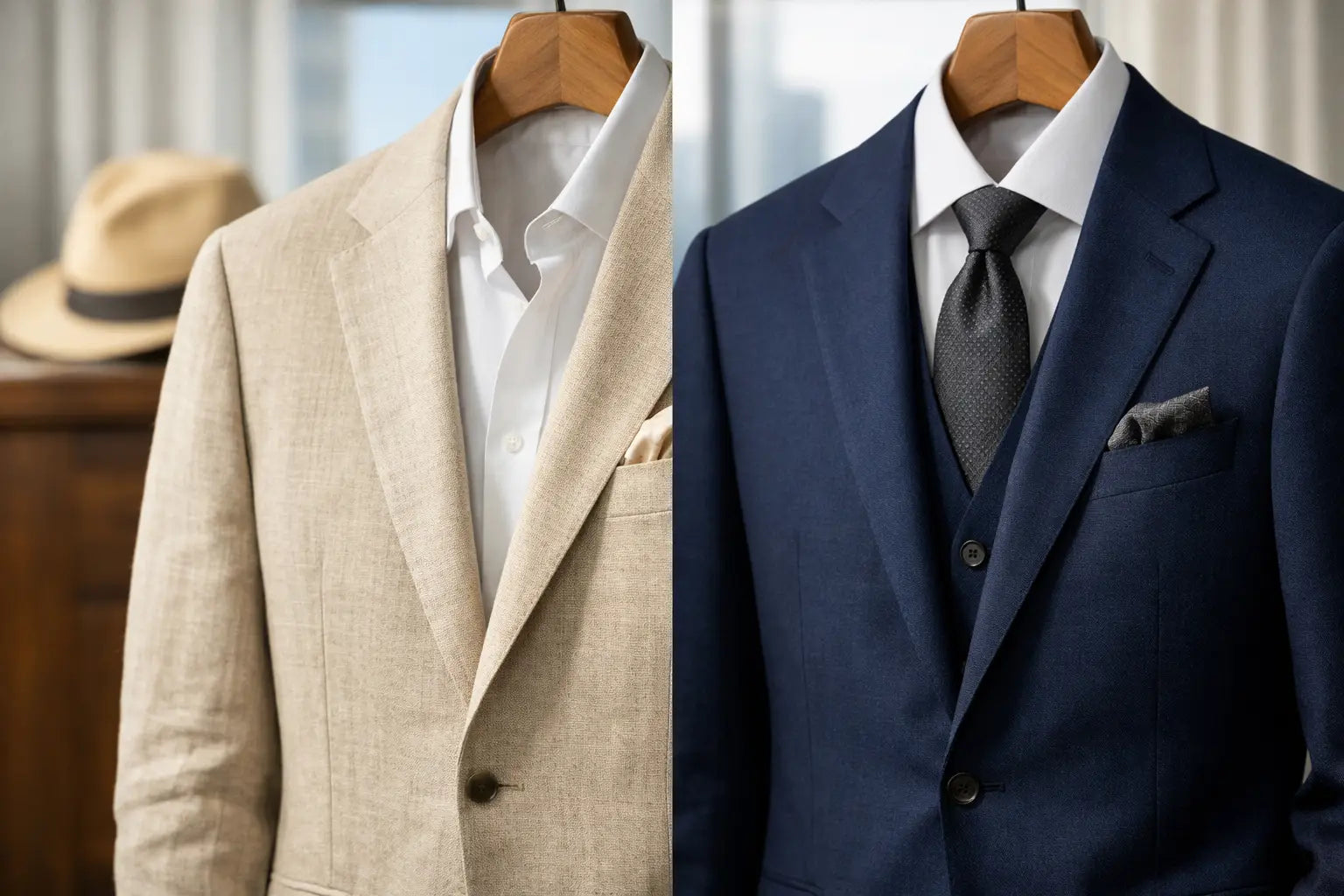
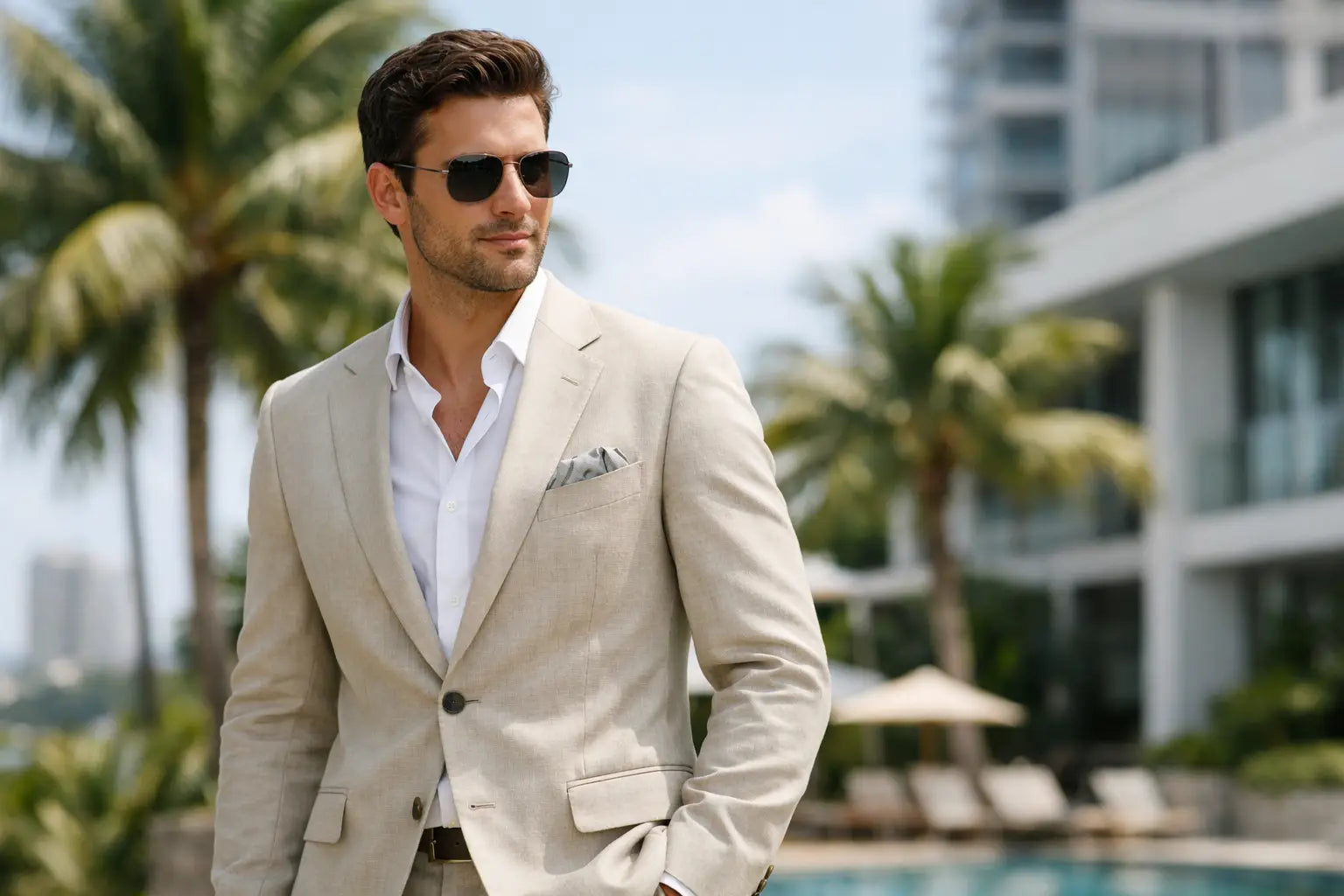
Linen has undeniable character. It is airy, tactile and exceptionally appropriate for daytime occasions, summer weddings and refined resort settings. Its creasing is part of its appeal, but it is a choice to make knowingly. Pure linen speaks in a more relaxed register, even when the suit is beautifully cut.
For a more composed expression, a wool-linen-silk blend can be an excellent compromise. Wool provides recovery, linen gives lightness and texture, and silk adds a subtle lustre. The balance depends on the occasion. A man who requires a suit for investor meetings will usually need more structure and crease resistance than one dressing for an outdoor celebration.
Cotton can also work well, particularly in a tailored chino suit or a soft summer jacket. It is comfortable and familiar, though it tends to crease and may retain moisture more readily than high-twist wool. The cloth should be selected for the life it will lead, not merely for how it feels over a fabric book in a quiet room.
Colour is a practical decision, not a seasonal cliché
Pale colours reflect more light, but the palest suit is not always the most practical or commanding choice. Stone, tobacco, soft grey and muted blue can feel lighter than navy or black while retaining enough depth for professional settings. A mid-blue high-twist wool is often among the most versatile choices for a warm-climate wardrobe.
Black deserves restraint in extreme heat. It remains correct for certain evening and ceremonial occasions, but can feel visually and physically severe under direct sun. Dark navy offers a more adaptable alternative, particularly when the cloth has an airy weave and restrained texture.
Construction determines how a jacket wears
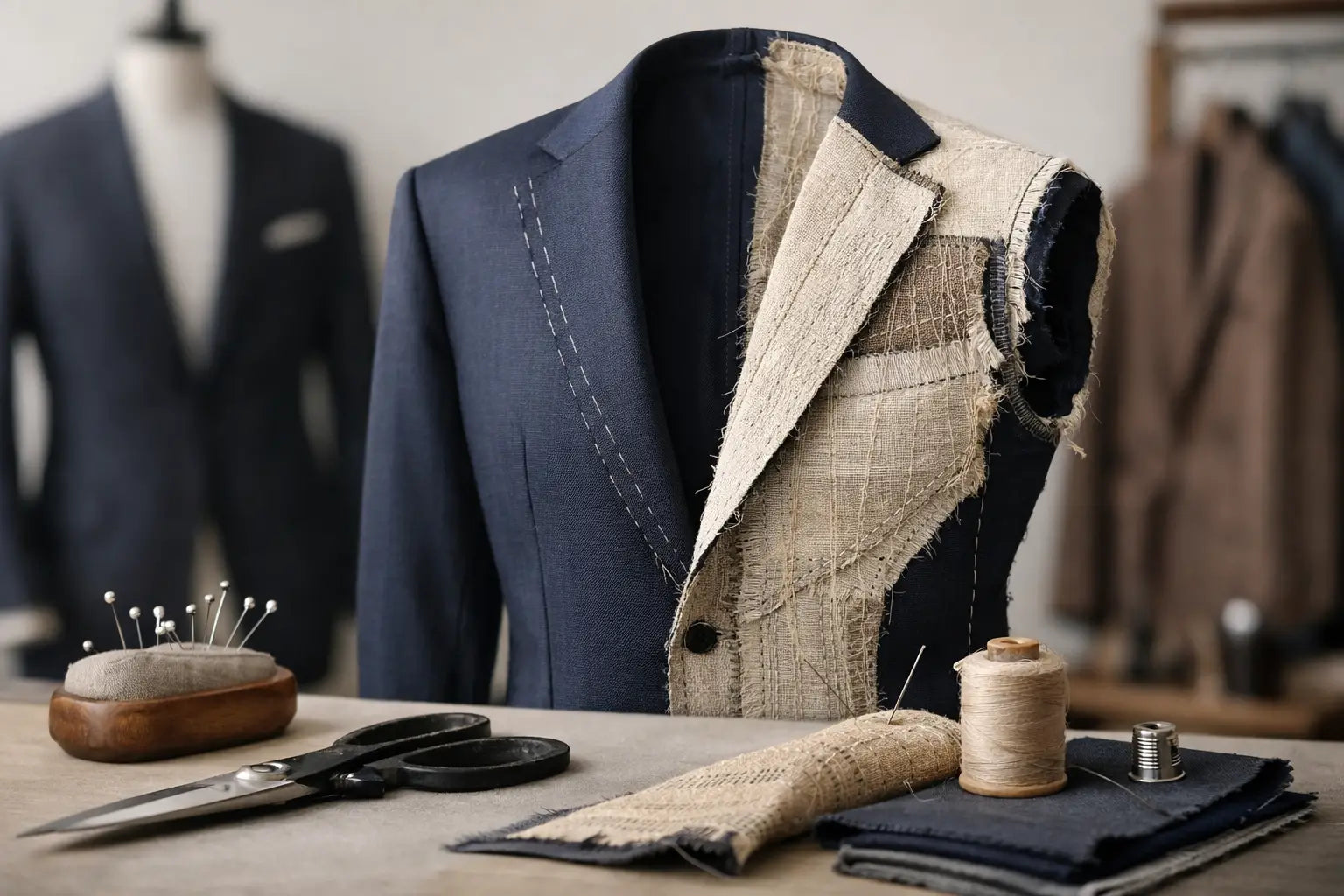
The internal construction of a jacket has as much influence on comfort as the cloth itself. Traditional full canvas construction offers beautiful shape and longevity, but the layer through the chest must be assessed carefully for the climate and the wearer. A lighter canvas or half-canvas jacket can provide definition without unnecessary density.
A soft shoulder, reduced padding and an unlined or partially lined interior can noticeably reduce weight. Yet minimal construction should never mean formless construction. The chest still requires enough support to sit cleanly, the lapel needs a precise roll, and the shoulder must frame the body with confidence.
At DONFIORITO, these choices are guided by the individual rather than a seasonal formula. A client with a naturally broad frame may benefit from a lighter, cleaner shoulder to avoid visual bulk. A leaner man may need more considered shaping through the chest and waist so that the jacket maintains presence without feeling restrictive.
Lining deserves particular attention. A full synthetic lining can undermine even the finest breathable cloth by limiting ventilation. Bemberg or cupro linings offer a smoother, more breathable alternative, while partial lining exposes more of the jacket’s interior and reduces weight. The appropriate choice depends on the jacket’s intended use, its fabric and the client’s preference for structure.
Fit creates airflow without losing authority
There is a misconception that a hot-weather suit should be cut loose. Excess volume does permit some air movement, but it also produces a less controlled appearance and more fabric to trap against the body. Bespoke fit is more precise than either tight or oversized.
The jacket should allow natural movement through the shoulders and upper back, with a clean chest and a waist shaped to the wearer rather than squeezed around him. The armhole should be high enough to preserve mobility, yet not so close that it causes discomfort in the heat. A well-cut sleeve allows the wearer to reach, greet and present without pulling the entire jacket out of position.
Trousers matter equally. A slightly higher rise can improve comfort and make the line of the jacket more elegant, particularly when seated. A tailored leg with sufficient ease through the thigh prevents the cloth from binding, while a clean taper maintains refinement. For many men, a modest turn-up gives the trouser welcome weight and balance. In very lightweight cloth, however, a plain hem may keep the line cleaner.
Details that make the difference
Small details are felt long before they are consciously noticed. A breathable open-weave shirt in fine cotton or linen supports the suit rather than competing with it. A collar cut to sit correctly against the neck avoids the discomfort and disorder of constant adjustment. Lightweight socks in fine cotton or wool keep the relationship between trouser and shoe polished without adding unnecessary warmth.
The choice of shoe should reflect the formality of the occasion. Dark brown leather loafers can be assured and appropriate with blue, grey or tobacco tailoring. A refined lace-up remains the stronger choice for conservative business settings. What matters is continuity: the suit, shirt, footwear and accessories should read as one deliberate composition.
A pocket square may add character, but in hot weather restraint is often more persuasive than display. Texture, a considered watch strap and impeccable grooming can carry as much distinction as any overt flourish.
Build a warmer-weather wardrobe with range
One excellent warm-climate suit is valuable. Two or three considered options create genuine freedom. A navy high-twist wool suit can anchor formal business days. A mid-grey or muted blue alternative brings variety without compromising authority. A linen or wool-linen-silk suit offers a more relaxed but still elevated option for daytime social occasions and travel.
This is not about accumulating seasonal clothing. It is about creating a concise wardrobe in which every garment has a clear role and each suit is built entirely around the body it belongs to. The result is less decision-making, greater consistency and a stronger personal image.
Before commissioning your next suit, consider where you will actually wear it: outdoors between appointments, in a chilled office, during travel, at formal dinners or across all of the above. The right cloth and construction will follow from that answer. In a demanding climate, true luxury is a suit that allows you to remain unhurried, precise and entirely yourself.