A Guide to Formal Trouser Fabrics for Men
A well-cut jacket may command the first glance, yet trousers determine whether a tailored look holds its authority from morning to evening. This guide to formal trouser fabrics considers the qualities that matter beyond appearance: drape, resilience, breathability, texture and the way a cloth responds to the body it is made for.
For the man whose wardrobe moves between boardrooms, private dinners, travel and formal occasions, fabric is not a minor decision. It affects how a trouser sits through a long day, how sharply it keeps its crease, and whether the finished silhouette feels composed or constrained.
Why formal trouser fabric deserves attention
Trousers carry more movement than a jacket. They bend at the hip and knee, meet the seat when sitting, and must retain a clean line despite the demands of the day. A fabric that looks exceptional on a hanger can prove too stiff, too light or too prone to creasing once worn.
The right choice is therefore personal. Climate matters, particularly in Dubai. So do your working habits, your preferred cut and the formality expected in the rooms you enter. A man who spends much of his day in air-conditioned meetings may choose differently from one who travels frequently or attends outdoor events.
In bespoke tailoring, the cloth and the pattern are considered together. A fuller trouser with pleats needs enough body to preserve its shape. A clean, flat-front silhouette may benefit from a finer cloth with fluid drape. Neither approach is inherently superior. The distinction lies in proportion, purpose and presence.
Guide to formal trouser fabrics: the essential choices
Wool: the standard of distinction
Wool remains the most versatile and accomplished choice for formal trousers. A quality worsted wool is woven from long, combed fibres, creating a smooth surface, refined handle and crisp drape. It can appear appropriately restrained with a business suit, yet still possess the depth required for an evening engagement.
Its greatest strength is balance. Wool breathes, recovers well after movement and naturally resists creasing better than many plant-based fibres. It also adapts to a remarkable range of weights. A lighter tropical wool can be an intelligent choice for warm climates, while a medium-weight cloth offers more structure and year-round versatility.
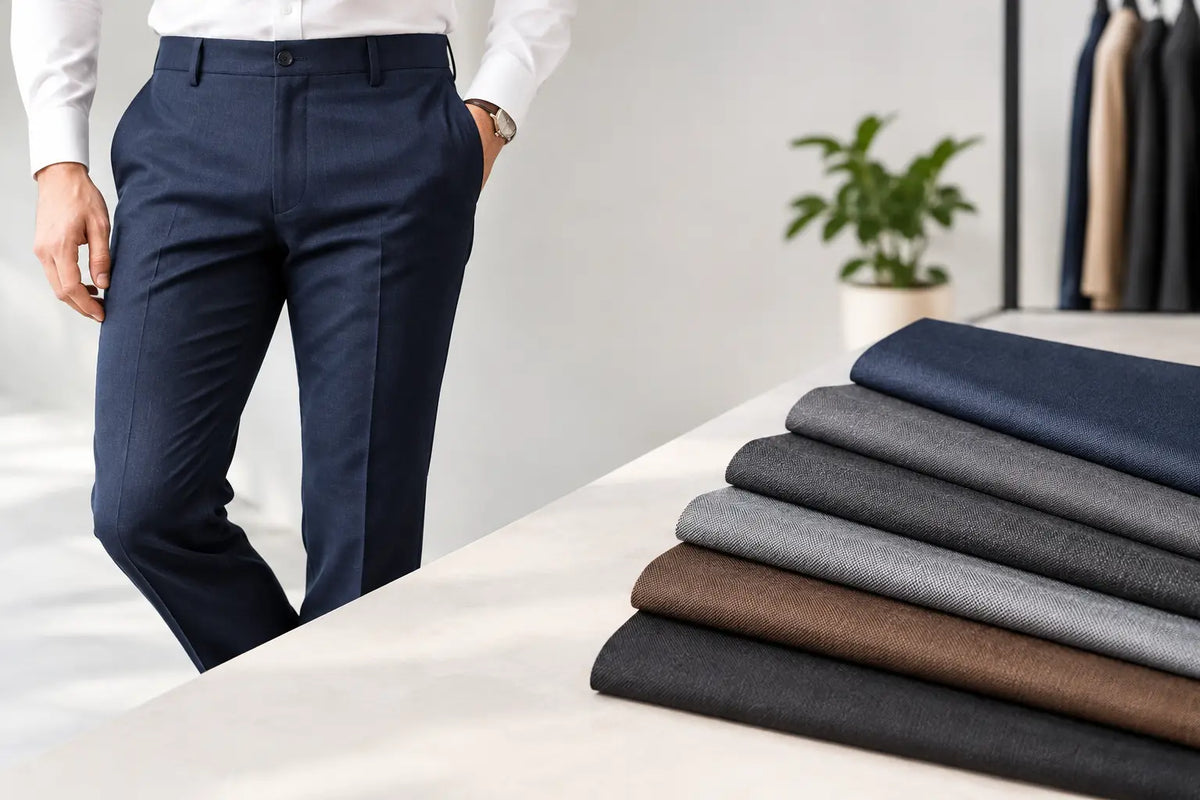
For an executive wardrobe, begin with navy, charcoal and mid-grey wool trousers. These shades work with pale business shirts, fine knitwear, blazers and tailored jackets without becoming repetitive. A subtle twill or nailhead weave introduces quiet character without compromising formality.
Fine wool does require respect. Very lightweight cloths can be less forgiving at points of tension, particularly if the fit is too close. The goal is not to choose the finest number on the label, but the cloth with the right weight, construction and resilience for how you live.
Wool blends: practical, but not interchangeable
A small percentage of elastane can add welcome flexibility to wool trousers, particularly for frequent travel or long days that require freedom of movement. Modern blends can retain a polished appearance while providing a little more ease through the seat and thigh.
However, more stretch is not automatically better. Excessive synthetic content may alter the cloth’s breathability, create shine over time or reduce the natural, elegant fall associated with pure wool. In formal trousers, the objective is controlled comfort, not the feel of casualwear.
A wool and mohair blend is a more elevated alternative for certain occasions. Mohair lends a dry, crisp handle and a subtle lustre, helping trousers maintain a particularly sharp crease. It is excellent for dinner suits and refined evening tailoring, although its firmer handle may feel less relaxed than soft wool.
Cotton: polished ease for daytime
Cotton trousers occupy a valuable place between formal tailoring and relaxed dressing. A finely woven cotton twill can look precise with a blazer and shirt, particularly in stone, tobacco, olive or deep navy. It is a considered choice for business lunches, daytime social occasions and smart travel wardrobes.
Compared with wool, cotton tends to crease more readily and has less natural drape. That is part of its character. It produces a cleaner, more casual expression rather than the fluid line of classic tailoring. A bespoke cut can minimise unnecessary fullness and ensure that the trouser still appears intentional as the day progresses.
Cotton is best reserved for settings where formality is present but not absolute. For a major presentation, a conservative business environment or a highly formal evening, wool will usually communicate greater authority.
Linen: elegant in heat, honest in character
Linen is unmatched when the weather demands lightness and breathability. Its texture has an unmistakable sophistication, especially in pale neutrals, soft blue, tobacco and muted grey. A linen trouser paired with an open-collar shirt or unstructured jacket can look assured rather than casual.
The trade-off is visible creasing. Linen does not pretend to remain immaculate, and it should not be chosen by someone who expects a sharp, pressed line until midnight. Its appeal lies in a relaxed refinement that develops during wear.
For a more composed result, consider a linen-wool or linen-cotton blend. These cloths preserve some of linen’s airiness while gaining structure, crease resistance and a more formal drape. They are often the stronger choice for clients who want summer comfort without sacrificing too much polish.
Flannel: depth for cooler settings
Wool flannel has a softly brushed finish that gives trousers warmth, depth and visual richness. Grey flannel remains one of the most distinguished foundations of a tailored wardrobe, pairing beautifully with navy blazers, dark brown knitwear and textured jackets.
It is not a natural first choice for Gulf heat, but it earns its place for travel, cooler interiors and winter wardrobes abroad. The surface is softer and less crisp than worsted wool, creating a more relaxed but deeply luxurious impression. Choose it when you want texture to do some of the work usually done by colour or pattern.
Fresco and high-twist wool: discipline in warm climates
For men who require formal trousers in sustained heat, high-twist wool and open-weave fresco deserve serious consideration. The tightly twisted yarns create a dry handle and a slightly textured finish. Air can circulate more easily, while the cloth remains remarkably resistant to creasing.
These fabrics do not feel as soft as a fine, smooth worsted. They are chosen for performance and clean structure. For daily business wear in a warm climate, that trade-off can be exceptionally worthwhile. A properly tailored high-twist wool trouser retains its composure when lesser cloths begin to collapse.
Weight, weave and drape matter as much as fibre
Two pairs of trousers may both be labelled wool and perform entirely differently. Weight influences warmth, opacity and structure, while weave determines texture, airflow and the way light meets the surface. A plain weave can feel crisp and airy; a twill often has a smoother, richer drape.
Drape is the decisive quality for formal trousers. It describes how the cloth falls from the waist, travels over the thigh and breaks at the shoe. A cloth with insufficient body can cling or reveal too much movement. One that is overly rigid can stand away from the body and appear heavy.
This is where a private fitting has particular value. Fabric can be assessed against your complexion, existing wardrobe and the intended trouser shape before a single cut is made. The best cloth is not simply luxurious to touch. It must serve the finished garment.
Choosing fabric by occasion
For daily business, medium-weight wool or high-twist wool offers the strongest balance of authority and durability. Charcoal and navy remain the most adaptable choices, with mid-grey offering a lighter alternative that still feels formal.
For evening events, a darker wool, wool-mohair blend or cloth with a subtle lustre provides a more deliberate finish. The trousers should hold a clean line beneath a dinner jacket and remain elegant under artificial light.
For warm-weather social dressing, linen blends and fine cotton offer a softer, more relaxed expression. The cut should remain precise, but the fabric can signal ease. This distinction is crucial: relaxed is not careless.
The final decision belongs to the wearer
A formal trouser fabric should support the way you wish to be perceived without asking for attention itself. It should move comfortably, maintain its line and feel appropriate in the settings that define your life.
At DONFIORITO, that decision begins not with a roll of cloth, but with a conversation about your routine, your standards and the impression you intend to leave. When fabric, cut and fit are resolved as one, a pair of trousers becomes more than a separate garment. It becomes the quiet foundation of personal authority.