

Article: Best Trousers for Hot Weather, Tailored Well
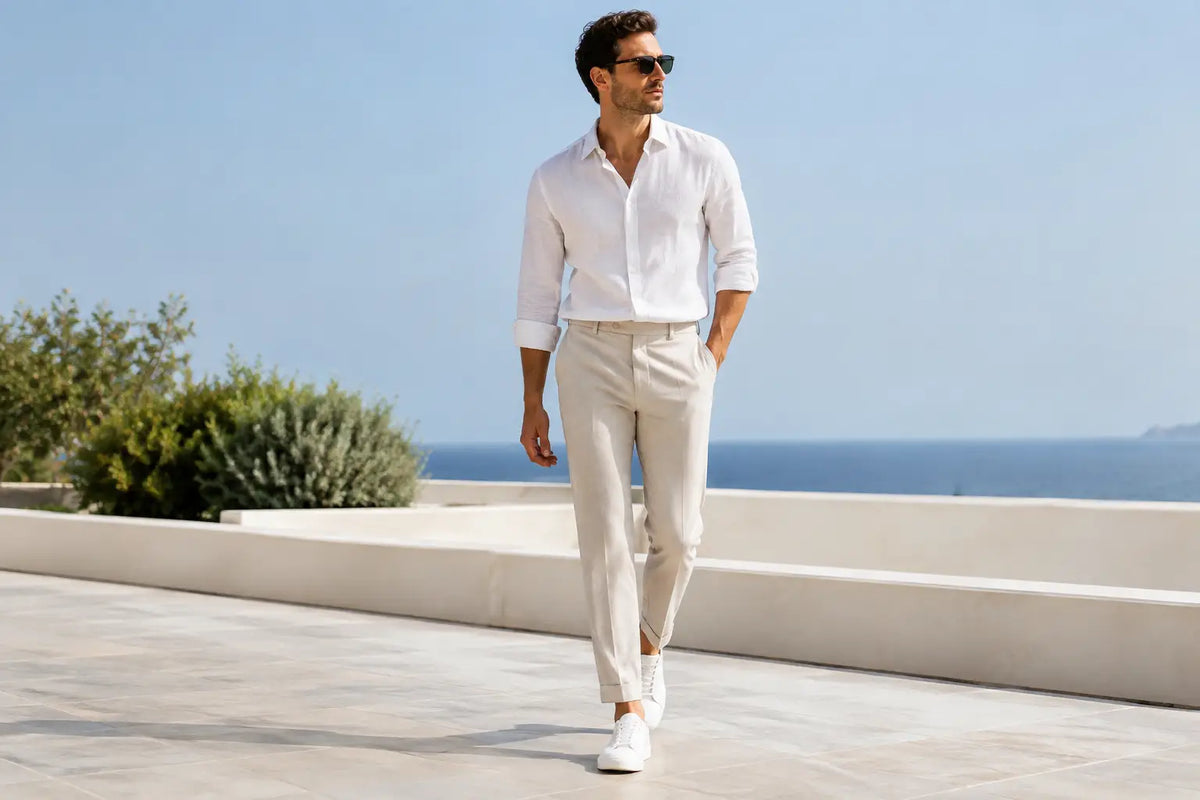
Best Trousers for Hot Weather, Tailored Well
A boardroom can be perfectly air-conditioned, yet the journey there is not. The car park, the pavement, the walk between meetings and the moment you step outside all expose a man’s clothing to the reality of heat. The best trousers for hot weather are not simply the lightest pair available. They must remain composed, hold their line and feel effortless from the first appointment to the last.
For a man whose appearance carries professional weight, this is where tailoring makes the difference. A trouser should not look like a concession to the temperature. It should look considered: clean through the leg, balanced at the waist and made from cloth selected for the climate and the occasion.
What Makes the Best Trousers for Hot Weather?
Heat management begins with fabric, but it is decided by the relationship between cloth, cut and construction. A trouser can be made from a beautiful lightweight material and still feel oppressive if it is cut too close, lined too heavily or built with unnecessary bulk at the waistband.
The best choice allows air to move without becoming shapeless. It resists clinging to the leg, recovers after sitting and maintains a polished drape in bright light. In Dubai, where a client may move from intense outdoor heat to a chilled private office in minutes, that balance is particularly valuable.
A tailored trouser also solves a problem common to ready-to-wear summer clothing: the compromise between ease and authority. Excessively slim trousers can restrict movement and trap heat. Very loose trousers may appear casual or untidy. The right pattern is built entirely around the body it belongs to, giving room where heat and movement demand it while preserving a decisive silhouette.
Begin With the Cloth, Not the Label
Labels such as linen, cotton or wool are useful starting points, not final answers. The quality of the yarn, the weave, the weight and the finishing determine how a fabric will behave during a long day.
High-twist wool for business composure
Many men assume wool has no place in warm weather. In fact, a finely woven high-twist wool can be one of the most accomplished choices for business trousers. The yarn is twisted firmly, creating a dry handle and an open, breathable structure. It tends to resist creasing better than linen, travels well and returns to shape after hours of sitting.
For formal business settings, this is often the most versatile answer. A mid-grey, tobacco, stone or deep navy high-twist wool trouser can work with an open-collar shirt, a light jacket or a complete suit. It retains the authority expected in meetings without the visual heaviness of dense, traditional suiting cloth.
There is a trade-off. High-twist wool does not offer linen’s relaxed texture or its distinctly summery character. Its strength is refinement, not informality.
Linen for character and airflow
Linen remains compelling because it breathes beautifully and has an unmistakable surface. It catches the light differently from smooth wool, bringing depth and ease to a tailored look. In softer shades such as sand, cream, pale olive or muted blue, it is particularly effective for daytime engagements, resort travel and less formal summer entertaining.
Creasing is part of linen’s nature. The question is not whether it will crease, but whether the creasing appears elegant or careless. A superior linen, cut with enough ease and fitted carefully through the seat and thigh, develops a natural lived-in character. A trouser pulled too tightly will crease sharply and prematurely, no matter how fine the cloth.
Linen-wool and linen-silk blends can offer a more controlled alternative. They preserve much of linen’s breathability and texture while improving recovery and drape. These blends are an excellent choice for the man who wants summer presence without an overly relaxed finish.
Cotton and seersucker for relaxed precision
Fine cotton works well when the dress code is smart but not ceremonial. It offers a smooth, familiar feel and can be tailored into trousers with a crisp, understated profile. Cotton gabardine is more structured and durable; lighter cotton twills offer softness but may show wear and creasing sooner.
Seersucker deserves greater consideration in hot climates. Its puckered weave holds portions of the cloth away from the skin, encouraging airflow. The traditional striped version has a distinctly casual, heritage quality, while plain seersucker in navy, olive or stone can feel more restrained. It is not the first choice for a formal negotiation, but it is remarkably effective for daytime social occasions and travel.
The Cut Should Create Space With Discipline
The common instinct is to wear trousers tighter in an effort to look sharper. In warm conditions, this is usually counterproductive. A close-fitting thigh limits air circulation, creates tension at the seat and causes the fabric to pull when seated. None of these details read as elegant.
A well-cut hot-weather trouser has controlled ease through the upper leg. It should sit securely at the waist without excessive pressure, fall cleanly from the hip and taper with restraint towards the hem. The line matters more than the narrowness. When the proportions are correct, the trouser looks precise whether the wearer is standing, walking or seated across a table.
Single pleats can be especially useful. They provide movement and breathing room without adding visible volume, particularly for men with athletic thighs or those who spend much of the day seated. Flat fronts remain a refined option for a leaner build, provided the pattern has sufficient allowance where needed.
The rise is equally important. A slightly higher rise can be more comfortable in heat because it allows the trouser to settle at the natural waist rather than cutting into the hips. It also lengthens the leg and gives shirts a cleaner line when tucked in. This is a detail that cannot be judged from a hanger. It must be assessed on the individual body.
Construction Details That Change Daily Comfort
Small decisions within the trouser can determine whether it becomes a summer staple or remains unworn. A lighter waistband construction reduces bulk around the midsection. Breathable pocketing prevents unnecessary layers, while a considered internal finish keeps the trouser comfortable against the skin.
The hem also deserves attention. A plain hem is clean, contemporary and slightly lighter. Turn-ups add visual weight and can help a fuller trouser hang beautifully, but they are not essential in extreme heat. The right choice depends on the cloth, the wearer’s height and the overall character of the wardrobe.
Side adjusters offer another advantage: they remove the need for a belt, which can feel restrictive and add heat around the waist. They also create a more elegant uninterrupted line beneath a jacket. For some men, however, a belt remains part of their professional uniform. A bespoke trouser should accommodate personal habits rather than impose a rule for its own sake.
Choose Colour With the Setting in Mind
Pale colours reflect heat, but the palest trouser is not always the most practical. Cream and white show marks quickly, particularly during travel or long working days. Stone, mushroom, light grey and tobacco are often more forgiving while still communicating seasonal ease.
Navy remains a powerful choice for warm-weather business dressing, especially in a breathable wool or wool-linen blend. It is darker, certainly, but its versatility can justify the additional visual weight when the cloth is right. Olive and soft blue offer quiet distinction for clients who prefer colour without drawing attention away from the cut.
For formal occasions, avoid treating summer as an excuse for novelty. A well-made light-grey trouser with a white shirt and dark brown shoes has more enduring authority than a loud print ever will.
Fit Is Tested in Motion, Not Before a Mirror
A trouser fitting should include sitting, walking, turning and placing a mobile phone or cardholder in the pocket. The waistband must remain secure without pinching. The seat should stay smooth. The knee should not pull, and the hem should break cleanly over the shoe without collecting around the ankle.
These checks are especially relevant for warm-weather trousers because heat magnifies every small discomfort. A garment that feels acceptable for ten minutes in a fitting room may become distracting during a full day of meetings.
At DONFIORITO, the process begins with how a client lives, travels and wishes to be perceived. That is the proper foundation for a summer trouser wardrobe. The cloth is selected with purpose, then shaped through fittings until its comfort is as convincing as its appearance.
The finest warm-weather trousers do not announce their technical virtues. They allow you to arrive composed, move freely and remain unmistakably well dressed when the temperature gives everyone else an excuse not to be.

