Menswear Investment Trends Worth Following
A suit that commands a boardroom at 9am and a private dinner at 9pm is worth more than a rail of garments bought for a single impression. The most meaningful menswear investment trends are moving away from conspicuous novelty and towards pieces with a longer, more personal life: exceptional cloth, an exacting silhouette and construction that improves the way a man carries himself.
For the discerning client, this is not a retreat from luxury. It is a more considered expression of it. The garment is chosen not because it is immediately recognisable, but because it performs with authority, fits without compromise and remains relevant long after a season has passed.
Menswear investment trends are becoming more personal
The strongest trend in luxury menswear is not a colour, a logo or a seasonal cut. It is personalisation. Men who have spent years navigating ready-to-wear sizing increasingly recognise that an expensive garment can still look ordinary when its balance is wrong. A shoulder that extends too far, a trouser that breaks heavily, or a jacket that restricts movement will undermine even the finest fabric.
Bespoke changes the calculation. Rather than adapting the body to a predetermined size, the garment is built entirely around the body it belongs to. Posture, shoulder slope, chest shape and the way a client naturally stands all influence the pattern. The result is not simply a closer fit. It is a more convincing presence.
This is particularly relevant for professionals whose wardrobe is part of their working identity. Executives and entrepreneurs do not need ten versions of the same suit. They need a small number of garments that project clarity in different settings: a formal meeting, a presentation, travel between cities, an evening engagement or a significant family occasion.
Quiet luxury is measured in cloth and cut
The move towards quieter dressing has been widely discussed, but it is often misunderstood. Quiet luxury does not mean plain clothing without character. It means that quality is legible through proportion, texture and finish rather than obvious branding.
A deep navy worsted wool suit, for example, may appear understated from a distance. Up close, its distinction lies in the clean line of the lapel, the controlled drape of the cloth and the way the jacket settles across the shoulders. A charcoal flannel trouser offers a different kind of refinement: soft in handle, confident in texture and remarkably versatile when paired with knitwear, a shirt or a tailored jacket.
Cloth selection is central to this approach. Fine wool remains the foundation of a serious wardrobe, but not every high-numbered yarn is automatically the better investment. Very delicate cloth can offer an exquisite handle, yet may be less suited to frequent travel, long days or the climate of Dubai. A resilient, well-finished wool with enough body to hold its shape can provide greater value over years of wear.
The correct choice depends on how the garment will be used. For regular business wear, durability and crease recovery matter. For formal evenings, a more refined finish or subtle lustre may be appropriate. Investment dressing is not about choosing the most expensive option in isolation. It is about choosing the right cloth for the life it will lead.
Texture is replacing unnecessary decoration
As wardrobes become more edited, texture is doing more of the work. Open-weave jackets, dry fresco-style wools, brushed flannels, fine corduroy and understated checks bring depth without turning an outfit into a statement piece.
This is where versatility becomes sophisticated rather than safe. A mid-blue jacket with a restrained texture can be worn with tailored trousers for business, darker denim for an informal lunch, or lightweight wool trousers for evening. It earns its place because it creates several polished looks without losing its own identity.
The return of wardrobe architecture
The wisest investments are rarely isolated purchases. They are part of a wardrobe with structure. This does not require uniform dressing, nor does it demand an excessive number of garments. It calls for a clear understanding of what each piece contributes.
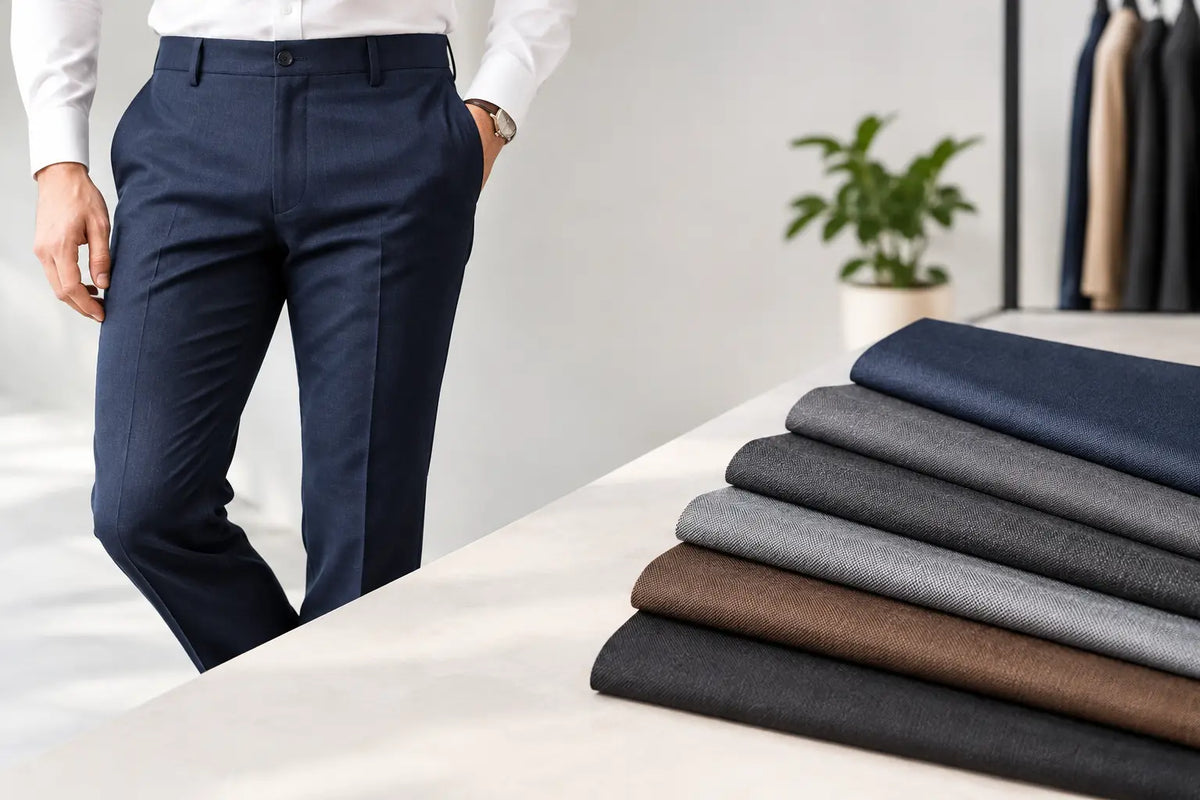
For many men, the foundation begins with a navy suit, a charcoal or mid-grey suit and a separate jacket that can travel across professional and social settings. From there, tailored trousers in grey, stone, navy or tobacco extend the usefulness of shirts, knitwear and jackets already owned. A dinner suit or black-tie ensemble should be considered separately, especially for clients whose calendar includes weddings, galas and formal Gulf events.
The important distinction is between versatility and sameness. A wardrobe built only from conservative navy can become repetitive; one built around too many seasonal pieces becomes difficult to wear coherently. Thoughtful tailoring creates variation through cut, cloth, lapel shape and tonal combinations, while retaining a consistent personal signature.
Fewer fittings, better decisions
Convenience has its place, but haste is costly in tailoring. An investment garment deserves a consultation that considers more than measurements. A skilled tailor asks where the suit will be worn, how often the client travels, whether he prefers a sharper or softer silhouette, and how he wants to be perceived when he enters a room.
Fittings then turn those decisions into precision. They allow the jacket balance, trouser line and ease of movement to be refined before the garment is finished. This is why bespoke remains distinct from made-to-measure offered at speed: the process allows the garment to evolve around the wearer rather than merely being selected from a set of adjustments.
For clients with an established wardrobe, a consultation can also reveal what not to commission. Another blue suit may be unnecessary when a versatile grey or textured brown jacket would solve more dressing occasions. Discernment is part of luxury service.
Investment value is worn, not stored
A luxury garment is not necessarily an investment in the financial sense. Most clothing should not be purchased with resale in mind. Its value is realised through wear: how often it is chosen, how well it holds its form, and how confidently it supports the wearer.
Cost per wear is useful, provided it does not become an excuse for buying only the most practical pieces. A beautifully cut dinner jacket may be worn less often than a business suit, yet it can be the correct investment if it transforms the occasions that matter. Equally, a suit worn twice a week must be made in a cloth and construction capable of meeting that demand.
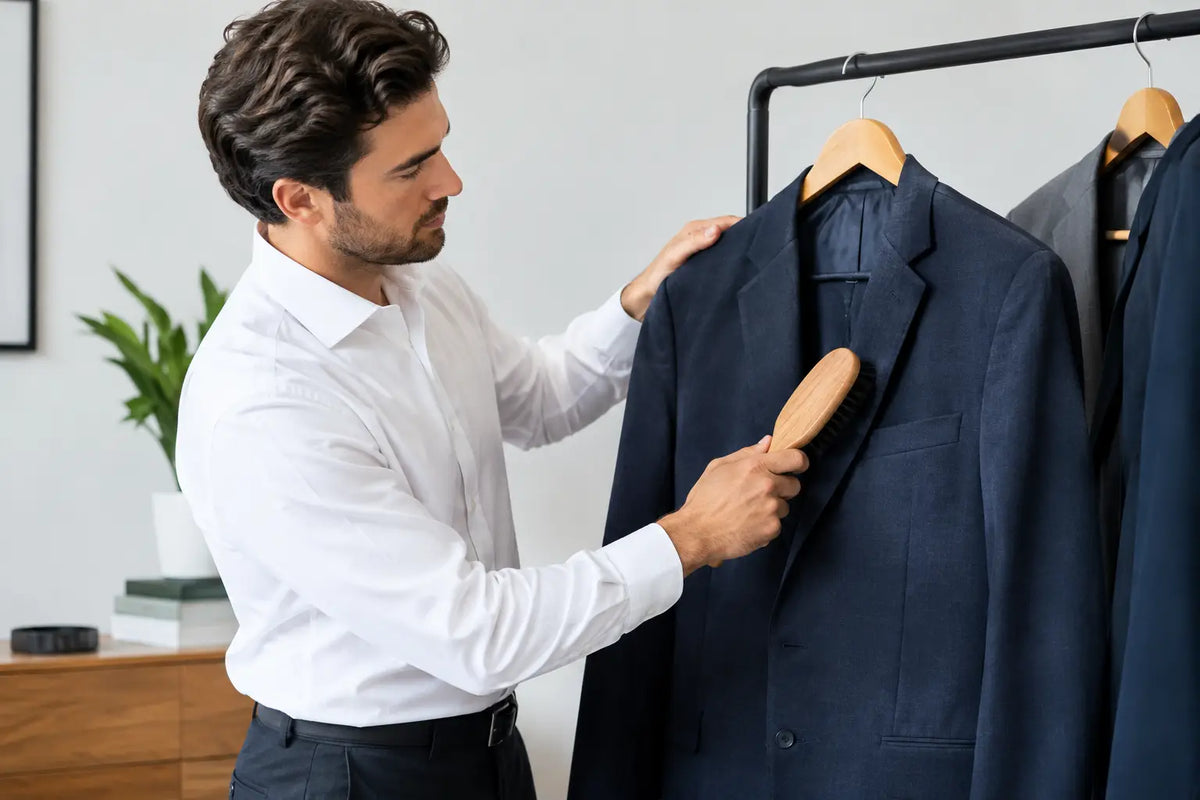
Care protects this value. Rest tailored jackets between wears, use properly shaped hangers, brush cloth lightly when required and give trousers time to recover. Dry cleaning should be occasional rather than habitual, as repeated chemical cleaning can shorten the life of natural fibres. Small repairs handled early - a loose button, a worn trouser hem, a lining beginning to strain - are signs of respect for fine work, not inconvenience.
What is losing ground
Several habits are becoming less persuasive among well-dressed men. Overly slim cuts that pull across the chest and thigh are giving way to cleaner, more comfortable proportions. Large branding is less compelling than an impeccable fit. Seasonal purchases made solely for a photograph often lose their appeal before they have earned a place in the wardrobe.
This does not mean every garment must be conservative. A rich olive jacket, a softly structured double-breasted suit or a precisely chosen patterned cloth can be deeply individual. The difference is intention. The piece should extend a man’s wardrobe and presence, rather than compete for attention on its own.
A considered wardrobe begins with an honest question: which garments make you feel composed, capable and unmistakably yourself? Commission those pieces with patience, choose cloth with purpose, and allow the fit to do what fashion alone cannot - make every appearance feel entirely your own.