A Guide to Business Dresscodes for Men
A man can lose authority before he has spoken a word. In certain rooms, the cut of a jacket, the line of a trouser, or the finish of a shoe speaks first. That is why a guide to business dress codes is not really about clothing alone. It is about judgement, respect for context, and the image you choose to present when standards matter.
For the modern professional, dress codes are no longer as fixed as they once were. Offices have relaxed, industries have blurred, and business is often conducted between formal boardrooms, private lunches, hotel lobbies and evening events in the same day. Yet this apparent freedom creates a more demanding challenge. When the rules are less explicit, discernment becomes more valuable.
Why a guide to business dress codes still matters
Business dress codes exist because clothing sets the tone of an interaction. It signals whether you understand the environment, whether you respect the occasion, and whether you have the self-command to present yourself well. In senior circles, people may not comment on what you are wearing, but they will register it instantly.
The mistake many men make is to reduce dress codes to labels. They hear business formal, business professional or smart casual and treat them as rigid categories. In reality, each one contains nuance. The right answer depends on your industry, your seniority, the geography, the time of day and the company you are keeping.
A finance executive meeting investors should not dress like a creative founder hosting an informal strategy session. Equally, a man attending a private dinner after work should not appear as though he has come directly from a tribunal. Precision matters, but so does calibration.
The guide to business dress codes: understanding the key levels
Business formal
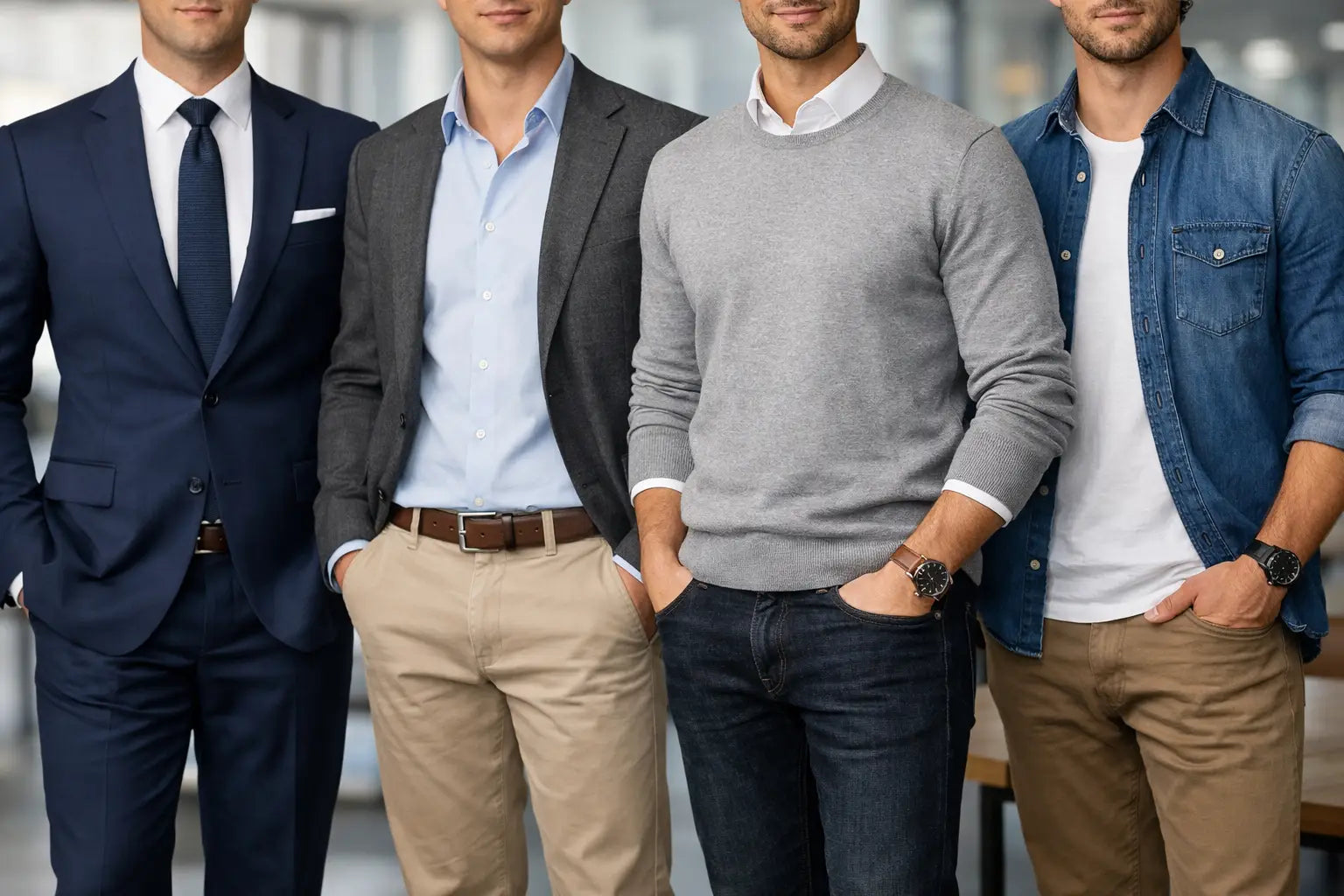
Business formal is the highest standard of daytime professional dress. This is the territory of important board meetings, high-level presentations, formal client appointments and conservative corporate environments. The expectation here is structure, restraint and polish.
A dark suit in navy, charcoal or deep grey is the foundation. The shirt should be crisp and properly fitted, most often in white or pale blue. A silk tie remains the correct choice, and shoes should be dark, elegant and impeccably maintained. Black Oxford shoes are often the safest answer, though dark brown may work with navy in some settings.
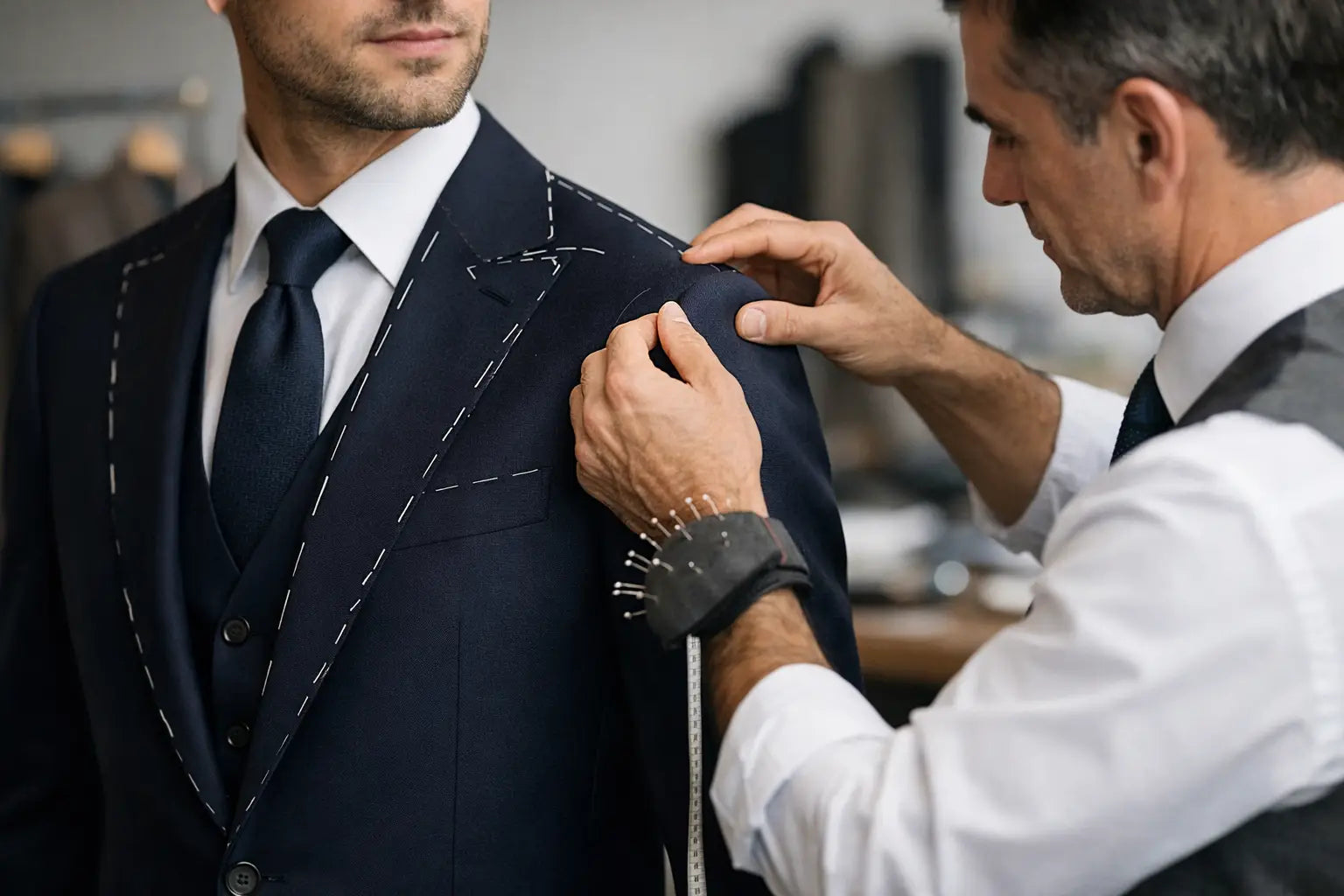
What separates a capable business formal look from an exceptional one is proportion. A jacket must sit cleanly on the shoulders. Trousers should fall with elegance, not collapse at the ankle. Sleeves, lapels and collar must work together in harmony. When a garment is built entirely around the body it belongs to, business formal feels natural rather than stiff.
Business professional
Business professional is slightly less ceremonial, though still distinctly polished. This is the daily uniform of many executives, lawyers, consultants and senior managers. The suit remains central, but there is greater latitude in cloth, pattern and colour.
Navy is especially powerful here because it conveys authority without severity. Mid-grey also performs well. Fine pinstripes, subtle textures and understated checks can be appropriate if they do not distract. Shirts may extend beyond plain white into soft blue or restrained stripe, and ties can introduce measured personality.
This is where many men benefit from thinking beyond mere compliance. Business professional should not look generic. It should look considered. A superior cloth, a cleaner silhouette and a more intelligent balance of details can quietly distinguish a man without ever appearing theatrical.
Business casual
Business casual is often the most misunderstood category because it offers flexibility without forgiving carelessness. Too many men read casual and forget the business part. The result is clothing that is comfortable but forgettable, or worse, too relaxed for the occasion.
A tailored jacket with well-cut trousers is usually the right starting point. Depending on the setting, this may mean a blazer with wool trousers, or a softly structured jacket with chinos of proper quality. A collared shirt remains a strong choice, though a fine gauge knit or polo in a refined fabric can be suitable in less formal offices.
Shoes should still have presence. Loafers, derbies and certain minimalist leather trainers may work, but only if the rest of the outfit supports that level of ease. The principle is simple: every piece must still suggest intention. Business casual should appear effortless, never accidental.
Smart casual in a business setting
Smart casual belongs to the edges of professional life - networking evenings, informal lunches, creative industries, private member events and settings where social and business codes overlap. It allows more expression, but expression without discipline quickly becomes noise.
This is the space for textured jackets, open-collar shirts, refined knitwear and lighter contrasts. You may step away from a full suit, but the fit still has to be exact. Trousers should remain tailored, shoes should remain elegant, and nothing should look tired or overdesigned.
For men who move between formal and semi-formal environments, smart casual works best when it retains a tailored backbone. That is often the difference between looking relaxed and looking diminished.
Fit is the real dress code
If there is one principle that runs through every level of business dress, it is fit. A costly ready-to-wear suit in the wrong proportions will never carry the authority of a garment cut correctly for its wearer. The shoulder line, chest balance, waist suppression and trouser shape alter not only how a man looks, but how he carries himself.
This matters even more in places such as Dubai, where business often unfolds in environments that combine sharp presentation with climate considerations. Cloth selection becomes part of dress code intelligence. A heavy suit may look correct on paper and feel entirely wrong in practice. Lightweight wool, high-twist fabrics and breathable constructions often deliver the elegance a professional needs without sacrificing comfort.
A dress code should support your performance, not fight against it. If a jacket pulls when you sit, if the collar lifts, or if the trousers lose their line by midday, the problem is not merely aesthetic. It interferes with presence.
The details that quietly define standards
Good business dress is rarely loud. Its strength lies in the details that most people notice without consciously naming them. The shirt collar should sit neatly under the jacket. The tie should have substance and proper length. The belt, if worn, should relate to the shoe. Socks should be long enough to preserve a clean line when seated.
Then there is the condition of the garment itself. Pressing matters. Cleanliness matters. The shape of the shoe matters. Even the finest tailoring can be undermined by neglect. Discipline in dress is visible in maintenance.
Restraint is equally valuable. Strong fragrances, flashy hardware, oversized logos and excessive accessories weaken a professional wardrobe. The most compelling business dress allows the man to remain the focus.
How to judge the room correctly
The best-dressed man in business is not always the most formal. He is the one who has read the room accurately. If you are meeting a conservative chairman, formality is a sign of respect. If you are seeing a founder in a more relaxed sector, appearing overly rigid may suggest distance rather than confidence.
When in doubt, it is wiser to be slightly more polished than expected, then adjust with ease. A tie can be removed. A jacket can be worn open. But it is difficult to recover authority once you appear underdressed.
This is where personal guidance becomes valuable. A thoughtful tailor does more than take measurements. He helps a client build a wardrobe around real situations - formal negotiations, everyday leadership, travel, events and the subtler moments in between. At that level, clothing becomes strategic rather than decorative.
Building a wardrobe that covers every business dress code
A strong professional wardrobe does not require excess. It requires range. For most men, that means beginning with dark suits that can carry formal obligations, then introducing versatile jackets, trousers and shirts that support business professional and business casual settings with equal assurance.
The objective is not simply to own more clothing. It is to own the right clothing, each piece serving a clear purpose. A navy suit may handle investor meetings, formal lunches and evening functions with a change of shirt and tie. A well-cut grey suit broadens the rotation. A beautifully made blazer extends that wardrobe into more relaxed territory.
At the higher end of menswear, this is where bespoke reveals its value. Instead of adapting yourself to standardised garments, the wardrobe is shaped around your schedule, posture, taste and presence. For clients who see presentation as part of leadership, that level of precision is not indulgence. It is alignment.
Dress codes change, industries evolve, and offices continue to loosen their language around what is acceptable. Even so, the essentials remain remarkably consistent. Wear clothing that respects the occasion, flatters the body, and speaks with quiet confidence before you do. That is where good judgement begins.