Difference Between Tailored and Bespoke
A suit can look expensive and still feel wrong the moment you fasten it. The shoulder sits a touch too wide, the chest pulls slightly, the sleeve breaks at the wrong point. That is usually where the difference between tailored and bespoke becomes clear. One refines an existing garment or block. The other begins with you.
For a gentleman who treats dress as part of his professional presence, this distinction is not academic. It affects how a jacket settles on the shoulders, how cleanly the trouser line falls, and how naturally the whole silhouette expresses authority. The right choice depends on what you expect from tailoring, how exacting your standards are, and whether you want adjustment or creation.
What is the difference between tailored and bespoke?
The simplest answer is this: tailored usually means altered or made with some level of adjustment, while bespoke means built entirely from scratch around one individual client.
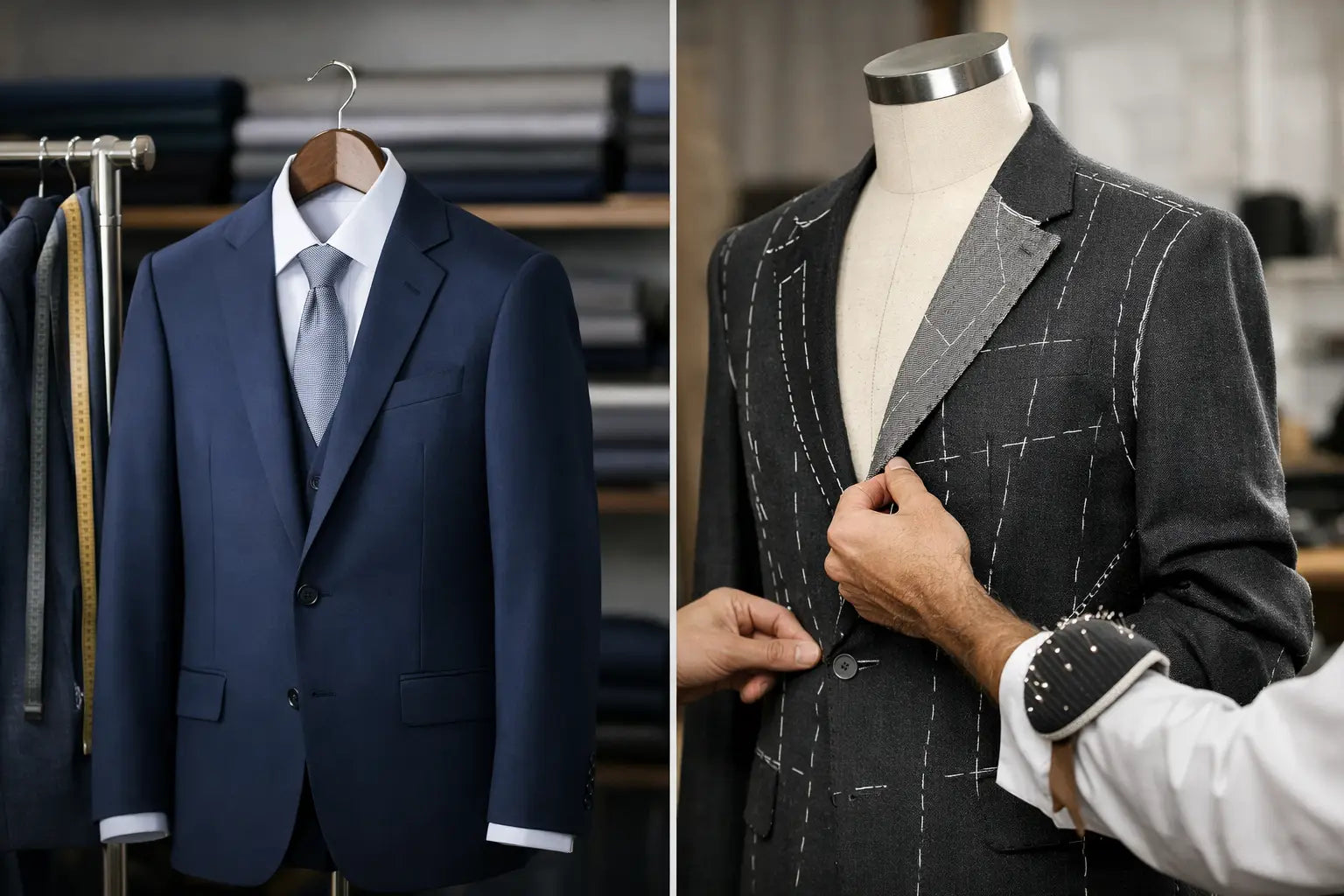
A tailored garment often starts from a pre-existing base. That may be a ready-made suit that is adjusted by a tailor, or a made-to-measure model produced from an existing house block and modified according to your measurements. The result can be very polished. For many men, it is a meaningful improvement over buying straight from a rail and wearing a suit untouched.
Bespoke is more exacting. The garment is cut from a unique pattern drafted for the wearer alone. The process involves consultation, cloth selection, balance assessment, posture analysis, fittings, and refinements that respond not only to measurements but to the way the body stands and moves. A bespoke suit is not simply resized. It is composed.
That is why the two terms should never be treated as interchangeable. They occupy different levels of craftsmanship, customisation, and personal attention.
Tailored does not always mean bespoke
This is where confusion enters the conversation. In common use, tailored has become a broad word. A tailored suit may describe a garment that has been shortened at the sleeves, suppressed at the waist, and hemmed at the trouser. It may also describe made-to-measure, where a factory pattern is adjusted to better suit your frame.
Neither option is inherently poor. In fact, for a man with relatively standard proportions and modest expectations, tailoring can deliver a respectable result. If your priority is to sharpen an existing wardrobe quickly, tailoring serves a purpose.
But there are limits. A jacket that begins life on a standard block still carries the assumptions of that block. The armhole position, shoulder expression, chest shape, and balance point are not conceived uniquely for you. Adjustments can improve proportion, but they cannot fully replace the precision of a pattern created around your individual posture and physique.
That matters most for clients who struggle with fit, have pronounced asymmetry, or expect their clothing to project a very specific image. Executives and entrepreneurs often notice this instinctively. They do not simply want a suit that fits adequately. They want a garment that supports presence without distraction.
What makes bespoke different?
The art of bespoke lies in the fact that nothing essential is assumed. The cutter studies the client before a pattern is drafted. Height, stance, shoulder slope, chest prominence, seat shape, arm position, and natural movement all influence the cut. Just as important, so does intention. Should the silhouette feel discreet and understated, or more commanding through the chest and shoulder? Should it read sharper in the boardroom or more relaxed for evening wear?
A bespoke suit answers these questions through construction, not marketing language.
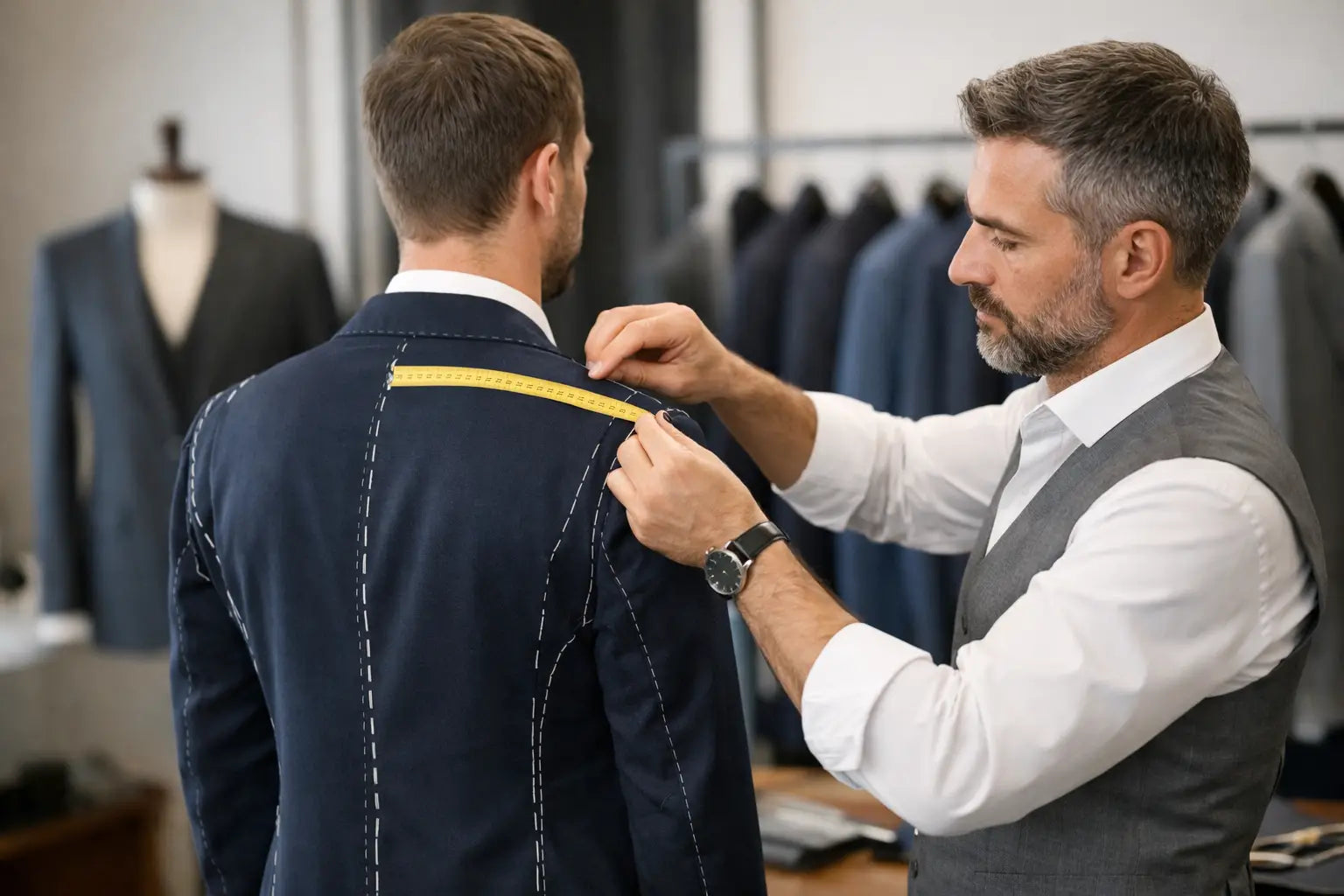
The pattern is created for one wearer. A basted fitting or first fitting then reveals what measurements alone cannot. The client may stand with one shoulder lower, carry weight differently when walking, or require more room through the back than a tape measure suggests. Those corrections are absorbed into the garment through successive fittings until the line is clean and the comfort feels instinctive.
This is why bespoke tends to look calm when worn well. There is no sense of compromise. The coat sits where it should. The collar remains close to the neck. The sleeve hangs correctly. The cloth follows the body rather than resisting it.
Difference between tailored and bespoke in fit and silhouette
Fit is the most visible point of difference, but silhouette is the more important one.
Tailoring can make a garment neater. Bespoke shapes the way a man is perceived. A tailored jacket may remove excess fabric at the waist and shorten the sleeves to reveal the cuff properly. A bespoke jacket considers the whole visual architecture - shoulder line, lapel position, button stance, skirt length, gorge height, and drape through the chest. These choices influence whether the wearer appears broader, leaner, taller, more assured, or more relaxed.
That level of control is especially valuable for men whose clothing functions as part of their professional identity. In cities such as Dubai, where personal presentation often carries immediate social and commercial weight, subtle distinctions are rarely as subtle as they seem. A garment built precisely around the body it belongs to communicates confidence before a word is spoken.
The process is where the value resides
A tailored service is generally faster and more transactional. You select a garment or base model, measurements are taken, alterations are made, and the piece is delivered. Efficient, practical, and sometimes entirely suitable.
Bespoke is a guided process. It begins with conversation. Not only about cloth and style, but about schedule, climate, professional demands, and the impression the client wishes to leave. Fabric is chosen with purpose. A navy business suit for frequent travel requires different considerations from a dinner jacket intended for evening engagements.
From there, the garment passes through fittings that refine both comfort and expression. This is not delay for the sake of ceremony. It is how precision is achieved.
For clients who value discretion and control, this process is often as meaningful as the finished suit. It removes guesswork. It replaces compromise with decision.
Price, time, and expectation
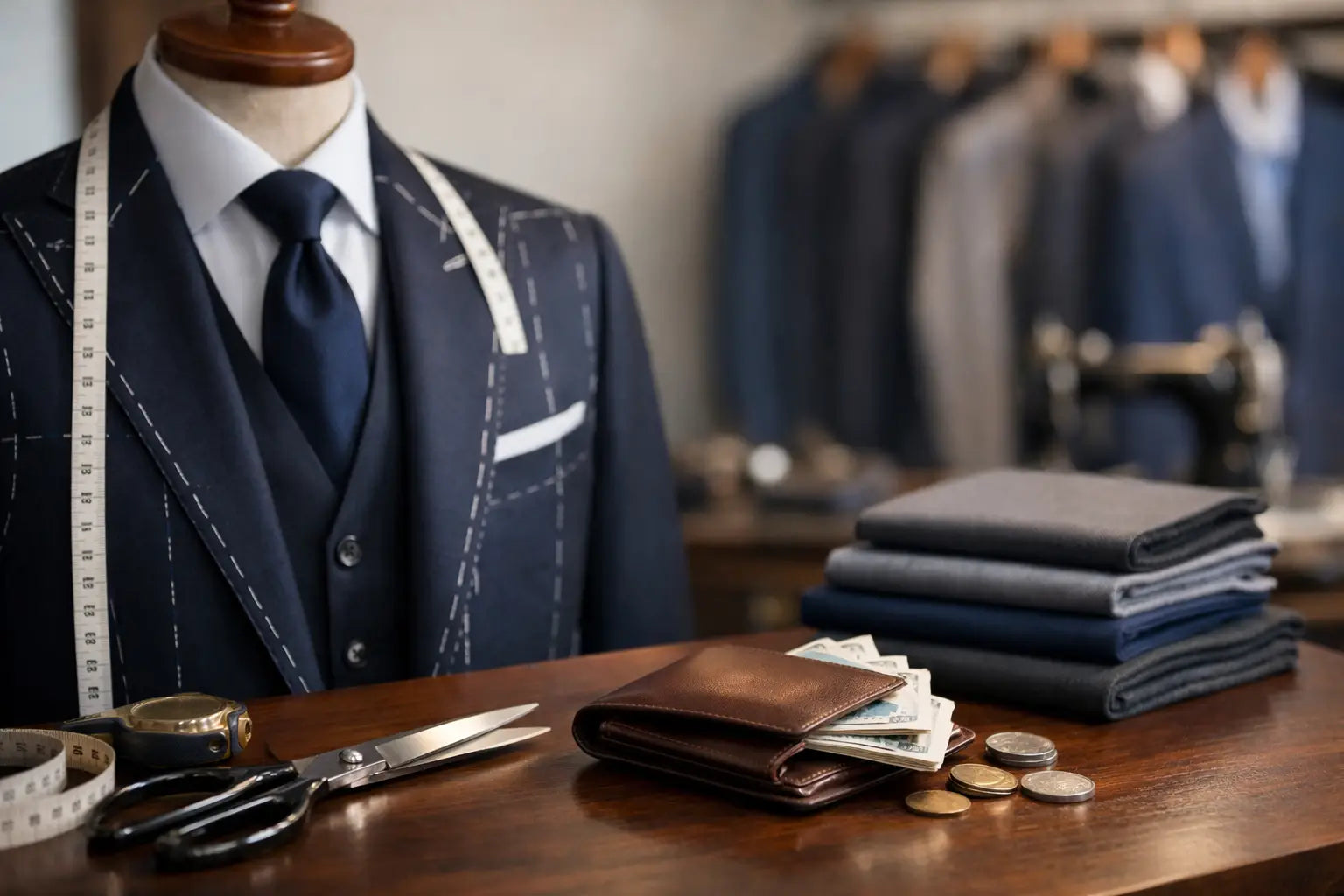
Bespoke costs more because it demands more - more handwork, more skill, more time, more judgement. The question is not whether bespoke is more expensive. It is whether its value matches your expectation.
If you need a suit quickly for occasional wear, tailored may be the sensible route. If you want one garment to perform many duties with decent fit, it can serve well.
If, however, you expect your wardrobe to operate at the same standard as the rest of your life, bespoke becomes easier to justify. It offers consistency. Once your pattern is developed and your preferences are understood, future commissions become more fluent while maintaining a high level of precision.
For many clients, the real luxury is not extravagance. It is the end of settling.
Which should you choose?
It depends on what problem you are trying to solve.
If your issue is that off-the-peg clothing is close but not quite right, tailoring may be enough. If your issue is that standard clothing never truly reflects your body, your position, or the way you wish to be seen, bespoke is the stronger answer.
The most discerning clients usually recognise this after wearing both. Tailored clothing can improve fit. Bespoke changes the relationship between wearer and garment. It feels quieter, more exact, and far more personal.
That is why houses such as Don Fiorito place so much emphasis on consultation and fittings. The objective is not simply to produce a suit. It is to create a garment that carries the client properly.
A final word on terminology
Some brands use bespoke loosely because it sounds prestigious. Serious clients should be wary of that. If the garment starts from a standard pattern, if there are no meaningful fittings, or if the process allows little room for structural refinement, it is not bespoke in the true sense.
The difference between tailored and bespoke is ultimately the difference between adjustment and authorship. One improves what already exists. The other creates something with intent, discipline, and identity from the first chalk line.
For a gentleman building a wardrobe that must perform as well as he does, that distinction is worth understanding. The best suit is not the one with the loudest label or the highest price. It is the one that appears inevitable on the man wearing it.