How Much Does a Custom Suit Cost?
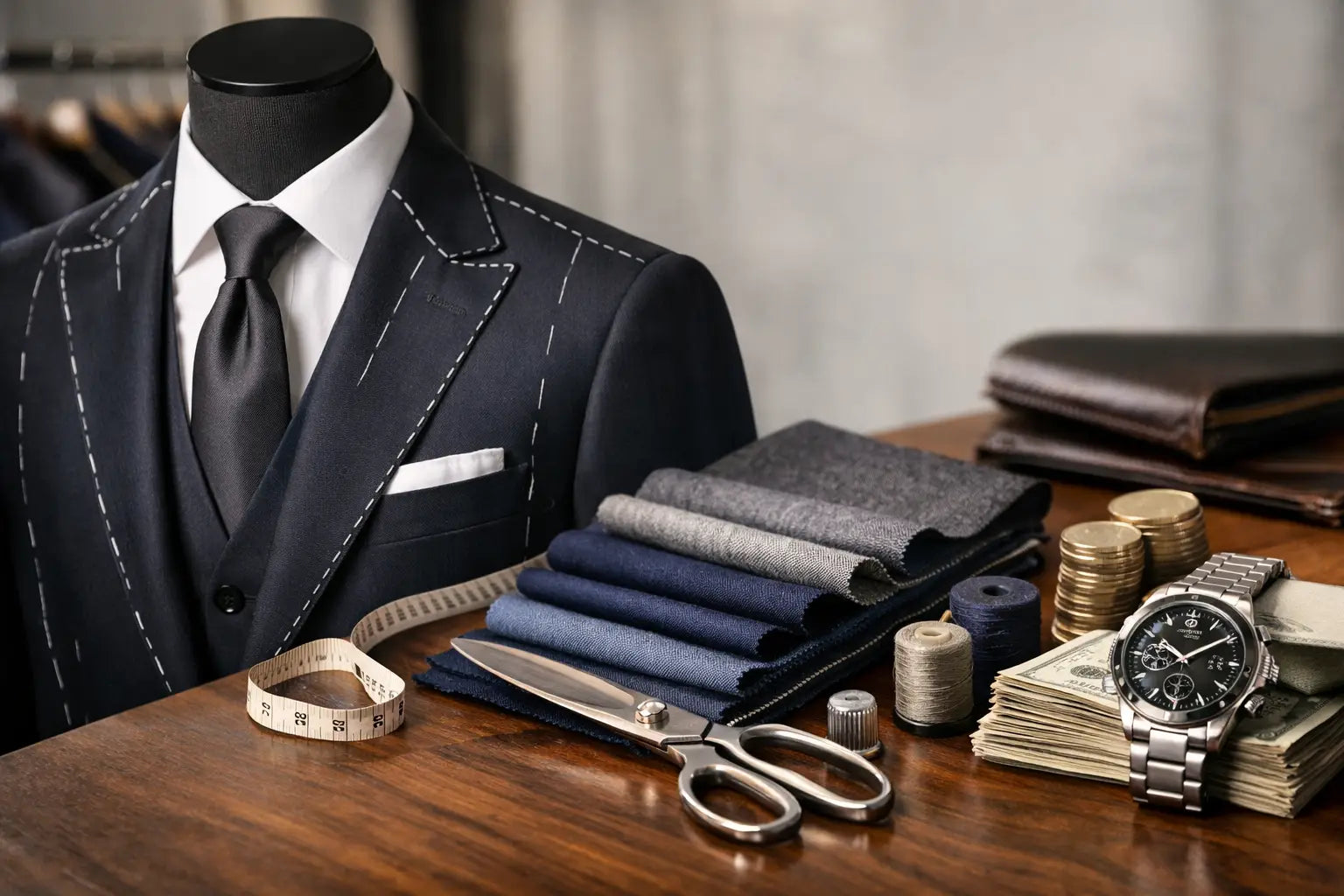
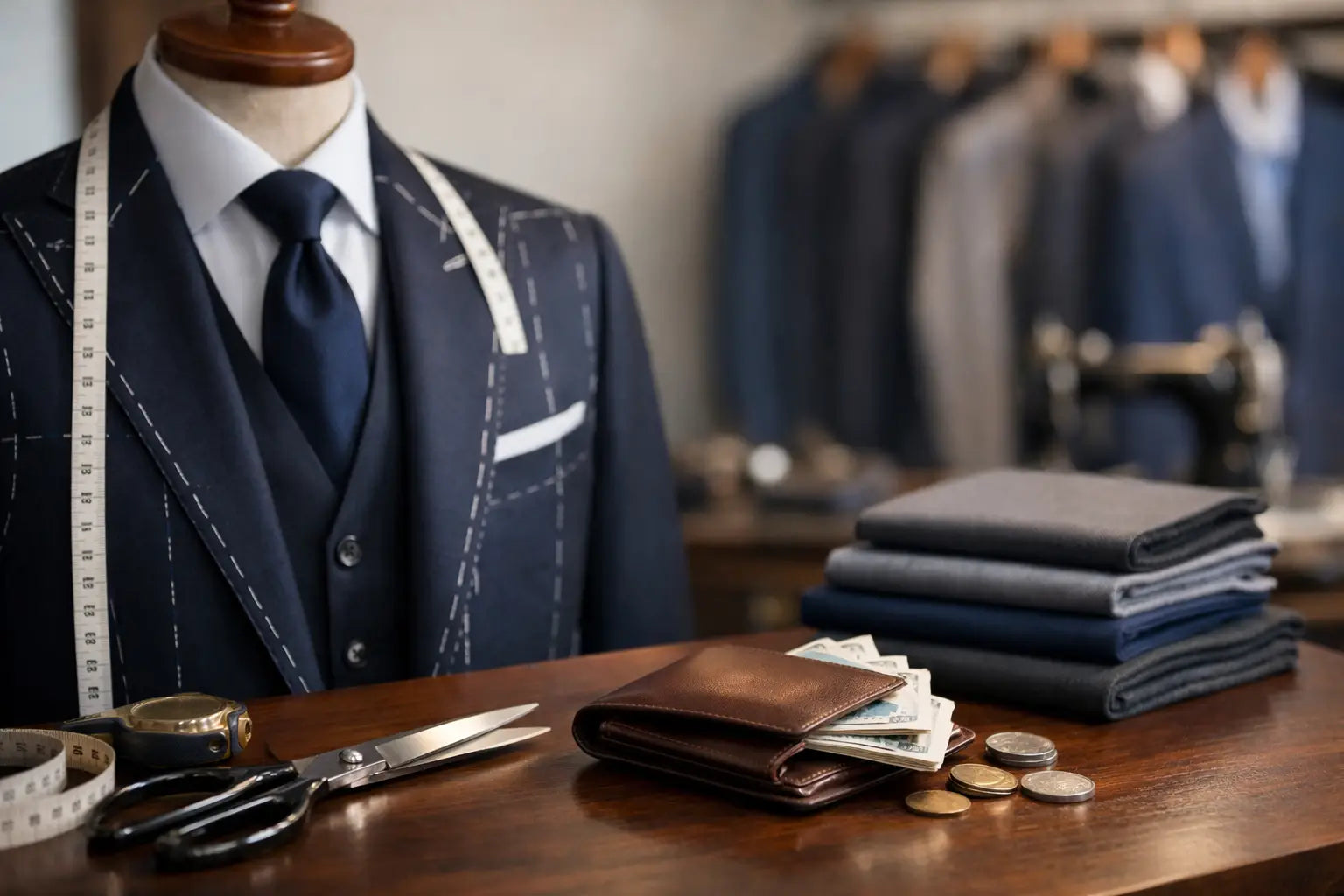
A custom suit can cost less than a watch strap or more than a business-class fare. That wide range is exactly why so many men ask the same question: how much does a custom suit cost? The honest answer is that price is shaped less by a label and more by what, precisely, is being made for you.
A suit built from an existing size block and adjusted at the waist or sleeve sits in a very different category from one cut from an individual pattern, refined through fittings, and finished to reflect your posture, proportions, and presence. Both may be called “custom” in casual conversation. They are not the same garment, and they should not cost the same.
How much does a custom suit cost in practice?
In the broadest terms, a made-to-measure suit may begin at a relatively accessible premium price, while true bespoke sits firmly higher because the process is fundamentally different. In luxury tailoring, you are not only paying for cloth. You are paying for judgement, pattern work, hand-finishing, fittings, and the discipline required to create a silhouette that looks composed from every angle.
For many clients, the realistic question is not simply what the suit costs, but what level of customisation they actually want. If your aim is a better version of standard suiting, the investment will be lower. If your aim is a garment built entirely around the body it belongs to, with a cleaner chest, sharper drape, better balance and more personal character, the figure rises accordingly.
This is where confusion often begins. Retailers, tailors, and luxury houses use the language of custom rather freely. The price only makes sense when the method is clear.
What actually drives the price of a custom suit?
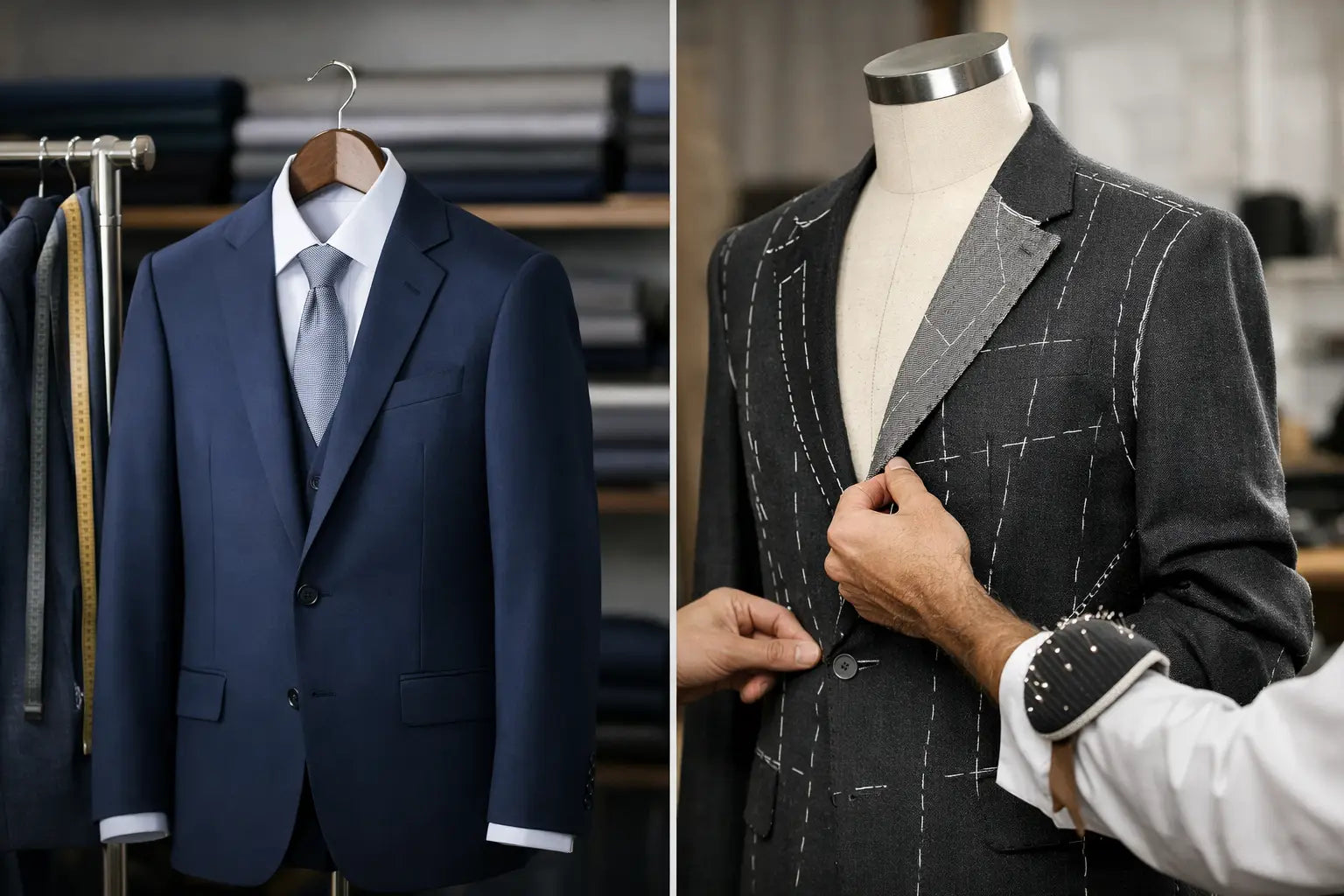
The largest factor is the construction method. A suit that starts from standard sizing and is altered to fit you requires less pattern development, fewer corrections and less handwork. A bespoke suit begins with your body, not a generic template. That demands a separate pattern, more extensive fittings, and greater technical control throughout the process.
Fabric is the next major influence. A fine wool from a respected mill will command more than an entry-level cloth, and the difference is not merely prestige. Better fabrics often drape more elegantly, recover better through wear, and hold their line with greater poise. If you move into superfine wool, wool-silk blends, cashmere blends, mohair, or seasonal cloths selected for a specific climate, the price can climb quickly.
Then there is the interior of the jacket, which many clients never see but always feel. Full canvas construction, carefully considered shoulder expression, hand-set elements, and refined finishing all add labour. A suit can look acceptable on the hanger with fused construction, yet behave very differently on the body over time. The more a tailoring house prioritises longevity, shape retention and clean movement, the more craftsmanship is involved.
The number of fittings also matters. One fitting suggests limited refinement. Multiple fittings suggest the tailor is checking balance, pitch, suppression, sleeve hang, trouser break and overall line with proper seriousness. That process costs more, but it is often the point at which a good suit becomes an exceptional one.
Finally, there is service. Private consultation, careful style direction, wardrobe context, and a measured understanding of how you need to be seen - in boardrooms, at formal events, or while travelling - all form part of the value. Luxury bespoke is not a product placed in front of you. It is a process led with intent.
Bespoke, made-to-measure, and altered ready-to-wear
These categories are often blurred, yet the distinction is essential. Altered ready-to-wear starts with a finished suit and improves it where possible. Made-to-measure starts with a pre-existing pattern and adjusts it to your measurements. Bespoke starts with a unique pattern drafted for you and refined through fittings.
That difference explains why two suits that appear similar from a distance can feel entirely different in wear. One follows the body adequately. The other is shaped around it with precision.
Why fabric can change the price so dramatically
Cloth does not only affect texture or appearance. It affects performance. A businessman who wears tailoring frequently may need a resilient wool with structure and recovery. Someone dressing for evening events may prefer a softer, more luxurious handle and richer visual depth. A client in a warm climate may require cloth selected for breathability and ease rather than heaviness and formality.
The finer the fabric and the more specialised its use, the more exacting the choice becomes. The right cloth can elevate a suit quietly. The wrong one can make even good tailoring feel compromised.
What price range should you expect?
At the lower end of the market, what is sold as “custom” may simply mean limited alterations or simplified made-to-measure. This can suit a client whose expectations are modest and whose fit issues are minimal. It is usually not the right solution for the man who notices shoulder imbalance, a collapsing collar, a pulling front, or trousers that never sit properly.
In the premium segment, prices typically reflect better cloth, more considered cutting, and a more complete fitting process. Here, the suit begins to deliver not just fit, but composure. It sits cleaner at the neck, moves better through the chest, and looks more deliberate overall.
At the luxury end, where bespoke craftsmanship and highly personalised service define the experience, the cost rises further because the garment is being built as an individual commission. This is where clients are paying for exactness, discretion, and a stronger result in both silhouette and self-presentation.
In a city such as Dubai, where standards of dress and expectation can be high, many clients quickly discover that the cheapest route often becomes the most expensive one. A suit that never fits quite right is worn less, corrected repeatedly, and eventually replaced. A properly commissioned one tends to become part of a man’s identity.
When is a custom suit worth the cost?
It is worth it when fit genuinely matters to your life. For a senior executive, entrepreneur or public-facing professional, a suit is not decorative. It is a tool of impression. If your clothing must project authority, discipline and ease, poor tailoring is not a small issue. It interferes with the message before you speak.
It is also worth it when standard sizing consistently fails you. Men with broad shoulders, a prominent chest, a drop in one shoulder, athletic legs, or an otherwise uncommon proportion often spend years making concessions in ready-to-wear. Bespoke removes that negotiation. Instead of asking what can be altered, it asks what should be made.
There is a third point that is less discussed but equally important: comfort. A well-cut suit does not merely look elegant. It allows you to move, sit, travel and work without constant adjustment. Luxury tailoring should feel composed, not restrictive.
Where men overspend - and where they underspend
Some men overspend on fabric before they understand their real needs. An exquisite cloth with a delicate finish may sound impressive but prove unsuitable for frequent business wear. Others focus too heavily on visible details such as monograms, contrast buttonholes or fashionable lapel shapes while neglecting the structure that makes a suit successful.
Underspending usually happens when the process is treated as a transaction rather than a commission. If the consultation is rushed, the fitter inattentive, and the number of fittings minimal, the lower price often reflects exactly what is missing. The danger is not simply receiving a cheaper suit. It is receiving one that looks expensive to nobody.
The best investment is usually a balanced one: excellent cloth for the purpose, a house style that suits your frame, and a tailoring process rigorous enough to refine the result properly.
How to judge value rather than headline price
Ask what is being made, how it is being cut, how many fittings are included, and whether the pattern is individual to you. Ask what level of handwork is involved and how the cloth has been selected for your use rather than simply offered as a menu of options. A serious tailoring house will answer with clarity, not vague luxury language.
Value becomes clearer when you consider cost per wear. A suit worn confidently for years, across meetings, dinners and important occasions, is often more economical than two or three compromised alternatives. More importantly, it does a job those alternatives cannot. It gives you a cleaner line, a more assured presence, and the quiet confidence that comes from knowing nothing about your appearance is accidental.
That is the real answer to how much does a custom suit cost. It costs whatever is required to move from generic clothing to a garment that expresses you with precision. If the suit is being made properly, the figure reflects time, judgement, and craftsmanship - not excess. And once you have worn one that is truly yours, price stops being the only question worth asking.