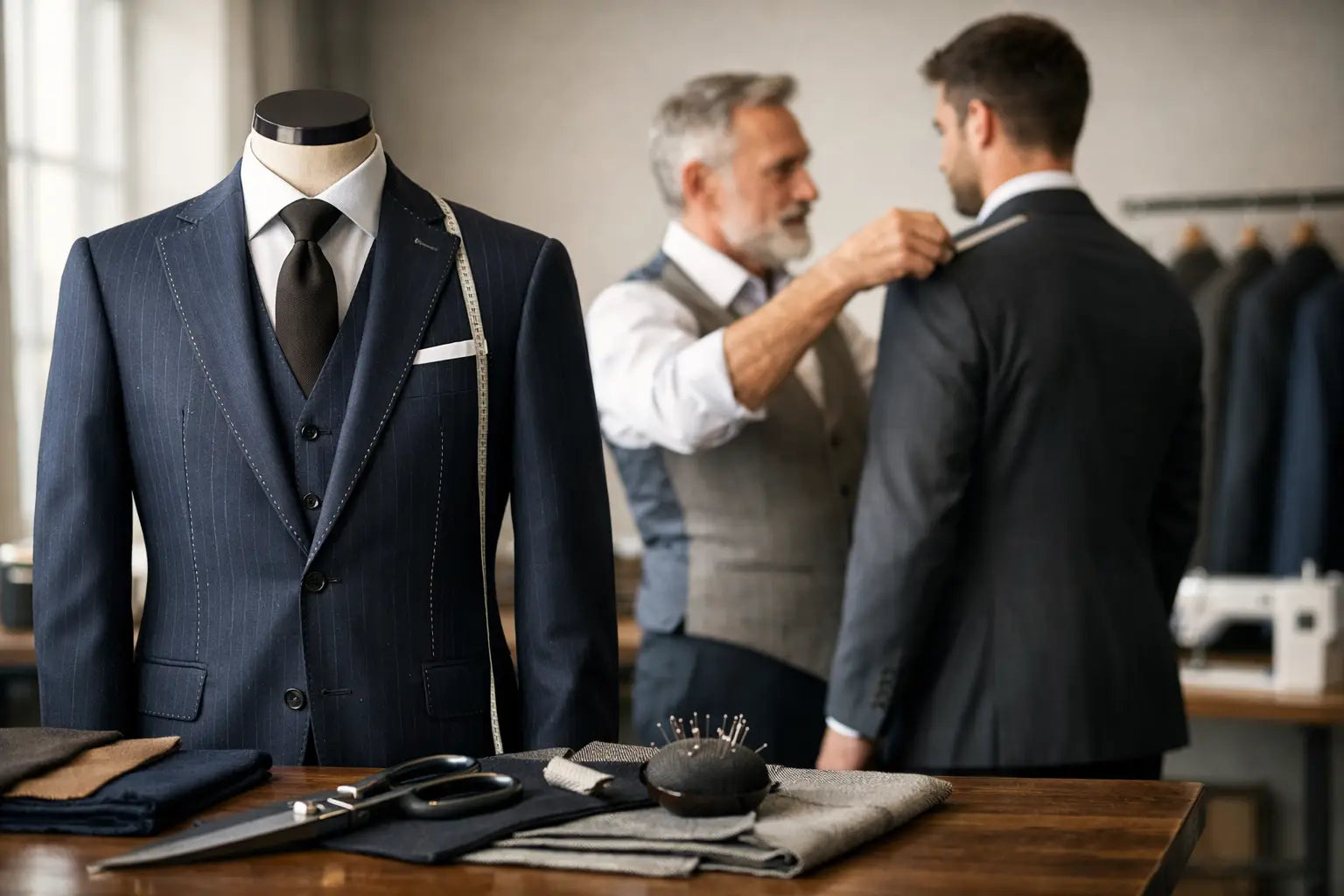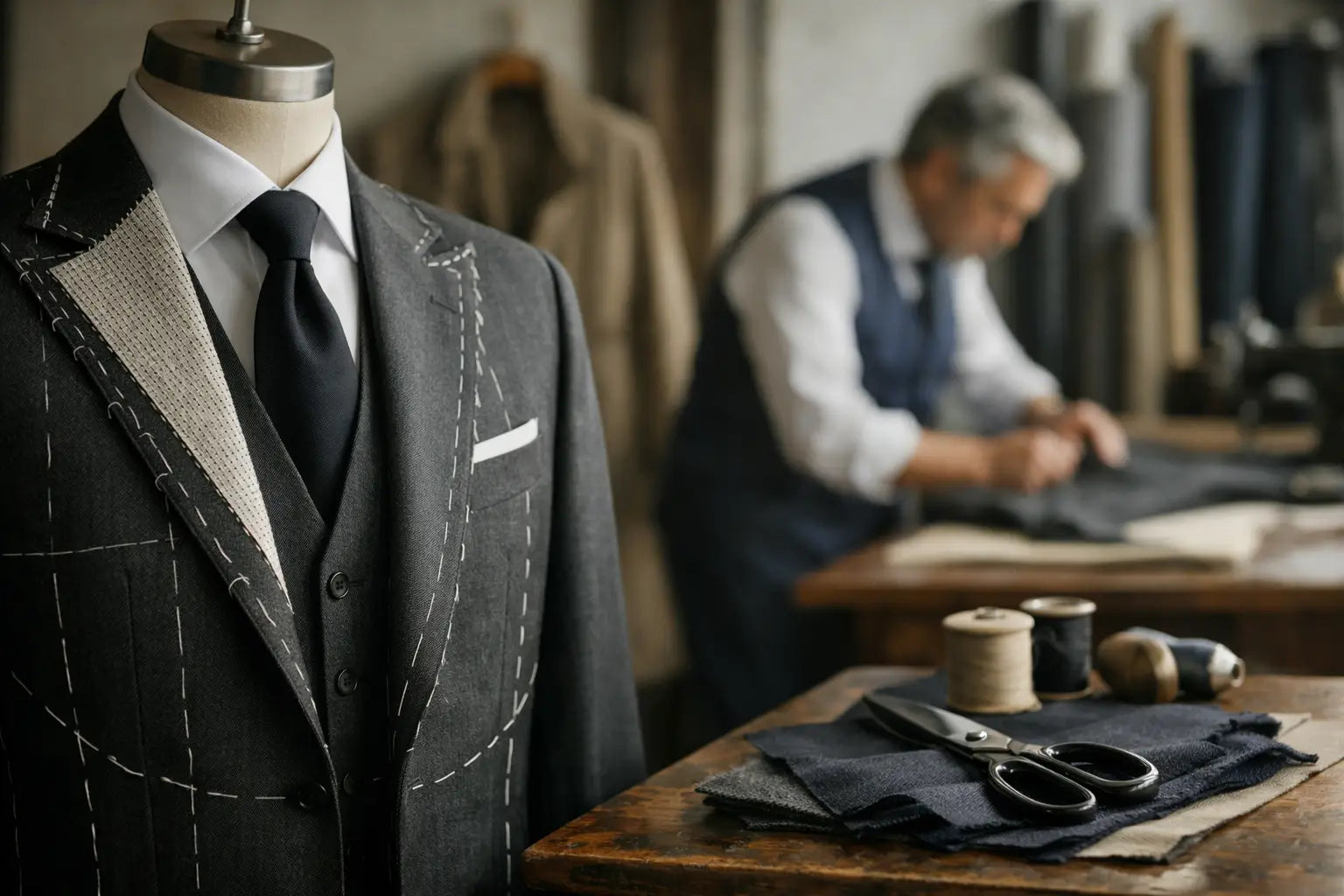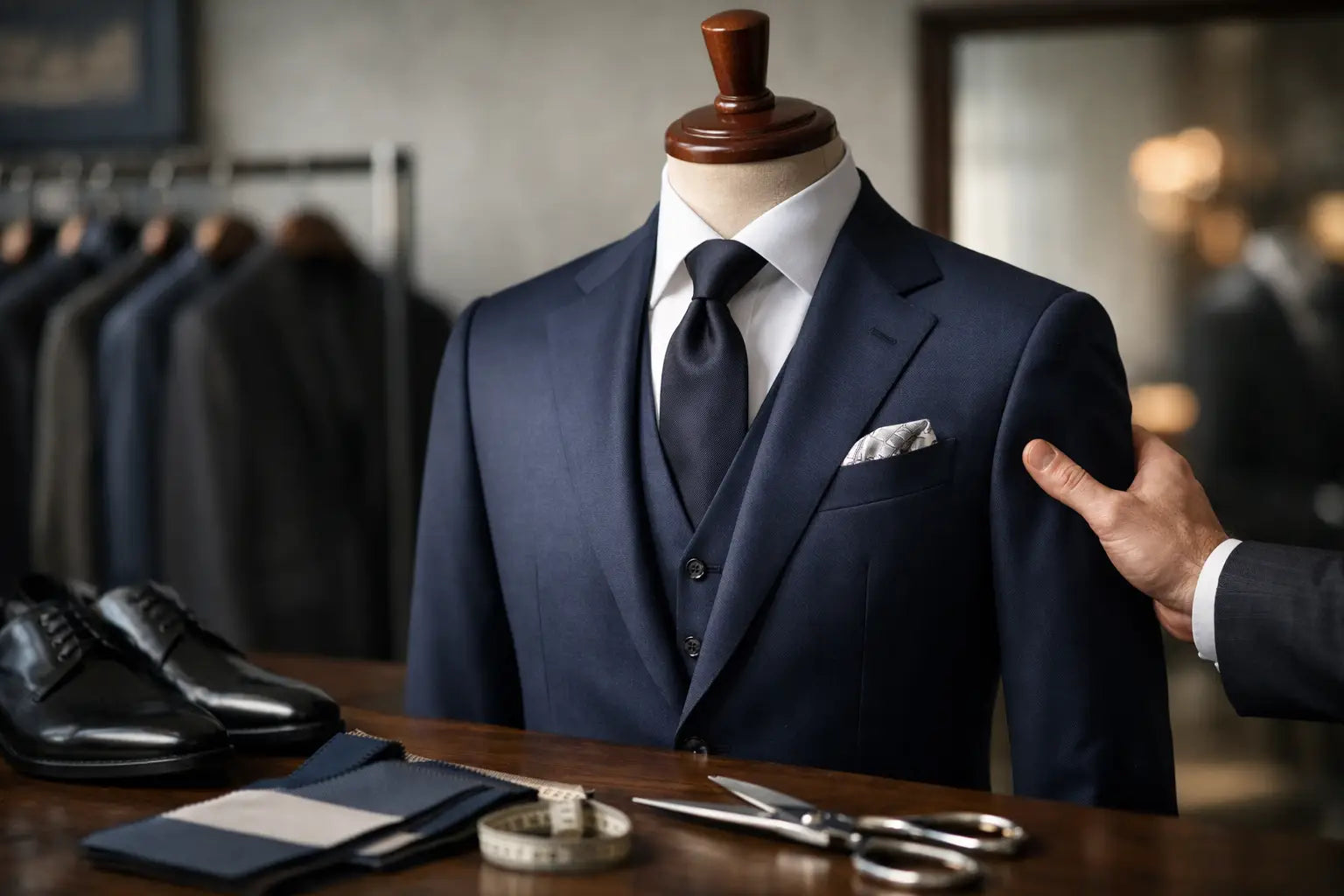
How to Choose the Best Luxury Tailored Suit
A suit can be expensive and still look forgettable. That is the distinction discerning men tend to recognise early: price alone does not create presence. The best luxury tailored suit is not defined by a label, nor by a fabric swatch presented with ceremony. It is defined by how precisely it serves the man wearing it - his frame, his movement, his standards, and the impression he intends to leave.
For clients who live in business settings where appearance carries weight, this is not a decorative purchase. A truly tailored suit shapes how you enter a room, how long people remember you, and whether your clothing supports authority or quietly undermines it.
What makes the best luxury tailored suit
Luxury in tailoring begins where standard sizing ends. The finest suit is built with intent, not merely adjusted after the fact. That difference matters because a garment altered from a pre-existing block can only ever improve within fixed limits. A bespoke suit starts with the body itself, and with the man behind it.
The shoulder line is usually the first tell. When it is cut correctly, the jacket sits with ease and certainty, neither pulling nor collapsing. The chest should feel clean and composed, the collar resting close to the neck, the waist shaped without strain. Trousers should lengthen the leg rather than interrupt it. None of this should look forced. Precision, at this level, appears natural.
This is why the best luxury tailored suit rarely announces itself through obvious styling. It feels quieter than that. Its value is seen in balance, restraint and confidence.
Bespoke, made to measure, and the gap between them
Many men use these terms interchangeably, but they are not the same. If you are comparing options at the premium end of the market, the distinction is worth understanding.
Made to measure modifies an existing pattern. It can produce a respectable result for some physiques and simpler requirements. For a man with proportionally standard posture, shoulders and balance, it may be sufficient for occasional wear.
Bespoke is a different discipline. A unique pattern is drafted for the individual client, and the garment is developed through fittings that refine shape, drape and comfort in real time. This matters most when the client expects more than a decent fit. If he wants a suit built entirely around the body it belongs to, bespoke is the standard.
The trade-off is straightforward. Bespoke requires more attention, more consultation and more patience. In return, it offers a level of personal calibration that standard luxury simply cannot match.
Why fit is only the beginning
Clients often begin by saying they want a better fit. What they usually mean is more complex. They want cleaner lines, stronger posture, more confidence, greater ease in movement, and a silhouette that reflects who they are rather than what was available on a rail.
A well-cut suit can broaden a narrow frame, sharpen a softer one, soften excessive height, or bring authority to a younger appearance. These are not tricks. They are judgements made through pattern, proportion and balance.
That is where craftsmanship becomes strategic. The suit is no longer just clothing. It becomes part of personal positioning.
How to judge quality beyond the obvious
The best luxury tailored suit should feel exceptional long before anyone mentions the cloth mill. Fabric matters, certainly, but it is only one component. Construction, line and decision-making matter just as much.
Start with how the jacket behaves when worn. Does it sit close to the collar when you move? Does the chest hold shape without stiffness? Do the lapels roll with elegance rather than pressing flat? A superior jacket has life in it. It follows the wearer instead of resisting him.
Then consider proportion. Peak or notch lapel, button stance, pocket style, jacket length and trouser rise must work together. A beautiful fabric can be diminished by poor judgement here. The opposite is also true: a refined, balanced cut can elevate even relatively understated cloth.
Lining, button choice and finishing should support the whole rather than compete with it. Luxury is often most convincing when nothing appears overdone.
The role of fabric in luxury tailoring
Cloth influences not only appearance, but behaviour. A business suit worn through long meetings and frequent travel requires different performance from one intended primarily for evening events or formal occasions.
Fine wool remains the foundation for good reason. It drapes well, breathes properly and holds colour with depth. For warmer climates, lighter weights and open weaves offer comfort without sacrificing structure. In a city such as Dubai, where heat and indoor air conditioning create competing demands, fabric selection becomes particularly important. A suit must retain composure in both conditions.
Cashmere blends can add softness and richness, but they are not always the most practical choice for heavy rotation. Mohair can bring crispness and resilience, though some men prefer a less assertive handle. The right cloth depends on usage, schedule and temperament. There is no prestige in choosing a fabric that works against your life.
The consultation should feel as tailored as the suit
A proper tailoring experience does not begin with measurements. It begins with questions. Where will the suit be worn? What does the client want to project? Is the priority boardroom authority, evening refinement, or understated distinction during travel and private engagements?
The answers shape everything that follows. A powerful double-breasted jacket may suit one man perfectly and be wrong for another. A slightly extended shoulder can convey command, but only if it respects the client’s build and character. The best tailors are not merely taking orders. They are interpreting identity.
This is where many luxury experiences fall short. They offer choice, but not guidance. Real bespoke service provides both. It narrows the field intelligently, steering the client away from flattering ideas that may not serve him over time.
Why fittings matter
A first fitting reveals more than a tape measure ever could. Posture, shoulder rotation, arm position and natural stance all influence the final garment. The second and third fittings refine the dialogue between cloth and body.
Skipping this stage is one of the clearest signs that a service is more transactional than bespoke. The best luxury tailored suit is developed, not simply ordered. Every fitting removes approximation. It brings the garment closer to inevitability.
Style choices that age well
Men investing at this level are rarely looking for novelty. They want distinction, but not fashion noise. The strongest tailored wardrobes tend to favour enduring decisions: balanced lapels, thoughtful suppression at the waist, elegant trouser lines, and colours that remain useful year after year.
Navy, charcoal and deep mid-grey continue to earn their place because they perform across business, travel and evening settings with very little effort. That said, subtle variety can be powerful. A dark brown suit in the right cloth can feel warmer and more cultured than expected. A refined pinstripe can project authority when cut with restraint.
Personal style should never be erased in the name of timelessness. It simply needs discipline. Monograms, contrast details and exaggerated cuts often age faster than the client’s appetite for them.
When the best choice is not the most expensive one
This is where judgement separates luxury from theatre. The most expensive cloth, the rarest button or the most elaborate finishing do not automatically produce the best luxury tailored suit for a given man.
If the suit is intended for frequent business use, durability and versatility may matter more than rarity. If it is for a wedding or a singular public occasion, the client may reasonably prioritise richer texture or a more dramatic silhouette. Context decides value.
The right tailor should be confident enough to say so. Advice with integrity is part of what clients are paying for.
For men who expect their wardrobe to work as hard as they do, tailoring should never be reduced to ornament. It should offer clarity. The right suit does not distract from the man. It sharpens him, steadies him and lets his presence speak with greater precision. That is usually the point at which luxury becomes worth having.