Tailoring Trends for Business Leaders in 2026
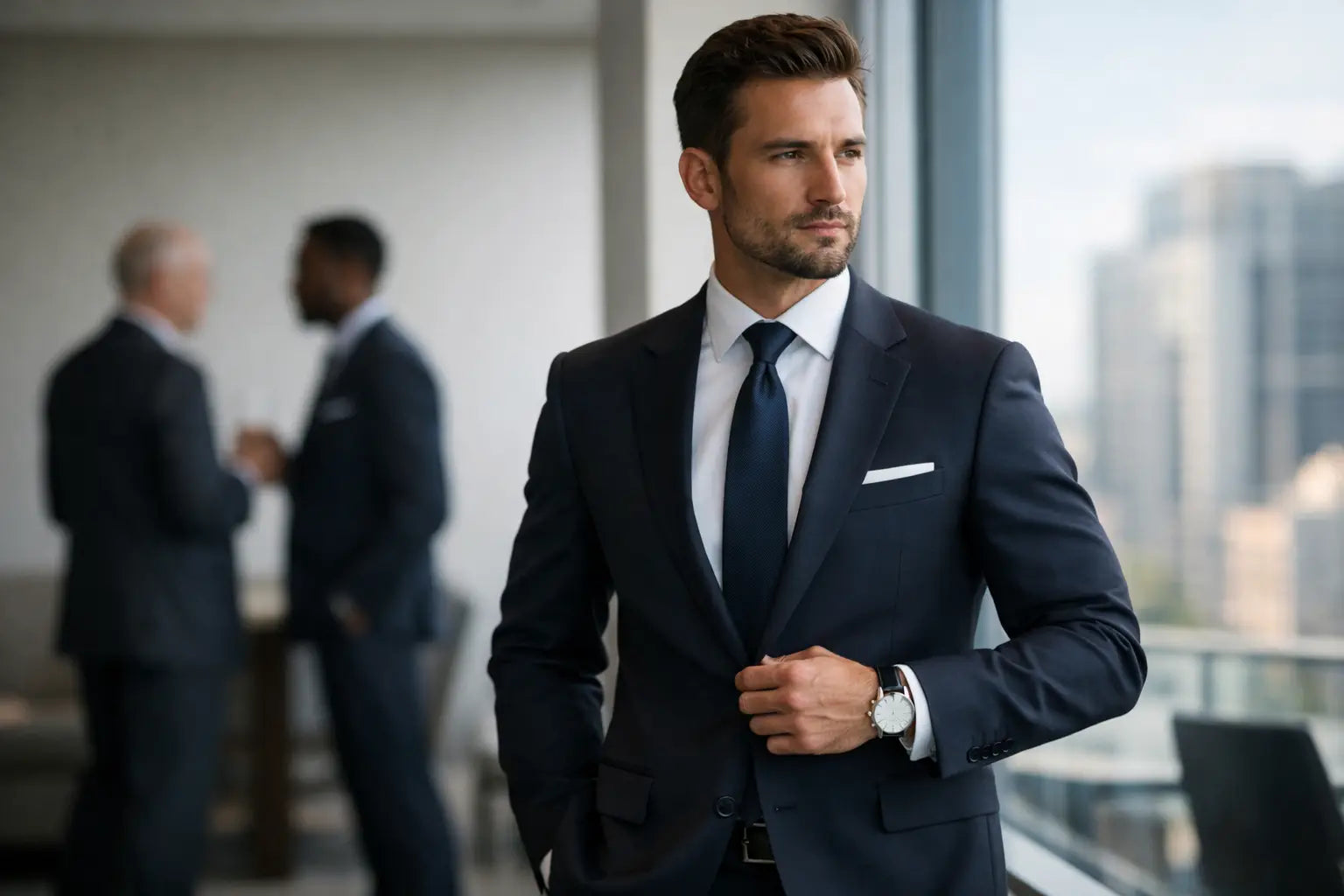
A boardroom rarely remembers every word. It remembers presence. The line of a jacket across the shoulder, the calm of a clean silhouette, the impression of a man who appears considered before he has even taken his seat. That is why tailoring trends for business leaders deserve more than a passing glance at seasonal fashion. They are not about novelty. They are about how authority is expressed through cloth, cut and restraint.
For the modern executive, tailoring has shifted away from display and towards control. The strongest wardrobes no longer chase attention through overt branding or exaggerated styling. They communicate judgement. A well-cut suit suggests discipline, clarity and self-respect. In a business environment where reputation is often formed in moments, those details carry weight.
Tailoring trends for business leaders are becoming quieter
The clearest movement in luxury menswear is towards understatement. Business leaders are choosing garments that project confidence without insisting on it. This means fewer loud checks, fewer sharp contrasts and less dependence on obvious status signals. In their place, we see rich navy, deep charcoal, tobacco brown and elegant mid-grey, often in fabrics with subtle texture rather than visible pattern.
This is not minimalism for its own sake. It is a more intelligent form of dressing. Quiet tailoring allows the man to remain the focus while the garment supports his presence. In senior roles, where every visual cue contributes to credibility, that balance matters. A suit should not look busy. It should look exact.
There is, however, a trade-off. Understated dressing requires better cut, better cloth and better finishing. When a garment is simple, every proportion becomes visible. The shoulder line, lapel width, sleeve pitch and trouser break all matter more. Quiet luxury is only persuasive when the tailoring is precise.
The return of softness with structure
One of the most relevant developments is the move towards softer construction. Many business leaders now prefer jackets with lighter canvassing, less padding and greater ease through the chest. The result is comfort without collapse. The coat follows the body rather than fighting it.
This works particularly well for men who travel often, move between meetings and expect a suit to perform across a full day. In warmer climates such as Dubai, lighter structure also offers practical value. The jacket feels more natural, breathes more effectively and retains refinement without unnecessary weight.
Yet softer tailoring is not the same as casual tailoring. A business suit still requires architecture. Too little structure can weaken the silhouette and diminish authority, especially on slimmer frames or in highly formal settings. The right choice depends on body shape, role and environment.
Fit is no longer a trend. It is the standard.
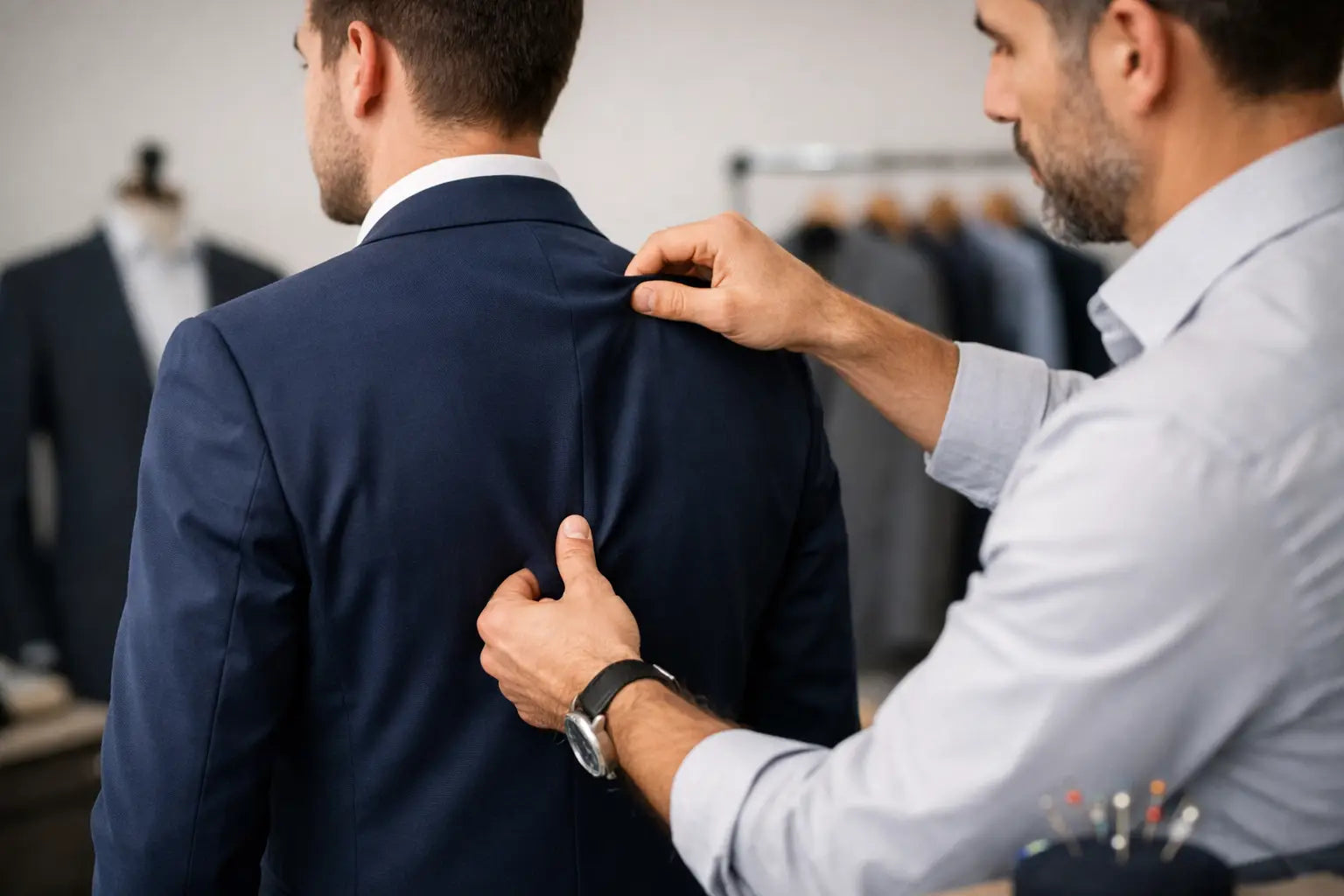
Perhaps the most decisive shift is that business leaders are no longer willing to excuse poor fit. Off-the-rack suiting often asks the wearer to compromise - a clean shoulder but a loose waist, a good trouser line but a restricted seat, a passable jacket that never quite settles. For men whose image is part of their professional capital, those compromises have become less acceptable.
Modern bespoke responds to this with a more exact philosophy. A garment built entirely around the body it belongs to does more than improve comfort. It changes posture, movement and confidence. The wearer stops adjusting, pulling or second-guessing. He simply arrives as intended.
This is particularly relevant for executives whose diaries are not gentle. Long hours, frequent engagements and high visibility demand clothing that remains composed under pressure. A precise fit supports that composure. It allows the suit to hold its line from the first meeting to the last dinner.
Trousers are cleaner and more considered
Trousers deserve more attention than they often receive. Current preferences favour a cleaner leg, a slightly higher rise and a line that elongates without clinging. Extreme slimness has lost ground because it ages quickly and rarely flatters a mature, accomplished wearer. At the other end, overly generous volumes can feel theatrical rather than assured.
The best modern trouser sits in the middle. It gives the leg definition, allows easy movement and aligns with the jacket in a way that feels balanced. Side adjusters remain a sophisticated choice, particularly for men who prefer an uninterrupted waistband. Pleats have returned in a more refined form as well, offering shape and comfort without appearing old-fashioned.
Fabric choices now reflect lifestyle as much as status
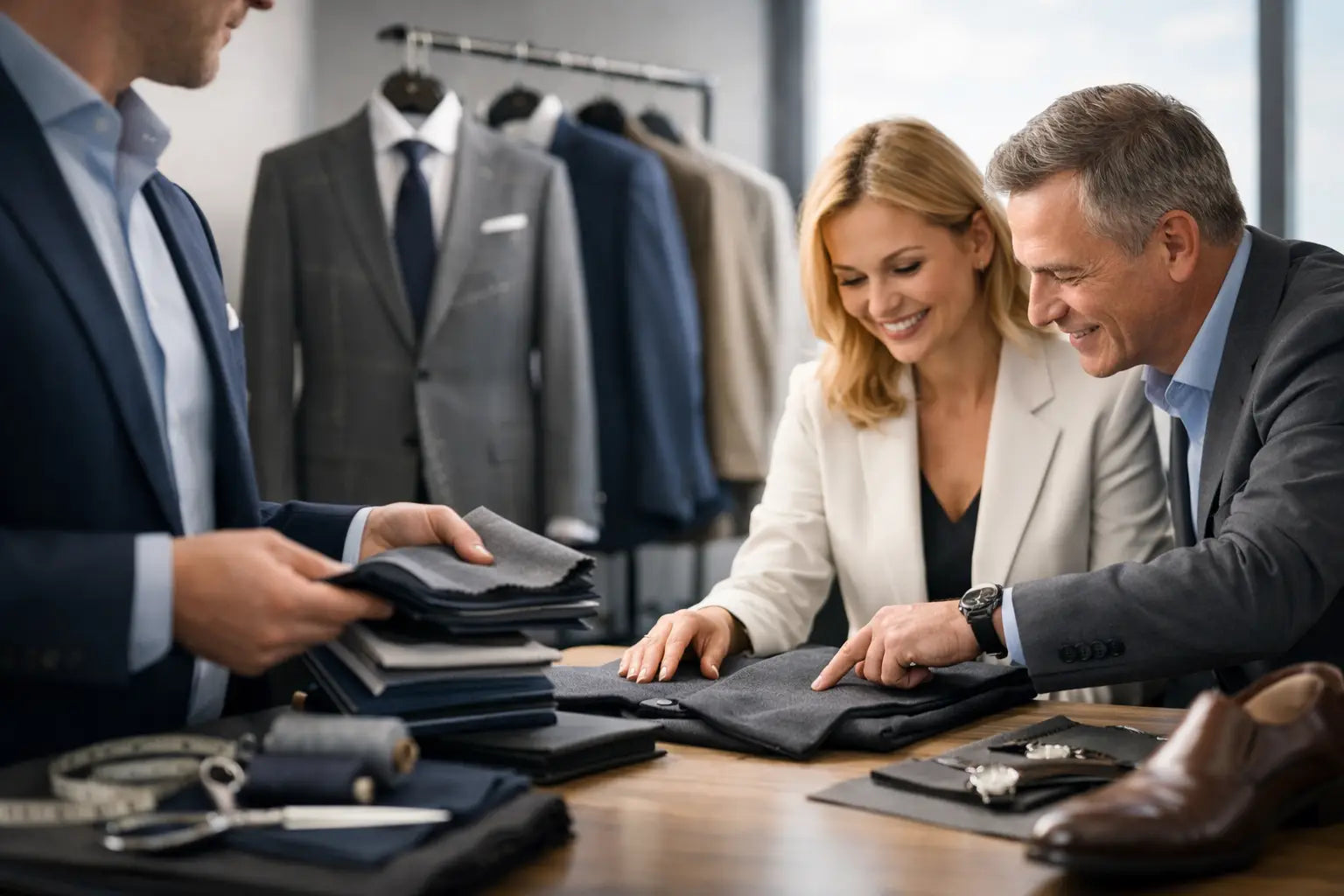
A business leader does not build a wardrobe for one photograph. He builds it for a real schedule. That is why cloth selection has become more strategic. The current preference is for fabrics that hold elegance while serving the demands of business life: lightweight wools, wool-mohair blends for resilience, fresco weaves for breathability, and brushed finishes for quieter depth in cooler months.
Texture is doing much of the work once handled by pattern. Instead of bold windowpanes or heavy contrast stripes, there is increased appreciation for tonal interest - hopsack, twill, birdseye and understated flannel. These fabrics read beautifully at close range and remain disciplined from a distance.
There is also a growing awareness that seasonless dressing is not always realistic. A man in the Gulf region has different needs from one commuting through London in February. The best wardrobes recognise climate, travel and diary. Bespoke tailoring allows for this level of calibration, ensuring the cloth serves the man rather than the other way round.
Personal branding has become more subtle and more exact
The best-dressed business leaders are not copying a look from someone else. They are refining a visual identity. That may mean a preference for broader lapels, a slightly extended shoulder, a consistent choice of double cuffs, or a house style in deep neutrals with occasional earth tones. The point is not ornament. The point is recognition.
This is where tailoring moves beyond fashion and into personal strategy. A bespoke wardrobe can create continuity across meetings, public appearances and private events. Over time, people begin to associate a certain standard of dress with a certain standard of thinking.
Naturally, this must be handled with judgement. Too much styling can become costume, especially in conservative industries. The strongest expressions of individuality are often the least obvious to the casual observer. They appear as coherence rather than decoration.
Evening and business dress are drawing closer
Another shift worth noting is the narrowing gap between formal business dress and evening tailoring. Many leaders want garments that can move from a late afternoon meeting to a private dinner without requiring a complete change. This has encouraged richer cloths, softer sheen, darker tonal palettes and more elegant detailing.
A midnight navy suit in a fine wool can perform beautifully in both contexts. So can a double-breasted jacket cut with discipline rather than swagger. The modern wardrobe values versatility, but not at the expense of distinction. The aim is to look appropriate in both settings, not interchangeable.
Why bespoke matters more as trends become less obvious
When fashion is loud, it is easy to imitate. When style becomes quieter, expertise matters more. That is precisely why bespoke has gained renewed relevance among discerning professionals. If the suit is judged on proportion, balance, movement and finish, then individual pattern making and careful fittings are no longer indulgences. They are the foundation.
A true bespoke process offers more than choice of fabric or monogram. It studies the way a man stands, where one shoulder may sit lower, how his posture affects drape, how his jacket should behave when he sits, reaches or walks. It also considers how he wishes to be perceived. Commanding. Approachable. Decisive. Refined. The garment is shaped around both body and intention.
For clients who value privacy, consistency and elevated service, that experience has a particular appeal. Houses such as DONFIORITO understand that luxury tailoring is not merely about acquiring clothing. It is about creating a wardrobe with clarity and purpose, one that supports the man in the moments that define him.
The most relevant tailoring trends are therefore not really trends at all. They are a return to essentials executed at a higher standard: lighter structure, better cloth, truer fit, quieter confidence. For business leaders, that is good news. It means dressing well no longer depends on being fashionable. It depends on being precise.
And precision has a way of being remembered long after the meeting ends.