

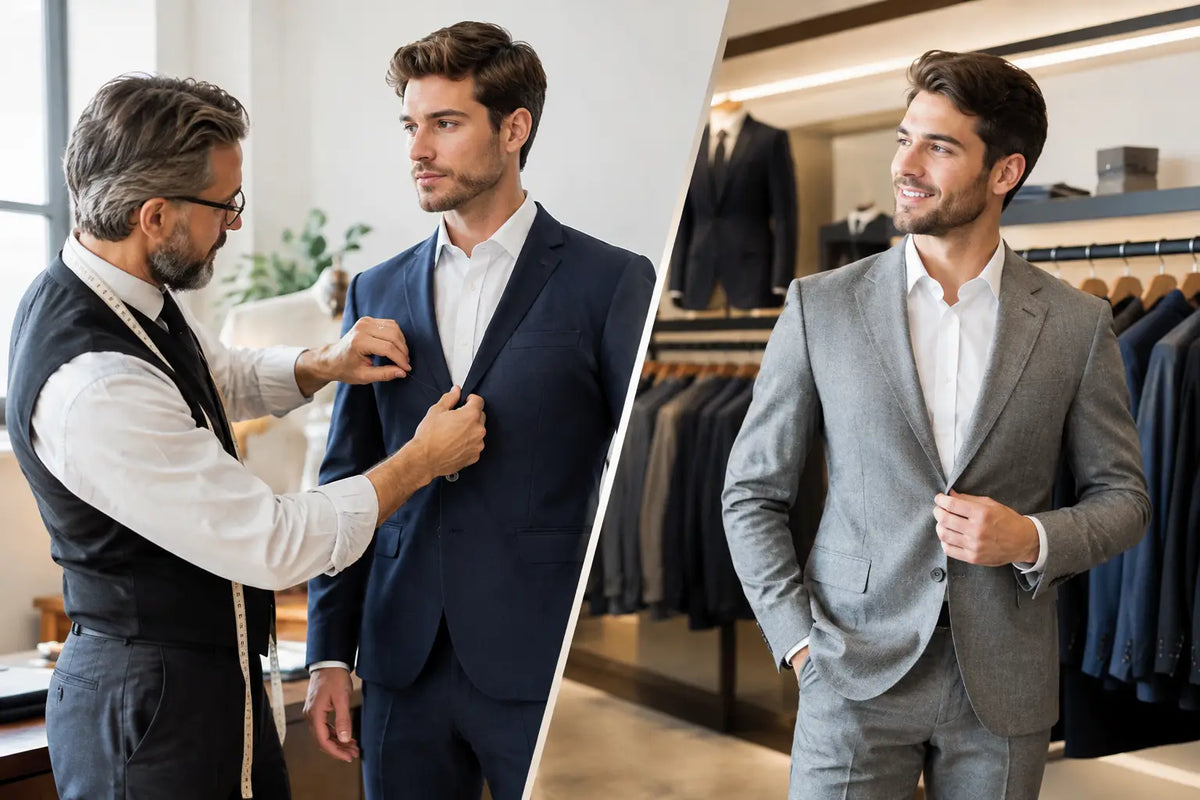
Private Tailor Versus Boutique: Which Suits You?
A suit can look correct on the hanger and still fail the moment you move through a boardroom, step from a car, or take your place across a negotiating table. The question of private tailor versus boutique is not simply about where to buy a jacket. It is about whether the garment is selected for you or built around you.
For men whose appearance carries professional and social weight, that distinction is substantial. A well-chosen boutique suit may offer speed, a recognisable label and a polished retail setting. A private tailor offers something more considered: a garment shaped around your proportions, your routine and the impression you intend to make.
Private Tailor Versus Boutique: The Real Difference
A boutique generally begins with a finished product. You enter, browse a curated collection, try several sizes and select the closest option. Alterations may refine the sleeve length, trouser hem or waist suppression, but the underlying pattern was created for a broad customer profile rather than your individual body.
A private tailor begins elsewhere. The process starts with observation and conversation. How do you spend your working day? Do you travel frequently? Do you prefer a commanding shoulder or a quieter, more natural line? Are you dressing for formal meetings, evening events, or a wardrobe that must move confidently between both?
Those answers inform the cut before cloth is even chosen. Measurements establish the foundation, but they are only part of the work. Posture, shoulder balance, stance, chest shape and the way you naturally carry yourself all influence the pattern. The result is not merely a suit in your size. It is a suit with your presence in mind.
The Boutique Advantage: Immediate Choice and Visible Labels
A strong luxury boutique has genuine appeal. It gives the client an opportunity to see garments immediately, assess fabrics in person and leave with a clear sense of a house style. If you need a suit at short notice, or enjoy a particular ready-to-wear silhouette, a boutique can be the practical choice.
Boutique collections can also be useful for less consequential pieces: casual jackets, knitwear, shirts, weekend trousers or a seasonal item you do not expect to wear for years. Retail is designed to offer selection efficiently, and for many purchases that is entirely appropriate.
The limitation emerges when fit is central to the garment's purpose. A ready-made jacket is designed around standardised balance. If you have one shoulder lower than the other, a prominent chest, a forward posture, athletic thighs or a longer torso, alterations can improve the appearance but cannot completely rewrite the original architecture. The garment may be respectable. It may not feel inevitable.
There is also the question of distinction. Boutique suiting is curated, but it is repeated. The same cloth, lapel shape and overall cut may appear on several other men within the same season. For a client who values individuality, that is worth considering.
What a Private Tailor Creates
Private tailoring is a service of interpretation. The tailor translates the client's requirements into proportion, cloth, construction and detail. A navy suit for an investor and a navy suit for a hotelier may share a colour, yet demand entirely different expression.
One man may need a sharper shoulder and a clean, authoritative line for investor meetings. Another may benefit from a softer jacket with greater movement for frequent travel and long days between appointments. The correct choice is not dictated by fashion alone. It is determined by body, setting and personal intent.
A private consultation creates room for these decisions. Rather than asking whether a jacket fits, the conversation considers how it should perform. The jacket length can be calibrated to the wearer's proportions. The trouser rise can support comfort while preserving a refined silhouette. The lapel width, pocket style, lining and button stance can be selected in harmony rather than as isolated preferences.
At DONFIORITO, this is treated as The Art of Bespoke: a disciplined process in which every decision serves the man wearing the garment. The aim is never decoration for its own sake. It is a composed, confident result built entirely around the body it belongs to.
Fittings Reveal the Difference
The first fitting is where private tailoring separates itself most clearly from an altered boutique purchase. A suit may look promising in a mirror, yet fitting reveals where the cloth pulls, where the collar fails to sit, or where the jacket loses its line in motion.
A private tailor studies these details in sequence. The balance of the coat, the fall of the sleeve, the drape across the back and the break of the trouser are refined while the garment is still in progress. This allows structural adjustments that ordinary alterations cannot realistically provide.
Multiple fittings require time, and that is a trade-off. Bespoke is not the answer for a gala invitation next weekend. It rewards the client who values precision over immediacy and who recognises that the most useful wardrobe is built with intention, not assembled in haste.
The reward is felt long after collection. When the armhole is cut properly, movement is easier without excess cloth. When the trouser is balanced to your stance, it maintains its line as you walk and sit. When the jacket collar rests correctly against the neck, the suit appears calm rather than strained. These qualities are rarely dramatic in isolation. Together, they are unmistakable.
Fabric Is More Than a Swatch
Both a boutique and a private tailor may offer fine cloth. The difference lies in how it is selected and used. In a boutique, cloth is usually chosen by the buying team months before the client arrives. In private tailoring, it is selected for the commission itself.
Dubai's climate makes this especially relevant. A cloth that appears luxurious under boutique lighting may prove too heavy for daytime wear, too delicate for regular travel, or too informal for the environments in which you lead. The appropriate choice may be a breathable wool with a clean finish, a high-twist cloth that recovers well, or a lighter composition reserved for particular occasions.
A good tailor will not simply present the most expensive book. He will guide the client towards cloth that fulfils its purpose. Weight, weave, resilience, breathability and drape all matter. So does the frequency with which the suit will be worn. A beautiful fabric that remains in the wardrobe is not a successful choice.
Value Depends on What You Expect From the Suit
Comparing prices alone can be misleading. A boutique suit has a visible ticket price and may appear less demanding because it is available immediately. A private tailored suit costs more not only because of the cloth, but because it includes consultation, pattern development, fittings, handwork and personal judgement.
For occasional wear, a boutique suit can be sensible. If the fit is close, the occasion is limited and the garment is not carrying a great deal of professional significance, there may be no need for a longer process.
For a man who wears tailoring weekly, however, private tailoring often represents better value over time. A suit that sits correctly, remains comfortable through a full day and continues to feel relevant after seasons change is worn more often and with greater assurance. The value is not only in durability. It is in the absence of compromise.
There is a further advantage in continuity. Once a private tailor understands your pattern and preferences, future commissions become more precise. Your wardrobe develops a coherent language: jackets that work with existing trousers, shirts that sit correctly beneath your preferred collar shape, and formal pieces that feel recognisably yours without becoming repetitive.
How to Make the Right Choice
Choose a boutique when time is limited, your needs are straightforward, and you find a garment that genuinely fits with only minor alterations. There is no virtue in commissioning bespoke simply because the word sounds luxurious.
Choose a private tailor when your wardrobe is part of your professional identity, when standard sizing repeatedly disappoints, or when you want a suit that reflects your judgement rather than a seasonal buying decision. It is also the stronger choice when comfort, proportion and discretion matter as much as outward style.
The best suit does not ask for attention through excess. It allows you to enter the room already composed, because every line has been considered before you arrive.


