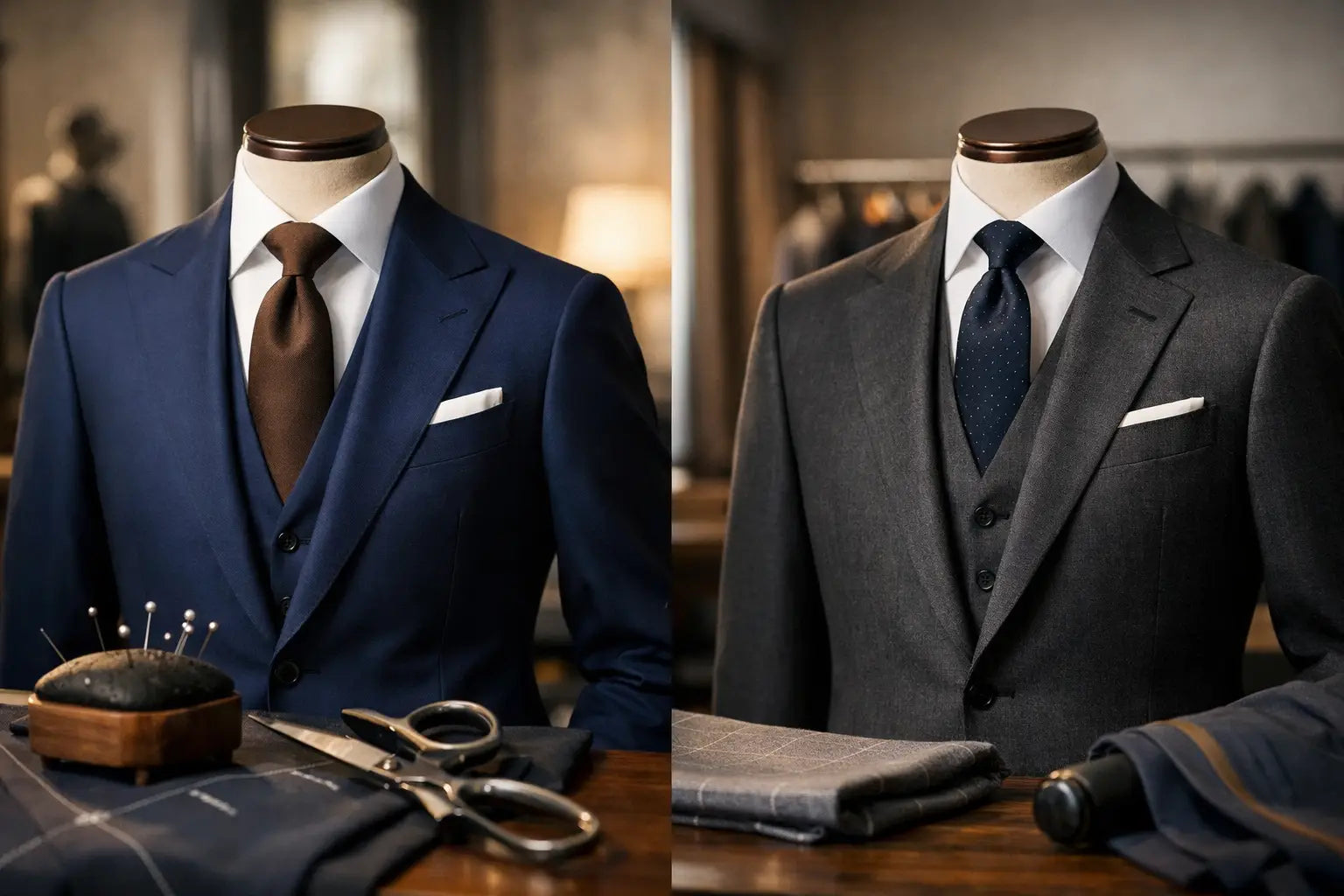
Bespoke Suits Dubai: What Sets Them Apart
A suit can look expensive on the hanger and still fail the moment it is worn. The shoulder sits a touch too wide, the collar lifts at the neck, the trouser line breaks awkwardly, and the whole impression loses authority. That is precisely why bespoke suits Dubai clients commission occupy a different category altogether. They are not simply purchased. They are conceived around the man who will wear them, the rooms he enters, and the impression he intends to leave.
For men whose appearance carries professional weight, fit is never a superficial concern. It shapes posture, ease, and confidence in a way ready-made garments rarely can. A truly bespoke suit does more than flatter the body. It creates visual balance, refines proportion, and gives the wearer a sense of command that cannot be replicated by standard sizing or superficial alterations.
What bespoke really means
The word is often used loosely, which has made the market harder to read. Many garments described as bespoke are, in reality, made-to-measure. That is not necessarily a flaw, but it is a different proposition.
A bespoke suit begins with an individual pattern drafted specifically for one client. It is built entirely around the body it belongs to, rather than adjusted from an existing block. That distinction matters because no two men stand, move, or carry themselves in quite the same way. One shoulder may sit lower. The chest may be fuller. The seat may require more room while the waist remains lean. These subtleties are where true tailoring begins.
Made-to-measure can improve fit significantly when compared with off-the-rack tailoring, but it still works within an existing framework. Bespoke starts from zero. It allows a greater level of precision, more control over silhouette, and a garment that feels personal in every sense.
Why bespoke suits Dubai clients commission demand more precision
Dubai is a city where presentation is rarely incidental. Business moves quickly, expectations are high, and first impressions are often formed before a word is spoken. In that context, a suit must do more than look polished under flattering light. It must perform through long meetings, formal events, travel schedules, and changing climates.
This creates a specific demand for tailoring. Cloth weight matters. Breathability matters. Construction matters. A suit that feels magnificent in a cooler European setting may feel unnecessarily heavy here. Equally, a very light suit can lose structure if it is not cut with intelligence. Bespoke tailoring resolves that tension through balance - preserving sharpness while ensuring comfort and fluidity.
There is also the question of lifestyle. Some clients need a boardroom suit with quiet authority. Others require evening tailoring with stronger character. Some want a wardrobe that transitions between Gulf business culture, international travel, and private social engagements. Bespoke responds to those nuances because it is based on the individual, not the category.
The process behind a proper bespoke suit
Luxury is often misunderstood as excess. In tailoring, it is better defined as control. The bespoke process is valuable not because it is elaborate for its own sake, but because each stage serves a clear purpose.
Consultation
The first conversation should go beyond measurements. A skilled tailor will ask how often the suit will be worn, what environments it must suit, how formal your preferences are, and how you want to be perceived. Some men want restraint and understatement. Others want distinction without theatricality. Both require judgement.
This stage also establishes silhouette. A stronger shoulder, a softer chest, a higher gorge, a cleaner waist suppression - these choices alter the character of the garment dramatically. The best tailoring houses guide rather than overwhelm, translating personal taste into something refined and coherent.
Fabric selection
Fabric is not decoration. It determines drape, comfort, resilience, and how the suit behaves over time. A client who travels frequently may need a cloth that resists creasing. Someone commissioning a suit for evening functions may prioritise depth of colour and richness of texture. A daily business suit may call for versatility above all else.
There is no universally superior choice. Super-fine cloths can feel extraordinary, but they are not always the most practical. Heavier fabrics may drape beautifully, yet be less suitable in warmer conditions. This is where expertise matters - not simply presenting options, but recommending the right cloth for the man and the purpose.
Fittings
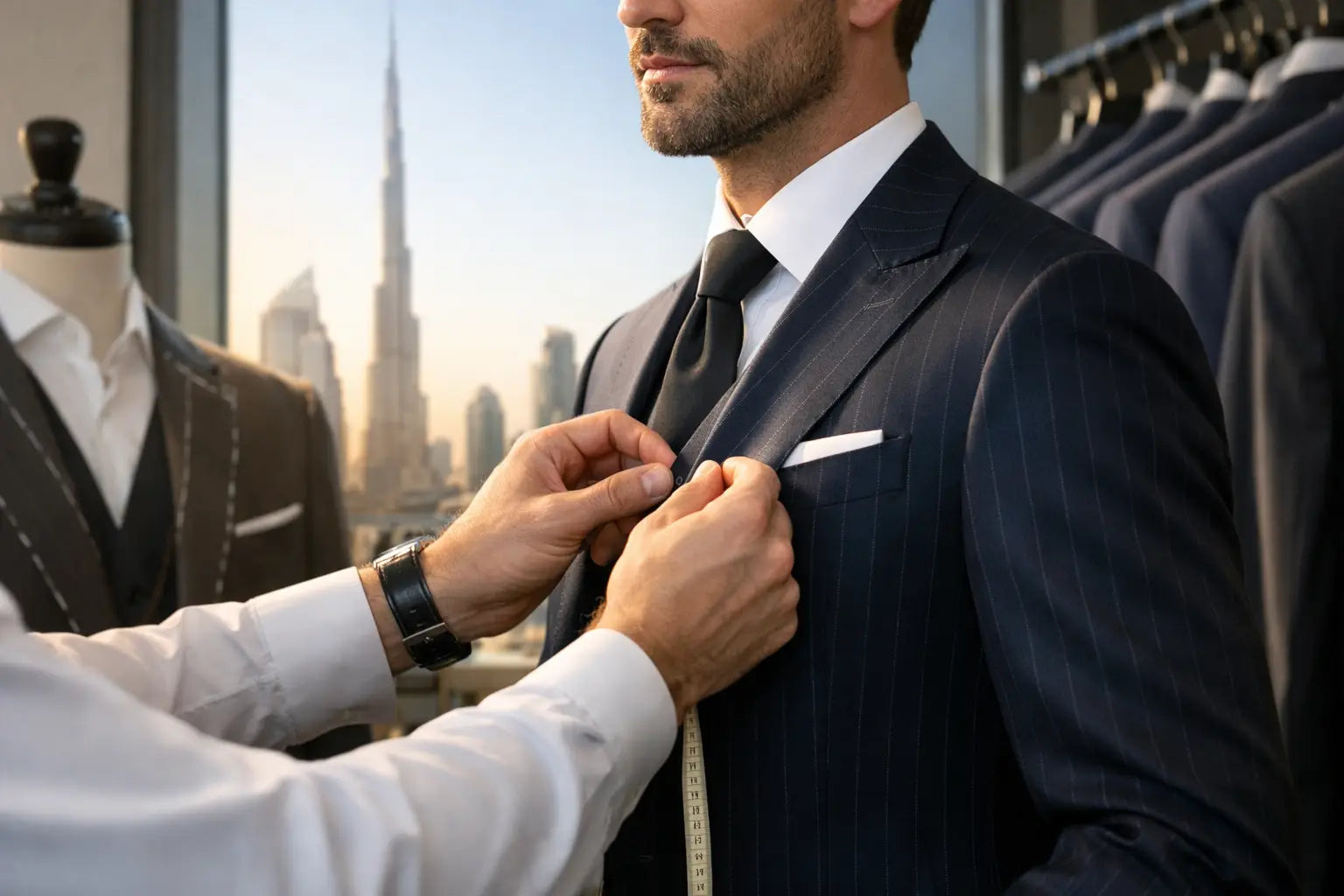
This is where bespoke separates itself from transactional tailoring. Fittings reveal how the garment interacts with the body in motion, not just at rest. The line of the sleeve, the balance of the coat, the suppression at the waist, the shape of the trouser - all are refined here.
A suit can appear close enough after a single adjustment, but close enough is not the point. The objective is harmony. When the pattern, cloth, and fittings are handled correctly, the final result feels composed rather than forced.
Final delivery
At delivery, the suit should feel instinctive. The wearer should not be conscious of compromise. He should notice ease in the shoulders, clean lines through the torso, and the quiet confidence that comes when a garment moves as though it belongs to him. That is the standard bespoke ought to meet.
Bespoke suits Dubai men should look for - signs of true quality
Quality in tailoring is rarely loud. It is seen in restraint, proportion, and the absence of strain.
The collar should sit cleanly against the neck. The lapels should roll with elegance rather than stiffness. The chest should feel shaped, not padded into artificiality. Sleeves should fall cleanly, and the jacket should remain balanced whether buttoned or open. Trousers should elongate the leg rather than bunch at the ankle or pull across the thigh.
Then there is comfort, which affluent clients often value more with experience. A well-made bespoke suit should not feel restrictive. It should support natural movement while preserving form. If a jacket looks sharp only when the wearer stands perfectly still, it has not truly been solved.
Equally, quality includes discretion. Personalisation should not become novelty. A monogram, lining, or distinctive cloth can add character, but the most sophisticated suits are memorable because they look inevitable on the wearer, not because they demand attention.
The trade-off: when bespoke is worth it
Bespoke is not the correct answer for every purchase. If a client needs a simple garment quickly for occasional use, made-to-measure may be entirely sufficient. If his body fits standard proportions unusually well, ready-to-wear with excellent alterations can also serve a purpose.
But those scenarios are narrower than many imagine. Men who wear tailoring regularly, men whose physiques do not suit standard blocks, and men whose image is commercially or socially significant tend to recognise the difference immediately. They are not paying for excess fabric or decorative detail. They are investing in consistency, authority, and ease.
That is why the value of bespoke is cumulative. The first suit teaches a tailor your posture, preferences, and visual language. The next becomes sharper still. Over time, this creates a wardrobe with coherence - garments that work together, reflect the same standard, and remove uncertainty from how one dresses.
Choosing a bespoke tailor with discernment
A serious client should look beyond marketing language. Ask how the pattern is created. Ask how many fittings are involved. Ask who advises on cloth, cut, and proportion. A proper bespoke service should feel exacting yet effortless from the client’s perspective.
The strongest tailoring houses combine craftsmanship with judgement. They understand that a businessman in Dubai does not need costume. He needs clarity. He needs a garment that reads as assured in the morning, composed in the evening, and appropriate in every room between.
That level of service is also personal. Private appointments, measured guidance, and genuine continuity are not indulgences. They are part of how precision is achieved. When a house understands not only your frame but your pace of life and standard of presentation, the result is more than a suit. It becomes an extension of personal presence.
At DONFIORITO, that principle sits at the heart of the experience: tailoring as a deliberate act of refinement, built around the man who wears it.
The best bespoke suit does not announce itself with noise. It simply makes the right impression feel effortless, which is often the most powerful form of luxury a man can wear.