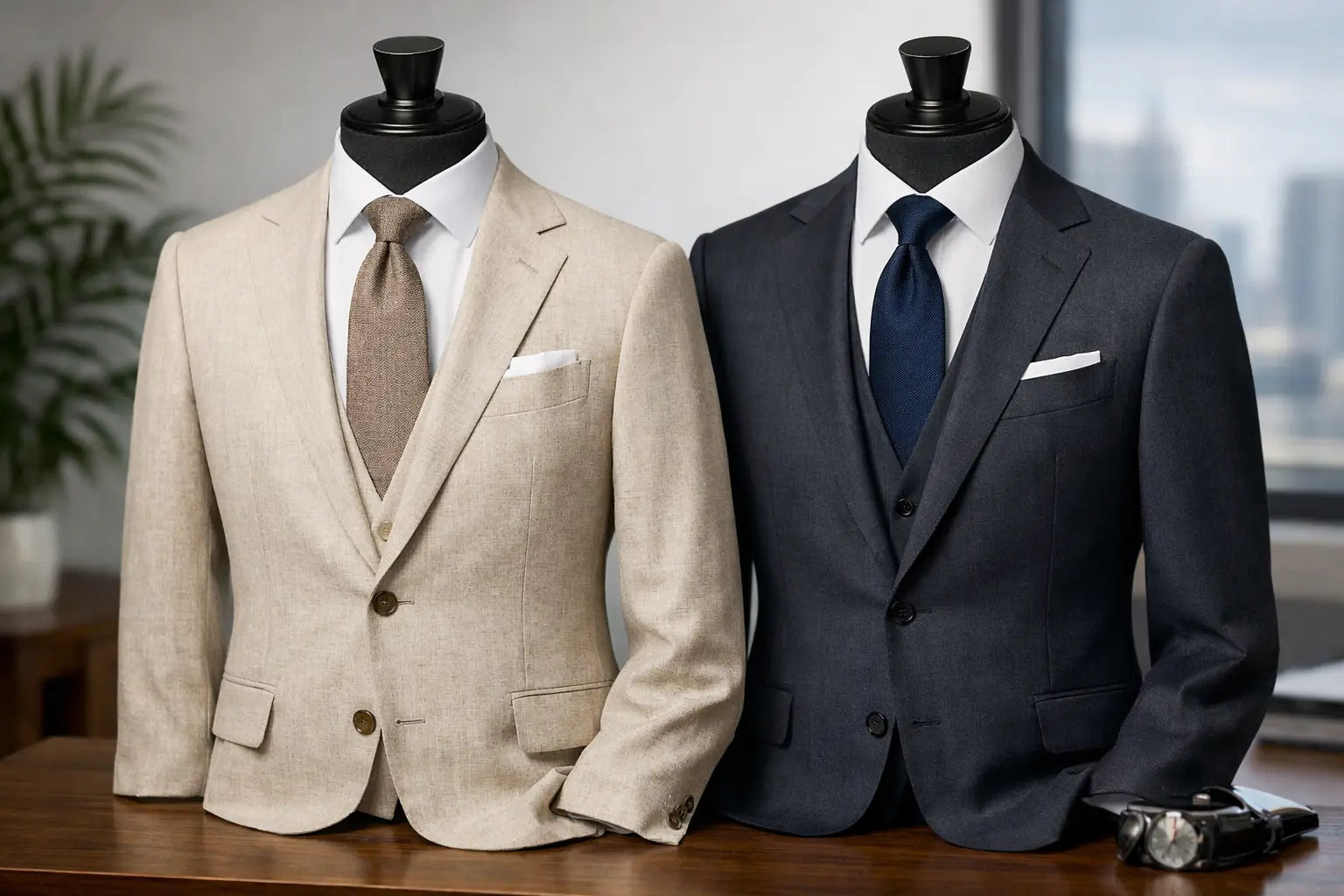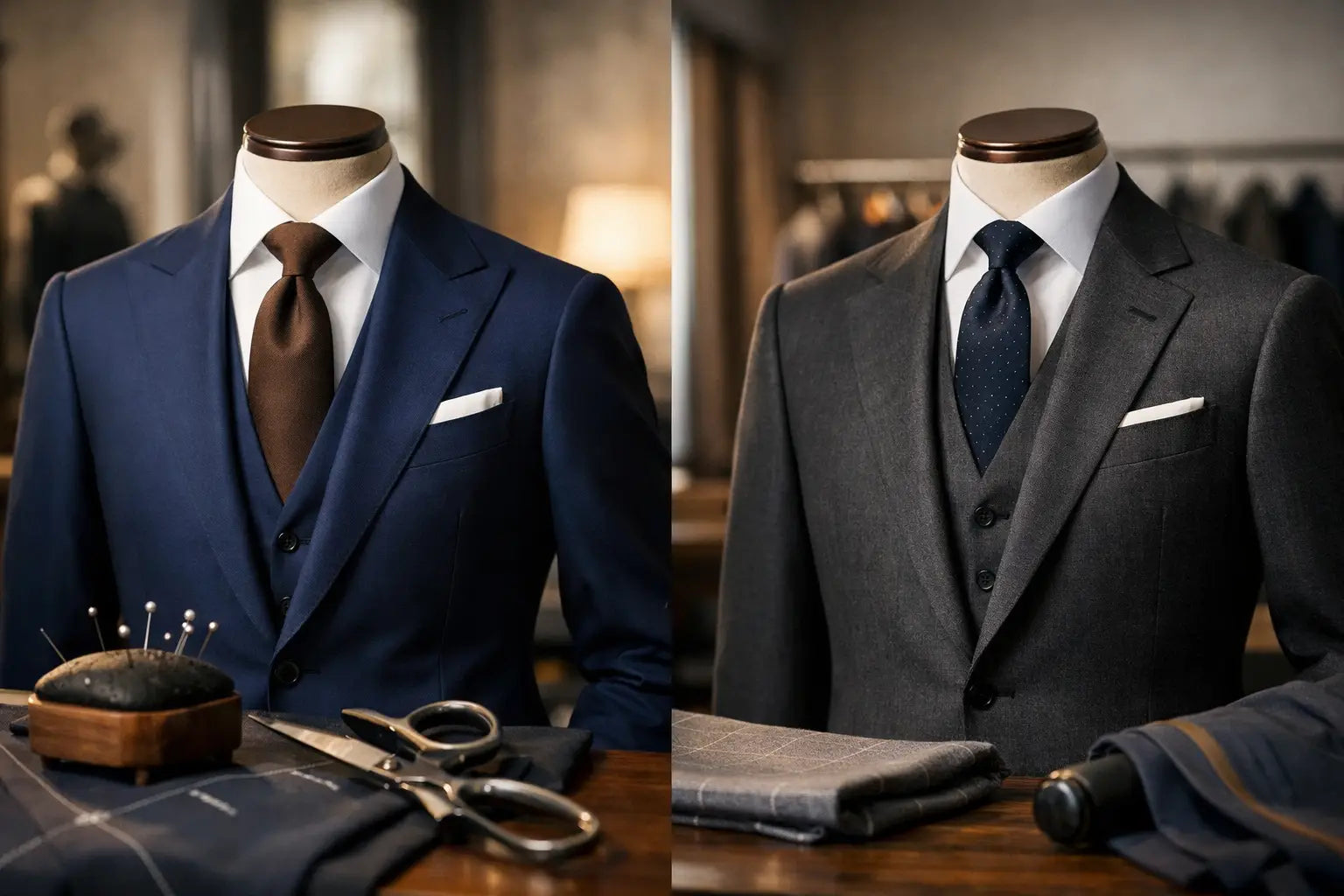
Italian Tailoring or British: Which Suits You?
A suit speaks before you do. In certain rooms, that first impression is not a detail - it is part of the negotiation. When clients ask whether they should choose Italian tailoring or British, they are rarely asking about nationality alone. They are asking what kind of authority they want to project, how they want cloth to move, and which silhouette best reflects the life they lead.
This is where the choice becomes more interesting than a simple style preference. Italian and British tailoring each carry a distinct philosophy of dress. Both can be exceptional. Both can be elegant. But they create very different effects on the body and in the room.
Italian tailoring or British: the real difference
At the highest level, the distinction is not about which tradition is better. It is about structure, posture, attitude, and occasion.
British tailoring is rooted in formality, military precision, and architectural shape. It tends to favour a stronger shoulder, a cleaner chest, and a drape that gives presence and discipline. The silhouette often feels grounded and authoritative. It is especially compelling for men who want their suit to communicate steadiness, command, and quiet power.
Italian tailoring, by contrast, is often lighter in spirit and softer in construction. The line can be more relaxed, the shoulder less pronounced, and the overall effect more fluid. Where British tailoring can feel sculpted, Italian tailoring often feels alive. It follows the body with elegance rather than imposing a rigid frame upon it.
Neither approach is fixed. A true bespoke house can draw from both traditions and adapt them to the individual. Still, understanding the original language of each style helps you make a more intelligent decision.
The British silhouette: structure, form and authority
British tailoring has long been associated with discipline in cut. The coat is usually built with more internal structure, which can create a sharper chest and a more defined line through the shoulder. This does not mean heavy or uncomfortable. When properly executed, structure can feel remarkably balanced. It simply means the jacket has a stronger opinion.
For many professionals, that opinion is useful. In boardrooms, formal events, and conservative business settings, the British silhouette carries a natural sense of credibility. It frames the torso cleanly and often lends the wearer a more commanding profile, particularly from the front.
Trousers in the British tradition may sit a touch higher and fall with a straighter, more formal line. The overall look is polished, deliberate, and composed. If your wardrobe needs to serve high-stakes meetings, ceremonial occasions, or environments where understatement still needs weight, British tailoring can be the stronger answer.
The trade-off is that some men experience highly structured jackets as less forgiving in warm climates or during long days of movement. This is not always the case, especially with refined canvassing and careful fabric choice, but it is worth considering. A suit that looks impressive standing still must also work when you are travelling, entertaining, or spending twelve hours between appointments.
Who tends to suit British tailoring best
Men with sloping shoulders often benefit from the added definition of a British cut. So do those who want to create more shape through the chest and upper body. If your aim is to appear more formal, more established, or more traditionally powerful, British lines can support that beautifully.
It also tends to appeal to clients who prefer a suit to hold its shape throughout the day. There is reassurance in that consistency. The garment remains poised, even when the schedule is not.
The Italian approach: softness, movement and ease
Italian tailoring is often admired for its lightness. The jacket may have less padding, a softer shoulder expression, and a closer, more natural relationship with the body. It still requires immense skill. In fact, softness can be harder to achieve elegantly because there is less structure to hide behind. The line must be resolved through cut, proportion, and balance.
The result is a different kind of confidence. Italian tailoring can feel less ceremonial and more personal. It moves with the wearer. It suggests sophistication without stiffness. For men who prefer refinement with ease, this can be profoundly appealing.
In warmer settings, lighter construction can also be practical. A softer jacket in the right cloth may feel more comfortable over long periods, particularly when the day includes both professional and social engagements. This is one reason Italian sensibilities often resonate so strongly with clients dressing in climates such as Dubai, where elegance must coexist with comfort.
That said, soft tailoring is not automatically casual. A beautifully cut Italian-style suit can be every bit as luxurious and polished as a more structured British one. The difference lies in the impression. Rather than authority through architecture, it offers authority through confidence and grace.
Who tends to suit Italian tailoring best
Men with naturally athletic frames often enjoy how Italian tailoring follows the body without making it look overbuilt. It can also flatter clients who dislike feeling constrained by heavy structure, or who want a more contemporary, cosmopolitan silhouette.
If your personal style leans towards understated luxury rather than visible formality, the Italian approach may feel closer to your identity. It often suits men who want to look accomplished without appearing rigid.
Italian tailoring or British for business wear
For business, the right choice depends less on trend and more on context. A financier meeting institutional clients may benefit from the assurance of British structure. An entrepreneur whose work moves between private meetings, travel, dinners, and public appearances may prefer the flexibility and ease of an Italian cut.
The key question is not which style is more prestigious. Prestige is achieved through precision. The better question is what message your suit should send before you speak.
British tailoring tends to express stability, hierarchy, and tradition. Italian tailoring often suggests discernment, fluency, and self-possession. Both are powerful, but they are not identical forms of power.
For many men, the ideal answer is not one camp or the other. It is a calibrated balance. A softly structured jacket with enough shoulder definition to sharpen the line. A clean chest without unnecessary stiffness. Trousers that preserve elegance while allowing comfort. This is where bespoke tailoring proves its value. You are not forced to inherit a national uniform. You commission a silhouette built around your body, your role, and the image you intend to present.
Why fabric changes the answer
Cloth alters everything. A British-inspired cut in a high-twist wool may feel crisp and metropolitan. The same structure in a heavier flannel creates a more traditional and seasonal effect. An Italian-style jacket in lightweight wool, linen, or silk blend can appear effortless, but if the cloth is too soft for the wearer, the line may lose authority.
This is why the decision should never be made from photographs alone. The same design language behaves differently depending on weight, drape, and finish. A client may admire the romance of soft Italian tailoring but still need a cloth with enough body to maintain polish. Another may appreciate British formality yet prefer a lighter canvas to suit a dynamic schedule.
The suit must answer the realities of your life, not just the fantasy of a label.
The bespoke advantage: beyond Italian or British
At a certain level of tailoring, strict allegiance becomes less relevant than mastery. A well-run bespoke process begins with the wearer, not the style tribe. Your posture, shoulder balance, movement, proportions, and professional environment all matter. So does your personality.
A gentleman who is naturally reserved may not need an aggressively structured coat to appear authoritative. Another who is youthful in appearance may benefit from more architectural shaping. One client may require a wardrobe that remains elegant through travel and climate shifts. Another may need ceremonial formality with unmistakable gravitas.
This is why the most refined approach is often selective rather than doctrinal. A bespoke tailor can borrow the discipline of British tailoring, the elegance of Italian softness, and the practical needs of modern living, then reconcile them in a garment that feels singular. At DONFIORITO, that philosophy is central to the process. The suit is not chosen from a rail or reduced to a trend. It is built entirely around the body it belongs to and the presence it is meant to create.
Which should you choose?
Choose British if you want clearer structure, stronger formality, and a silhouette that conveys control the moment you enter the room. Choose Italian if you value movement, softness, and a more relaxed expression of luxury. Choose neither, in the purest sense, if your needs sit between the two - because they often do.
The finest suit is not the one that most faithfully imitates Milan or Savile Row. It is the one that makes your posture stronger, your movement easier, and your presence more exact. When the cut is right, the question is no longer whether it is Italian or British. The question becomes whether it looks unmistakably like you.