

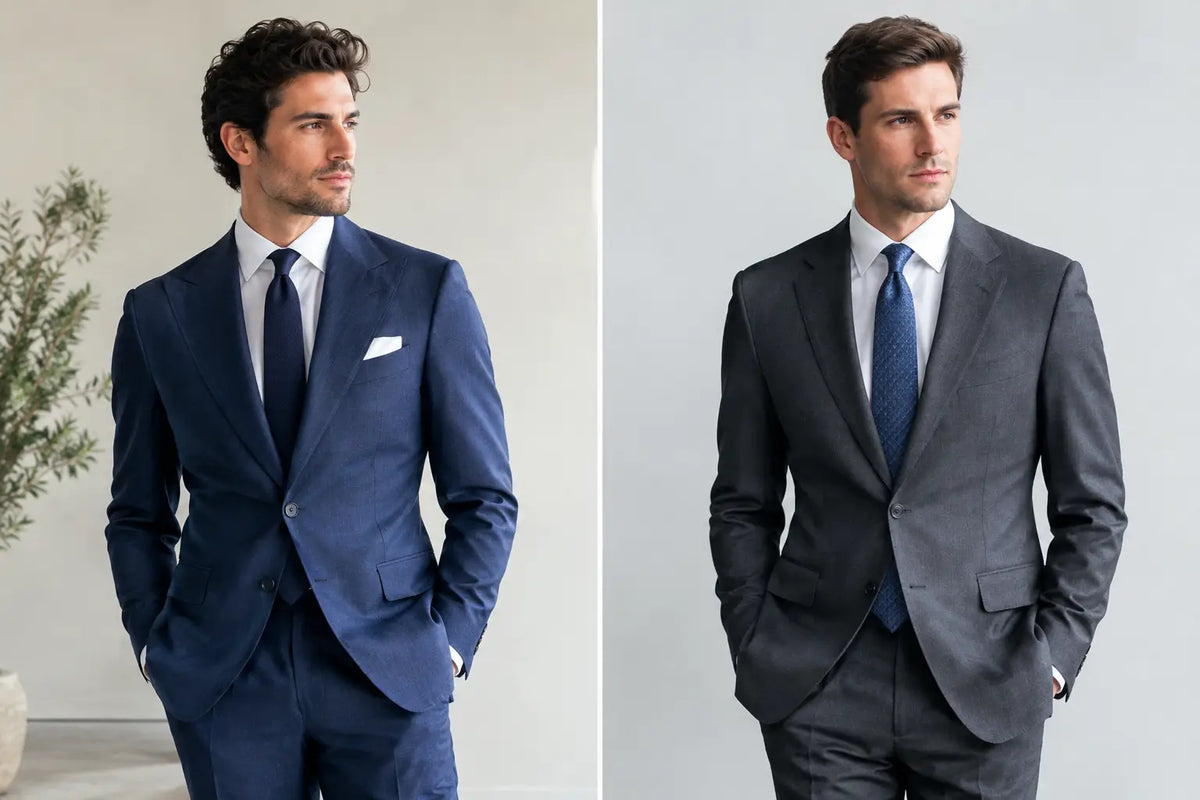
Italian Suit Versus American Suit: Which Fits?
An Italian suit versus American suit is not simply a question of origin. It is a decision about proportion, movement and the message your presence delivers before a word is spoken. For a man whose wardrobe supports boardrooms, private dinners and important negotiations, the distinction is worth understanding.
The familiar descriptions are useful, but they should never become rules. Italy has several tailoring traditions, from the relaxed confidence of Naples to the more structured elegance of Milan. America, equally, has moved far beyond the classic Ivy League sack suit. The finest choice is not a national stereotype. It is the suit that is built entirely around your frame, your routine and the image you intend to project.
Italian Suit Versus American Suit: The Essential Difference
Italian tailoring is generally associated with a cleaner, more sculpted silhouette. The jacket often follows the torso closely, with a higher armhole, a shaped waist and lighter internal construction. This creates a line that feels elegant without appearing rigid. It is designed to move with the wearer and to retain a certain natural ease.
Traditional American tailoring has historically favoured greater comfort through the chest and body. Its classic expression is the sack jacket: straighter through the torso, less suppressed at the waist and often cut with a central vent. The result is composed, practical and quietly authoritative. It does not demand attention through contour in the same way an Italian jacket might.
Neither approach is inherently superior. A lean, sharply cut Italian-inspired jacket can give a founder or executive a more decisive visual presence. A fuller American-inspired cut can be particularly flattering for a man who values room through the chest, has a more athletic build, or spends long hours travelling and seated in meetings. The skill lies in translating these references into a personal pattern rather than reproducing them without thought.
The Italian Approach: Shape Without Stiffness
The Italian suit has earned its reputation for sprezzatura, though the word is often used too loosely. True ease is not carelessness. It is the impression that every element sits naturally: the shoulder is clean, the lapel rolls correctly, the trouser falls without tension and the wearer never looks constrained.
A softer shoulder is central to many Italian styles. There may be minimal padding, or none at all, allowing the jacket to follow the body rather than impose a pronounced architectural line. Sleeves are set high enough to preserve mobility, while the jacket body is often shorter and more shaped than its American counterpart. In the right proportions, this creates length through the leg and definition through the torso.
The cloth matters greatly. Fine wool, silk blends, lightweight cashmere and open-weave fabrics are common choices, particularly in warm climates. For clients in Dubai, this lightness is more than an aesthetic preference. A suit must look composed under formal lighting and feel comfortable during a full day of appointments, transfers and evening engagements.
Yet softness should not be confused with fragility. A well-made Italian-inspired suit can have remarkable precision. The canvas, lapel structure and balance of the coat must still be carefully controlled. If the chest collapses, the shoulder is too narrow or the waist is forced, the intended elegance becomes discomfort.
When an Italian-Inspired Suit Is the Right Choice
This style suits men who prefer a contemporary, expressive silhouette and enjoy clothing that has visible shape. It works especially well for client-facing leaders, entrepreneurs and social occasions where a formal suit should feel personal rather than uniform.
It is also a strong choice for men with a naturally defined waist or those seeking to create more definition. However, the cut must be moderated for the individual. Excessive suppression can make a broad-chested man look restricted, while an overly short jacket can disrupt the overall proportion. The goal is refinement, never fashion for its own sake.
The American Approach: Comfort, Authority and Restraint
The American suit tradition emerged from a different idea of elegance. Its strength is understatement. Rather than emphasising the body, it allows the wearer to occupy space with an unforced confidence. The line is often straighter, the chest more accommodating and the overall impression less ornamental.
The classic American sack suit is recognisable by its relatively straight front, natural shoulder and simple, central vent. It became associated with universities, corporate life and a distinctly democratic approach to dress: polished enough for serious business, comfortable enough for daily wear. Its visual language is measured rather than dramatic.
Contemporary American tailoring has evolved considerably. Many modern houses introduce more waist shaping, cleaner trousers and lighter construction while retaining the ease that makes the tradition appealing. The most useful lesson is not the historic cut itself, but its respect for comfort and restraint.
When an American-Inspired Suit Is the Right Choice
An American-inspired suit can be compelling for a man who dislikes feeling overly styled. It offers a steadier, more relaxed authority, particularly in conservative business environments or where the wearer wants the quality of the garment to speak quietly.
It can also serve fuller and athletic body types exceptionally well when made correctly. More room through the chest and back permits natural movement, while a subtle waist suppression prevents the jacket from becoming boxy. The trouser can be cut with a little more ease through the thigh, maintaining a clean line when walking, driving or sitting.
The risk is that convenience becomes excess. Too much cloth through the body, low armholes or an unconsidered shoulder line can make even an expensive suit appear borrowed. Comfort comes from a precise pattern, not from adding unnecessary volume.
Shoulder, Lapel and Trouser: Where the Difference Is Seen
The shoulder gives each tradition its first impression. Italian jackets often have a soft, lightly padded or shirt-like shoulder that follows the wearer’s natural slope. American jackets traditionally retain a natural shoulder too, but may carry a broader, straighter expression through the upper body. A bespoke tailor assesses posture, shoulder balance and neck position before deciding which interpretation will look most natural.
Lapel design changes the character of the chest. Italian-inspired tailoring often favours a slightly more assertive lapel and a higher gorge, creating verticality and visual energy. American styling tends towards moderation, though there is ample room for a beautifully proportioned notch or peak lapel in either tradition. The correct width depends on the wearer’s chest, face and jacket length, not a seasonal trend.
Trousers reveal whether the suit has been considered as a whole. Italian cuts frequently sit cleanly through the seat and leg, sometimes with a tapered finish. American-influenced trousers may have a more relaxed line, occasionally with a fuller thigh. Both can be elegant. What matters is that the trouser remains comfortable without pooling at the shoe or pulling across the hip.
Why Bespoke Matters More Than the Label
A ready-made Italian suit may be beautifully designed and still fit poorly. An American suit may offer welcome room and still obscure the body beneath it. Country of reference cannot correct a compromised shoulder, a collar that lifts from the neck or trousers that lose their line after an hour of wear.
Bespoke begins with a more intelligent question: how should this man look and feel in this room, on this occasion, and throughout this day? The answer informs every choice. A private consultation establishes the desired presence, while measurements and posture observations form the basis of an individual paper pattern. Fabric is selected not only for appearance but for climate, movement and frequency of wear.
At the fitting stage, the suit begins to reveal its true direction. Perhaps the client initially requests an Italian silhouette but benefits from slightly more American ease through the back. Perhaps a traditionally relaxed American line becomes more elegant with a softly shaped waist and a refined trouser. These adjustments are where tailoring becomes personal rather than merely stylistic.
At DONFIORITO, this is understood as The Art of Bespoke: a suit should not ask its wearer to conform to an inherited template. It should express his individual proportions and his intended presence with clarity.
Choosing the Right Direction for Your Wardrobe
Consider where the suit will work hardest. For high-level presentations, formal dinners and occasions where visual precision carries weight, an Italian-inspired silhouette may bring welcome definition. For daily business wear, frequent travel or a more understated professional manner, American-inspired comfort can provide an excellent foundation.
Then consider your body honestly. The right suit does not disguise the wearer behind excessive structure or cling to him in the name of modernity. It creates balance. A softer shoulder may calm a powerful frame; a sharper lapel may add presence to a narrower chest; a carefully positioned waist can improve almost any silhouette.
The most distinguished men do not wear a suit to imitate Milan, Naples or New York. They wear one that has been considered down to the last proportion, then forget about it the moment they enter the room. That is where real confidence begins.

