

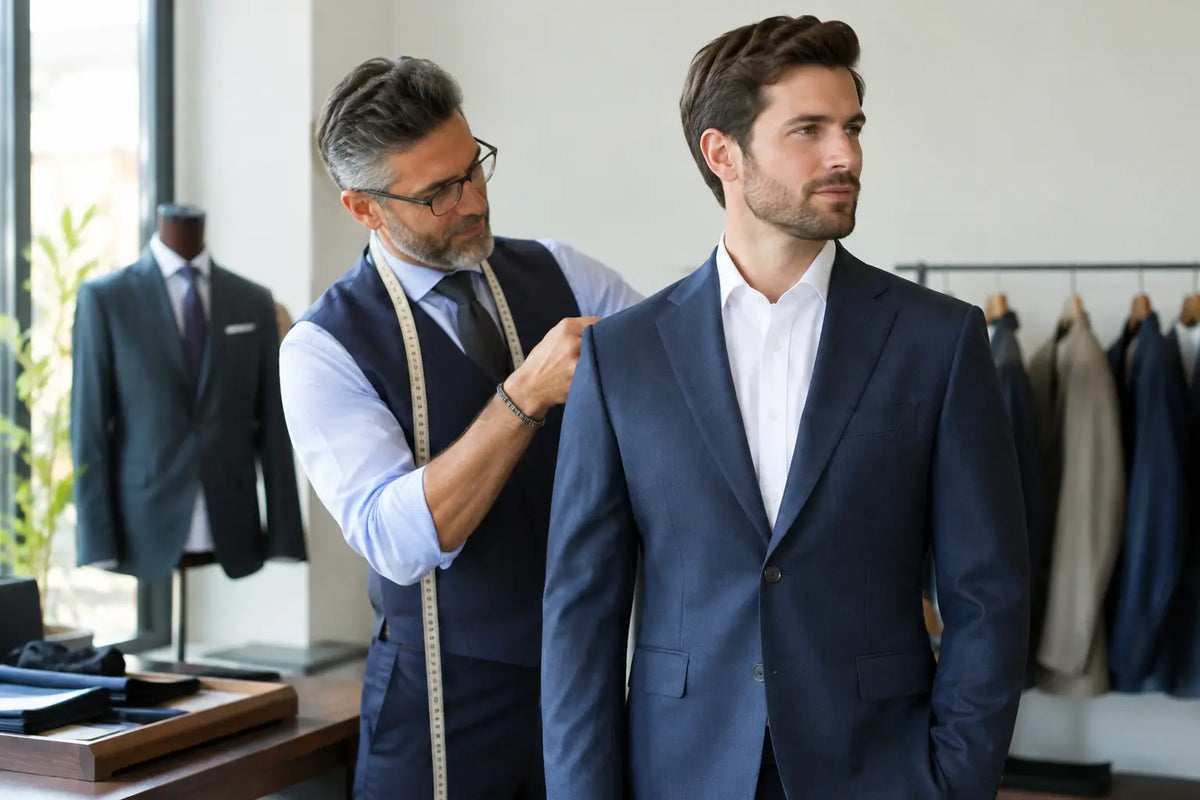
How to Book Private Tailoring With Confidence
A private tailoring appointment is not a retail errand. It is the first decision in creating a garment that will shape how you enter a boardroom, host a dinner or represent yourself at an important occasion. Knowing how to book private tailoring means arriving with the right expectations and choosing a house that treats your time, silhouette and standards with proper care.
The finest result begins before the tape measure is lifted. A considered booking gives your tailor the context to design with purpose, rather than merely take an order.
Begin with the occasion, not the garment
Before you arrange an appointment, consider where the suit will be worn and what you need it to communicate. A daily business suit for Dubai will require a different balance of weight, structure and formality from a tuxedo for an evening celebration or a jacket intended for frequent travel.
Be specific about your professional rhythm. Do you spend most of the day in meetings, move between countries, attend formal client dinners, or need a wardrobe that performs across all of them? A skilled tailor uses these details to guide decisions that may appear minor but profoundly affect the finished garment: the cloth, lapel shape, jacket length, pocket style, lining and level of internal construction.
There is no virtue in commissioning a highly formal suit if your life calls for quiet versatility. Equally, an unstructured jacket may not give the presence required in a senior negotiation. Private tailoring works best when the garment answers a real need, while still expressing the man who wears it.
Choose the right way to book private tailoring
A luxury tailoring house should offer an appointment format that respects your schedule without diminishing the experience. A consultation in the atelier is ideal when you want to see cloth in natural light, assess the house style and consider several wardrobe options in a focused setting. The environment matters: it allows the conversation to move beyond measurements towards proportion, colour and personal presence.
For clients with demanding diaries, a private visit can be the more sensible choice. A consultation at your office, residence or chosen location can be particularly valuable when time is limited or several garments are being planned at once. The same standard of attention should apply. Convenience is useful only when it is supported by proper cloth presentation, clear advice and accurate measuring.
An online consultation is a worthwhile first step when you are travelling, newly considering bespoke or preparing a commission before arriving in Dubai. It can establish your requirements, discuss timing and narrow the direction of the wardrobe. However, the final measuring and fitting process remains essential. Bespoke clothing is built entirely around the body it belongs to, and that precision cannot be reduced to a video call.
When booking, state whether you are commissioning your first bespoke suit, replacing a trusted garment, preparing for a defined event or building a broader wardrobe. This helps the tailor reserve sufficient time. A first consultation should never feel hurried.
What to share before your consultation
The appointment becomes more productive when your tailor has a clear picture of your preferences. You do not need technical vocabulary or a fixed design in mind. In fact, arriving with rigid ideas borrowed from a photograph can limit a more intelligent solution. Your role is to describe what feels right, what has disappointed you before and how you wish to be perceived.
Mention any persistent fit issues with ready-to-wear clothing. Perhaps jackets pull across the chest, trousers sit poorly through the seat, sleeves are consistently too short, or standard cuts conceal rather than complement your frame. These observations are useful evidence, not superficial complaints.
It is also helpful to bring or wear a suit you know well, whether you enjoy it or not. The tailor can see where the balance succeeds and where it fails. A favourite jacket may reveal the shoulder expression you prefer; an unworn suit may show exactly why generic sizing has not served you.
If the commission is for a wedding, black-tie event, presentation or international engagement, share the date when you make the booking. Bespoke requires time for pattern creation, cutting, fittings and refinements. Rushing the process can narrow cloth choices and reduce the opportunity to make adjustments with the care they deserve.
Expect a conversation before measurements
The first appointment should begin with dialogue, not a sales pitch. Your tailor should ask how you work, travel and dress, as well as what you want from the garment. The purpose is to establish an honest brief: confident but not theatrical, distinctive but not excessive, formal when required and comfortable throughout the day.
This is where style guidance has real value. The right navy is not simply navy. Its depth, weave and finish influence how it performs under office lighting, in the heat and alongside your existing shirts and shoes. The same is true of grey, brown and more individual cloths. A tailor should direct the choice according to your complexion, setting and intended use, rather than present endless books without judgement.
Measurements follow, but bespoke is more than numbers. Posture, shoulder angle, stance and movement all inform the pattern. The tailor will assess how your body carries a jacket and how you naturally stand. That information is translated into a personal foundation from which every later garment can evolve.
Understand the fitting commitment
Private tailoring asks for a small investment of time because the fitting stage is where a good suit becomes a personal one. At the first fitting, the garment is usually still in a formative state. It allows the tailor to assess balance across the shoulders, chest and back, the line of the trouser and the relationship between jacket and body in motion.
Wear the shirt and shoes you expect to use most often with the suit if possible. They influence sleeve length, trouser break and the overall proportion of the look. Stand naturally, sit down and move as you ordinarily would. A suit is not made for a mirror alone; it must remain composed during a long day.
Speak plainly during fittings. If you prefer more room through the thigh, a cleaner waist or a softer shoulder, say so. The tailor will explain what is structurally advisable and what may compromise the line of the garment. This exchange is not a test of your knowledge. It is a collaboration between your comfort and the craft.
Ask the questions that protect the result
A private commission should be transparent about process and timing. Ask when fittings are expected, what is included in the quoted work and how future alterations or repeat orders are handled. If you are ordering for a date, confirm the delivery plan at the beginning rather than assuming every stage can be compressed.
It is also reasonable to ask how the house approaches pattern storage. A well-kept bespoke pattern becomes an asset: it captures the work already done to understand your proportions and makes future commissions more consistent. Yet it should not become a reason to stop reviewing fit. Bodies, preferences and lifestyles change, and an attentive tailor will reassess rather than rely blindly on past measurements.
Price should be discussed with the same clarity. Bespoke tailoring is shaped by cloth, construction, handwork and the complexity of the commission. The least expensive option is rarely the soundest value if it sacrifices fit, longevity or the quality of the fitting process. A well-made suit earns its place through repeated wear and the assurance it gives its owner.
Arrive ready to make considered choices
There is no need to arrive knowing every detail. The point of private tailoring is to be guided by expertise. But give yourself enough time to decide without distraction, especially if this is your first commission. Avoid booking between calls or immediately before a flight when the decision deserves concentration.
For a first suit, restraint is often the most assured choice. A refined navy or mid-grey in a versatile cloth can form the foundation of a wardrobe and establish confidence in the fit. Once the pattern and relationship with the tailor are established, more expressive choices become easier to wear well.
DONFIORITO approaches this process as The Art of Bespoke: a private conversation translated into line, cloth and proportion. The aim is not simply to produce a suit that fits, but to create one that belongs naturally to your life and reinforces the impression you intend to make.
Book when you have a genuine reason to invest in how you present yourself, then allow the process the time it deserves. The final garment should feel less like something new you have purchased and more like the most precise version of your own presence.


