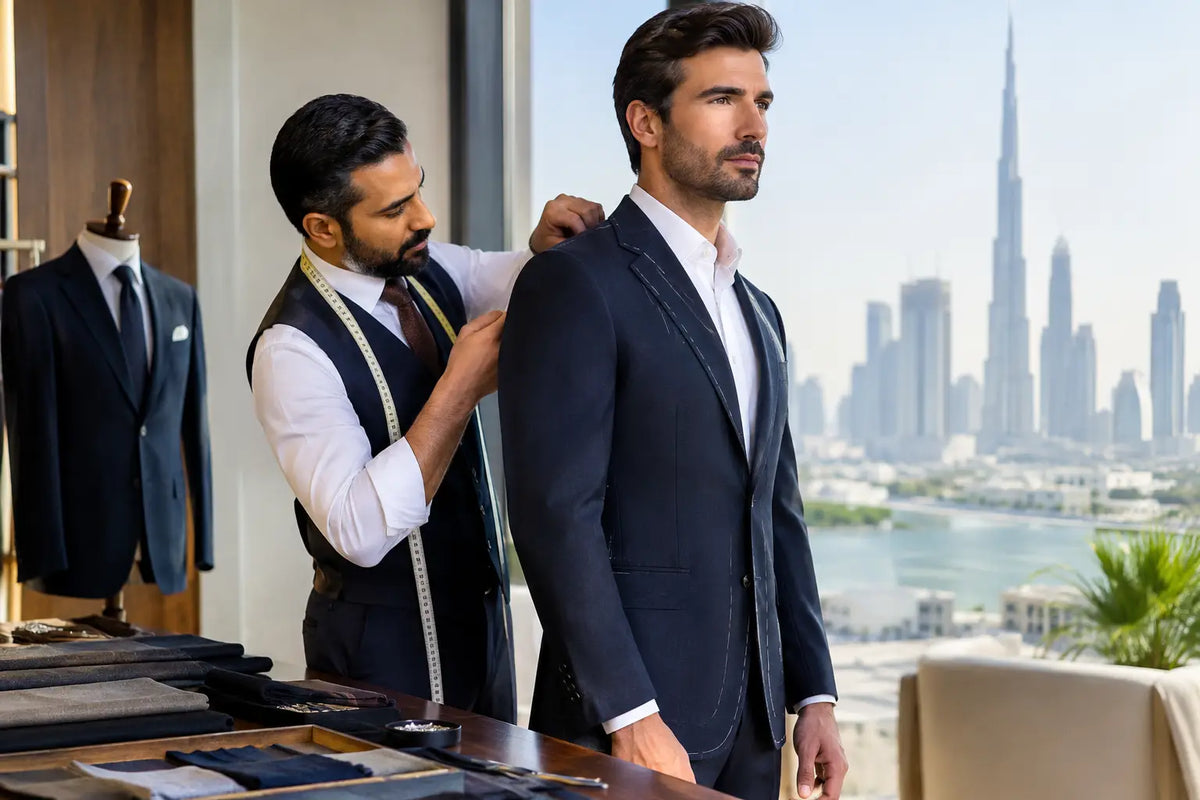
Gala Attire for Men, Cut With Intention
A gala invitation rarely leaves room for casual interpretation. Whether the evening is a charity dinner, awards ceremony, diplomatic reception or private celebration, your gala attire should communicate respect for the occasion before you have introduced yourself. It should also feel entirely your own: composed, precise and built around the body it belongs to.
For the modern gentleman, formalwear is not about costume. It is about understanding the code, then carrying it with quiet authority. The right choice depends on the invitation, venue, host and hour of the event. A dinner in a grand ballroom calls for a different expression of elegance from a contemporary gala on a Dubai terrace, even when both are formally dressed.
Read the invitation before choosing your gala attire
The dress code is the starting point, not a suggestion to be improved upon. Look for the exact wording. “White tie”, “black tie”, “black tie preferred”, “creative black tie” and “formal” each allow a different degree of freedom. If the wording is unclear, consider the nature of the host and venue. It is almost always better to be slightly more formal than noticeably underdressed.
A gala held by an established institution often rewards classic restraint. A fashion or arts-led event may permit a more individual approach, though individuality should still be controlled. The objective is not to attract attention through excess. It is to look as though you understand the room instinctively.
White tie: the highest formal standard
White tie is exacting by design. The proper foundation is a black tailcoat with matching trousers, traditionally finished with a satin stripe. It is worn with a white piqué waistcoat, a wing-collar dress shirt, white bow tie and black patent leather evening shoes. The tailcoat must sit cleanly through the shoulders and waist, with the front cut away to reveal the waistcoat beneath.
This is a dress code where shortcuts are immediately visible. A standard black suit, black necktie or long tie does not qualify. Neither does a black waistcoat. White tie is less common than black tie, but when it appears on an invitation, precision is the point.
Black tie: formal, but not uniform
Black tie is the dress code most men will encounter at a gala. At its best, it is one of menswear’s most flattering silhouettes: a dark, sharply defined frame around the face, softened by a crisp white shirt and considered details.
The classic choice is a black or midnight-blue dinner jacket with silk-faced lapels, worn with matching trousers, a formal shirt and black bow tie. Midnight blue deserves particular attention. Under evening light, it can appear deeper and richer than black, while retaining complete formality. A shawl collar brings smooth elegance; a peaked lapel offers a slightly more architectural, assertive line. Neither is inherently superior. The choice should suit your proportions and the character you wish to project.
The dinner jacket should fasten without pulling across the chest or opening at the waist. Its sleeves should reveal a measured amount of shirt cuff. Trousers should sit cleanly at the waist, without bunching at the seat or breaking heavily over the shoe. These are not minor details. Eveningwear relies on line, and line is created by fit.
The formal suit when black tie is not required
When an invitation calls simply for “formal attire”, a dark bespoke suit may be the more appropriate response. Navy, charcoal and near-black cloth offer authority without implying that you have mistaken a formal business event for black tie. Choose a fine wool with a clean finish, a white or pale blue shirt, and a silk tie in a deep, restrained tone.
A formal suit is particularly useful for gala settings that begin before nightfall, involve a corporate programme or take place in a setting where guests will vary in their interpretation of dress. Here, the elegance lies in control: a strong shoulder line, a balanced lapel, a correctly proportioned trouser and polished black or dark brown leather shoes.
The temptation is to make the suit more “special” through a conspicuous tie, exaggerated lapels or too many accessories. Resist it. A gala suit should be elevated by cloth, cut and finishing, not novelty. A perfectly fitted dark suit has more presence than an elaborate ensemble that feels borrowed from someone else’s wardrobe.
Fabric, colour and the reality of the evening
Traditional formalwear has a visual language, but it must still serve the wearer. In Dubai and across the Gulf, gala events often move between air-conditioned interiors, arrival terraces and outdoor receptions. Fabric weight therefore matters. A breathable, finely woven wool can retain its shape while remaining comfortable through a long evening. Excessively heavy cloth may look impressive on a hanger but become restrictive after dinner.
For black tie, black and midnight blue remain the most assured choices. A dinner jacket in deep burgundy, forest green or ivory can work at a creative gala, particularly for a host known for a more expressive dress code. Yet these choices require judgement. They are not substitutes for black tie at a traditional event, and they must be supported by impeccable fit and understated accessories.
Texture can introduce distinction more elegantly than colour. A subtle barathea, velvet jacket or silk-blend facing gives depth under evening lighting without demanding attention. The trade-off is formality and frequency of wear. A velvet dinner jacket is memorable, but it is more occasion-specific than a classic wool dinner jacket. If your calendar includes several formal engagements, invest first in the piece that will serve them all.
Accessories should complete the line
Formal accessories are small, but they establish whether the outfit feels resolved. With black tie, a self-tied bow tie has a softer, more natural character than a pre-tied version. It need not be perfectly symmetrical. Slight irregularity is part of its charm, provided the overall effect remains neat.
Choose a white pocket square in linen or silk, folded simply. Cufflinks should be discreet, ideally in precious metal, mother-of-pearl or onyx. Black silk socks are essential, long enough to ensure no bare leg appears when seated. Shoes should be black, highly polished and sufficiently refined for evening: patent leather oxfords or formal slippers are dependable choices.
A wristwatch is optional. At the most formal events, many men prefer to leave it aside. If you wear one, make it slim, elegant and free of an oversized sports profile. Fragrance should be equally restrained. A gala is a close social setting, not a stage for announcing your arrival from across the room.
Why bespoke changes the experience
Off-the-peg formalwear is designed around averages. Gala attire should not be. The difference is felt first in the shoulders, chest and waist, then seen in the balance of the entire silhouette. A dinner jacket made from an individual pattern can accommodate posture, shoulder slope, arm position and the proportions that standard sizing routinely ignores.
Bespoke also allows the details to be considered as a whole: the lapel shape that flatters your face, the jacket length that brings balance to your frame, the trouser rise that improves comfort when seated, and the cloth that suits both the event and local climate. This is the Art of Bespoke - not adding ornament, but removing compromise.
At DONFIORITO, the process begins with the impression you intend to make. Some clients require the disciplined authority of a classic peak-lapel tuxedo. Others need a more distinctive dinner jacket for a gala where personal expression is expected. Consultation, fabric selection and fittings turn that intention into a garment with ease of movement and a finish that holds its composure throughout the evening.
Prepare before the night, not at the door
Try on the complete outfit at least several days before the event. This is when you discover whether your shirt studs are present, your shoes need polishing or your trousers need a final adjustment. Practise tying the bow tie if it is not familiar. It takes minutes to learn and saves unnecessary pressure before departure.
Consider the practical rhythm of the evening too. You may be standing through a reception, seated for a long dinner and photographed under unforgiving light. Your formalwear should allow you to move, greet, sit and raise a glass without constant correction. Comfort is not separate from elegance. It is what permits elegance to appear effortless.
The finest gala attire does not ask the room to notice every detail. It allows the room to notice you: assured in your bearing, precise in your choices and entirely at ease in the occasion you have chosen to honour.