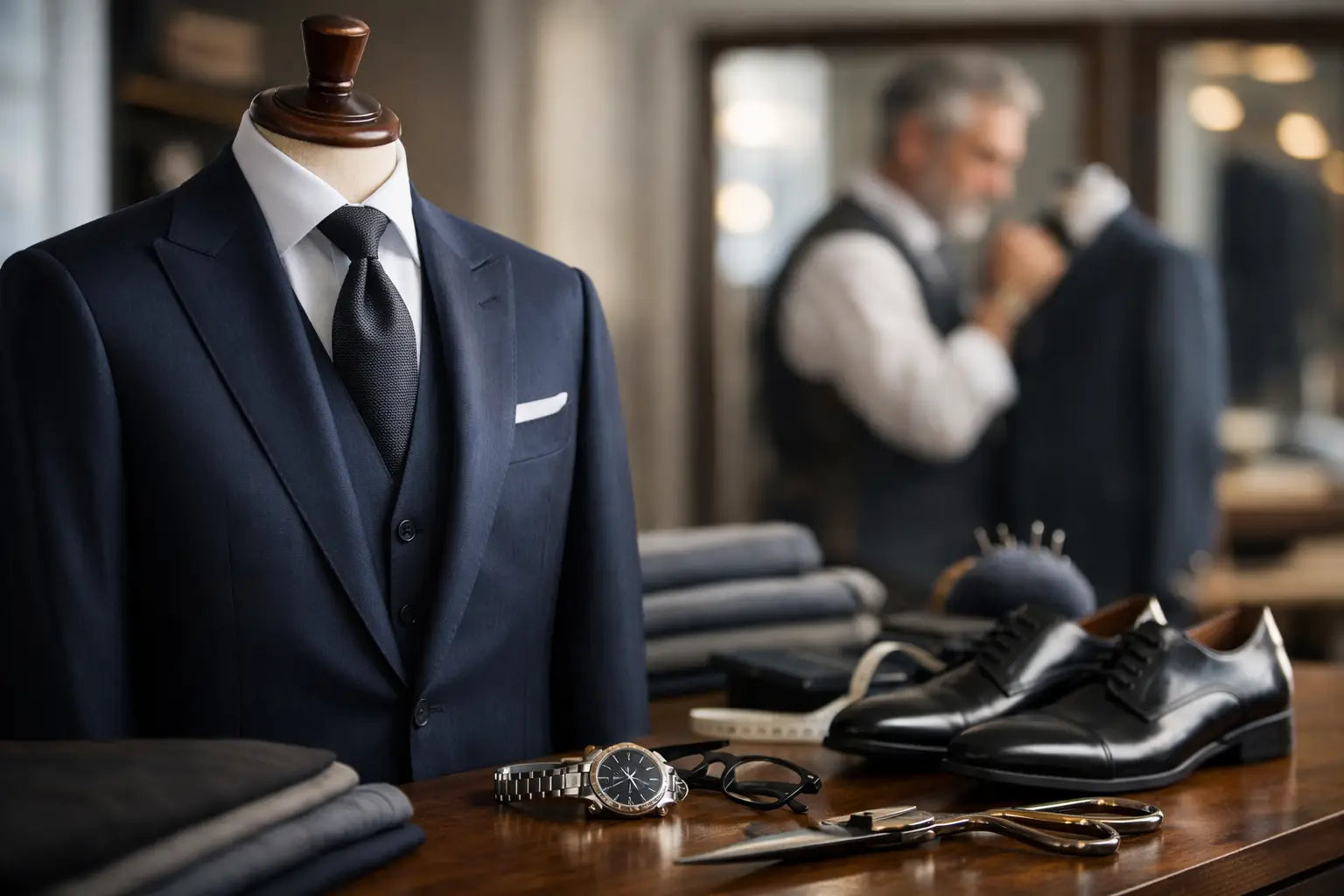
Why Made to Measure Menswear Matters
A suit can be expensive and still look ordinary. That is the quiet frustration many men know well - the cloth may be fine, the label may be respected, yet the shoulder sits poorly, the collar lifts, or the jacket never quite moves with the body. Made to measure menswear exists to correct that compromise. It is not merely about buying a better garment. It is about wearing something shaped around how you stand, how you move, and how you wish to be perceived.
For men whose calendar moves between boardrooms, private dinners and formal occasions, clothing does more than cover the body. It frames authority. It influences first impressions before a word is spoken. When fit is imprecise, presence is diluted. When fit is exact, the effect is immediate and unmistakable.
What made to measure menswear really offers
The phrase is often used loosely, which can blur the distinction between true craftsmanship and a simple alteration service. Proper made to measure menswear begins with an existing block pattern that is adjusted to the client’s dimensions, posture and preferences. That process allows for a garment that feels personal and considered, without stepping into the full complexity of a completely drafted bespoke pattern.
That distinction matters because expectations matter. A man investing in custom clothing should know what he is buying. Made to measure can offer excellent precision, elegant balance and meaningful comfort when handled by a skilled tailoring house. It should never be presented as a shortcut version of luxury, nor as a mass-market convenience dressed up in finer language.
The best result lies in the quality of interpretation. Measurements alone do not create shape. An experienced tailor reads the body properly - one shoulder lower than the other, a stronger chest, a cleaner waist suppression, a preference for room through the thigh, a more decisive sleeve pitch. Those details are what separate a serviceable suit from one that appears calm, assured and entirely natural on the wearer.
Made to measure menswear and personal presence
Most men do not pursue custom tailoring because they enjoy being measured. They pursue it because they understand the value of appearance when appearance carries consequence. In business, in social settings, and at important personal milestones, the right suit changes the quality of one’s presence.
This is not vanity. It is judgement. A well-cut jacket can make a man look more composed, more deliberate and more credible. The line through the shoulder communicates structure. The drape through the chest suggests ease rather than strain. The break of the trouser, the balance of the lapel, the length of the coat - each element contributes to an impression of control.
There is also a private benefit, less visible but no less important. When a garment is built with proper proportion, the wearer does not spend the day adjusting cuffs, pulling at the front button, or feeling constrained across the back. He can attend to the room rather than to his clothes. Confidence often begins there.
Where standard suiting falls short
Ready-to-wear menswear is built for scale. It must accommodate the widest possible range of bodies using the fewest possible sizes. That model serves convenience well, but convenience has limits. Very few men are proportioned exactly as a standard size assumes. Some are broader through the shoulder and lean through the waist. Others need more room in the seat or a cleaner fit at the calf. Height introduces another layer entirely, as does posture.
Alterations can improve many things, but not everything. A good trouser hem and waist adjustment are straightforward. Reworking the balance of a jacket is another matter. If the base shape is wrong, the garment will often continue to feel like a negotiation between body and cloth.
This is why accomplished clients tend to move away from standard suiting over time. Once a man has worn clothing that respects his proportions, compromise becomes far easier to recognise. He notices when the collar no longer sits cleanly. He notices when the armhole is too low, or the coat collapses at the lower back. These are not abstract concerns. They affect silhouette every minute the garment is worn.
The process behind a refined result
Luxury tailoring should feel exacting, but never complicated. The process is most effective when it is clear, measured and personal.
It begins with consultation. This is where taste, lifestyle and intention are established. A client may need a wardrobe for regular business wear, a single evening suit, or garments suited to travel between climates and formalities. The conversation should move beyond simple preference. How formal is his professional environment? Does he favour stronger structure or a softer line? Does he want quiet restraint or a clearer expression of personality?
Fabric selection follows naturally. The cloth is not a decorative afterthought. It determines drape, weight, texture and seasonality. A businessman who spends much of the year in warm conditions may require something very different from a client dressing primarily for evening events or heavily air-conditioned interiors. Fine tailoring is partly the art of matching fabric to life.
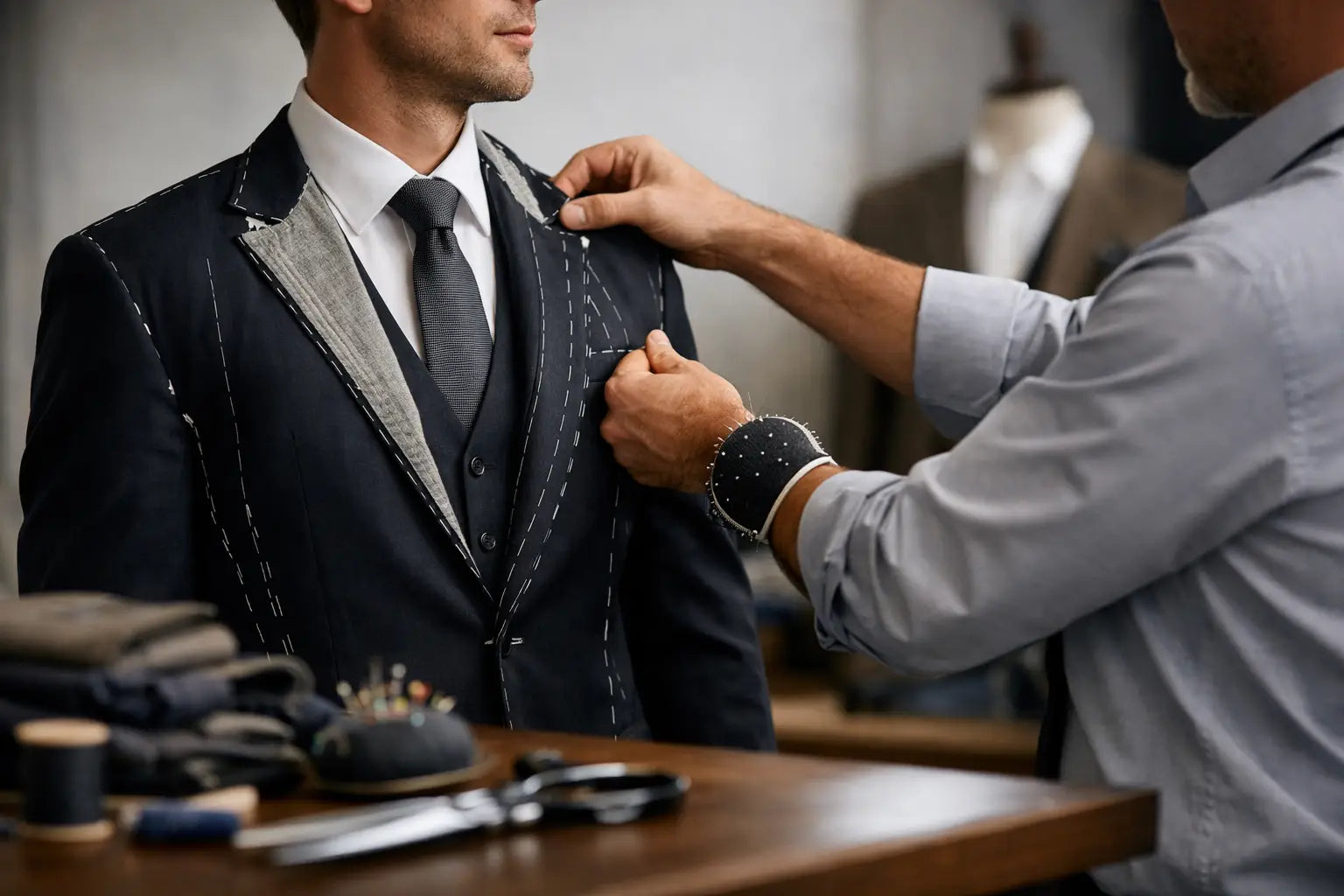
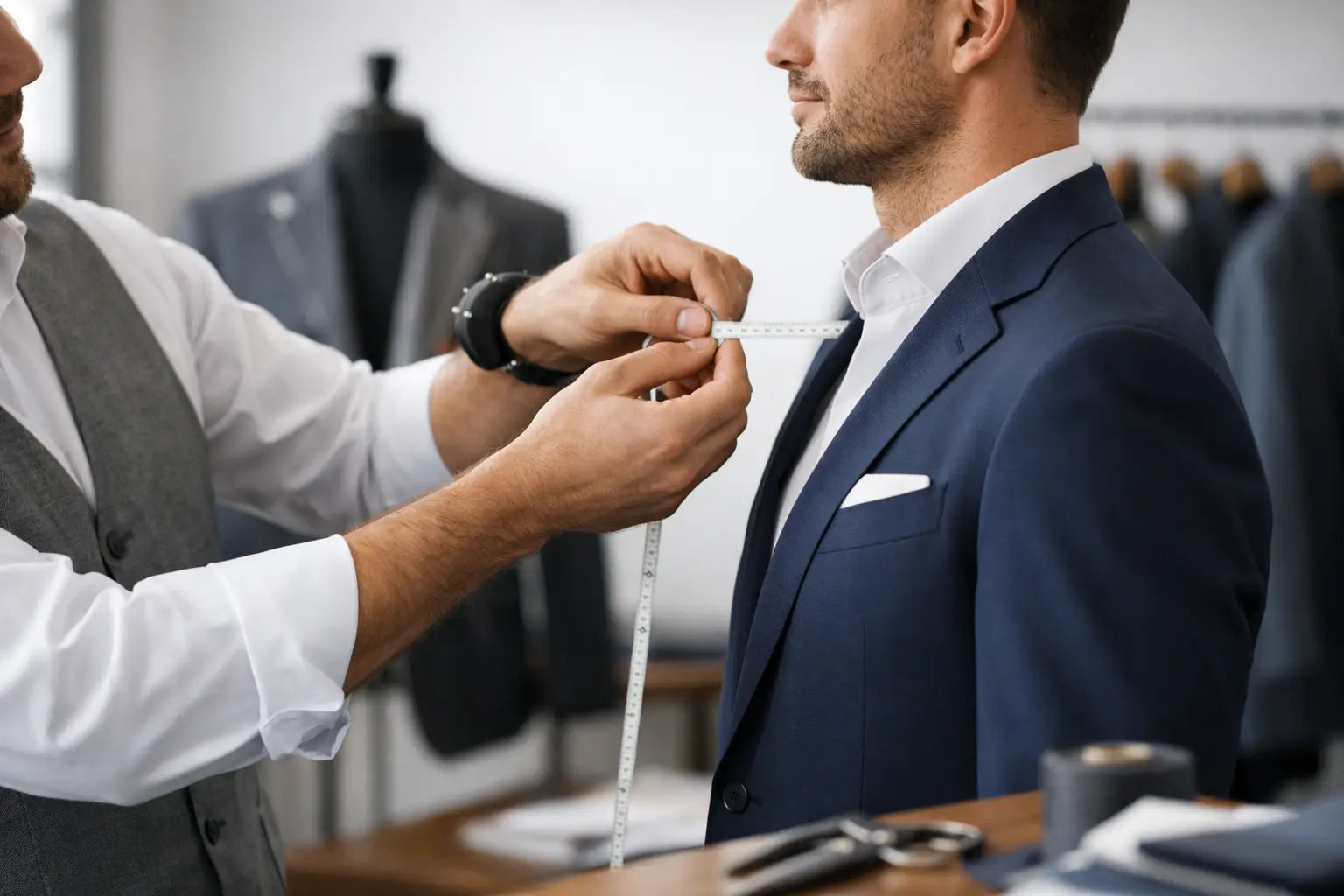
Then comes measurement and fitting. This is where technical skill must support aesthetic judgement. Numbers matter, but so does interpretation. A fitting reveals what measuring tape alone cannot fully explain - how the jacket opens, whether the seat is clean, whether the sleeve falls correctly, whether the trouser line remains elegant both standing and seated.
The final delivery should feel inevitable rather than surprising. A well-managed made to measure experience removes uncertainty. The client understands what is being created, why it is being shaped that way, and how each decision serves the finished result.
Why the trade-offs are worth understanding
Made to measure is not identical to bespoke, and refined clients should appreciate that rather than resist it. Bespoke typically begins with a unique pattern drafted from scratch for one individual. It offers the deepest level of personal construction and often the greatest degree of freedom in shaping the garment. Made to measure, by contrast, adjusts an existing pattern with precision.
For many men, that is more than sufficient. If the tailoring house is disciplined, the fit can be elegant and highly individual. The process may also be more efficient, which suits clients who value discretion and clarity as much as craftsmanship.
Still, it depends on the wearer and the objective. Men with particularly unusual proportions, strong asymmetries, or exacting stylistic preferences may benefit more from full bespoke. Men seeking a finely cut business wardrobe with dependable consistency may find made to measure the ideal balance of precision, time and practicality.
The crucial point is honesty. Luxury lies not in inflated terminology, but in receiving the right service for the right purpose.
What to look for in made to measure menswear
The quality of the tailor matters more than the category itself. A serious house will ask thoughtful questions, guide rather than overwhelm, and pay close attention to posture, movement and image. It will not rush the consultation or reduce the process to fabric books and waist measurements.
Look for discernment. A strong tailor understands not only how a suit should fit, but how a man should appear in the contexts that matter to him. The same client may need one expression for investor meetings and another for private celebrations. The tailoring should recognise that distinction.
In a city such as Dubai, where standards of presentation are high and climates demand intelligence as well as elegance, this level of judgement becomes especially valuable. Cloth, cut and construction must work beautifully in both visual and practical terms. Luxury should never feel burdensome.
This is where a house such as DONFIORITO distinguishes itself - not by treating tailoring as a transaction, but by shaping garments around the individual life of the client. That includes the image he wishes to project, the settings he moves through, and the confidence he expects from what he wears.
The lasting value of getting it right
A well-made garment earns its place slowly and decisively. It becomes the suit reached for when the room matters. It travels well, photographs well and settles into the wardrobe with authority. More importantly, it stops demanding attention from the wearer and starts supporting him quietly.
That is the lasting appeal of made to measure menswear. It respects the fact that accomplished men do not dress simply to be noticed. They dress to be understood correctly.
When tailoring is approached with care, taste and precision, clothing becomes more than presentation. It becomes alignment - between the man, the moment and the impression he leaves behind.