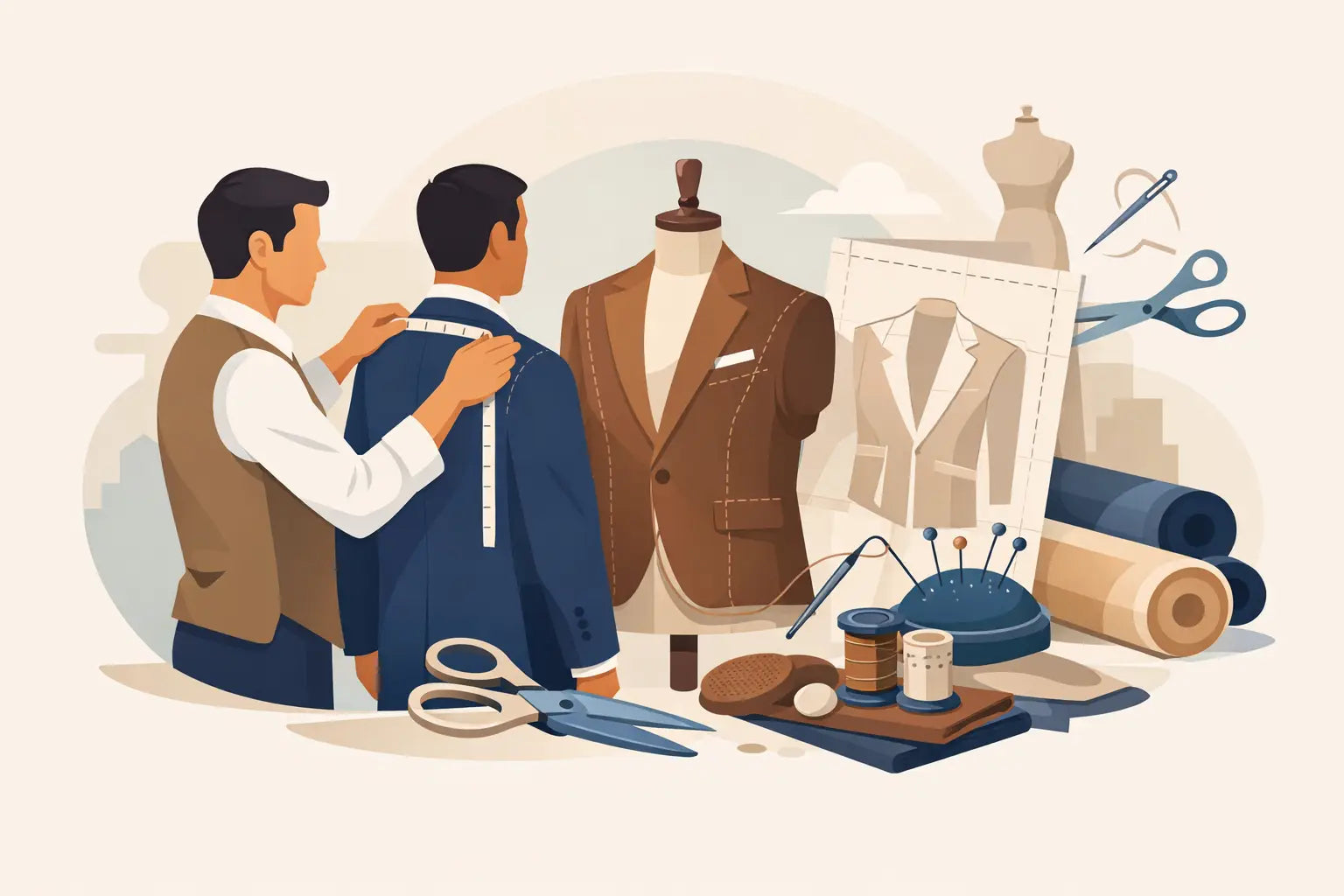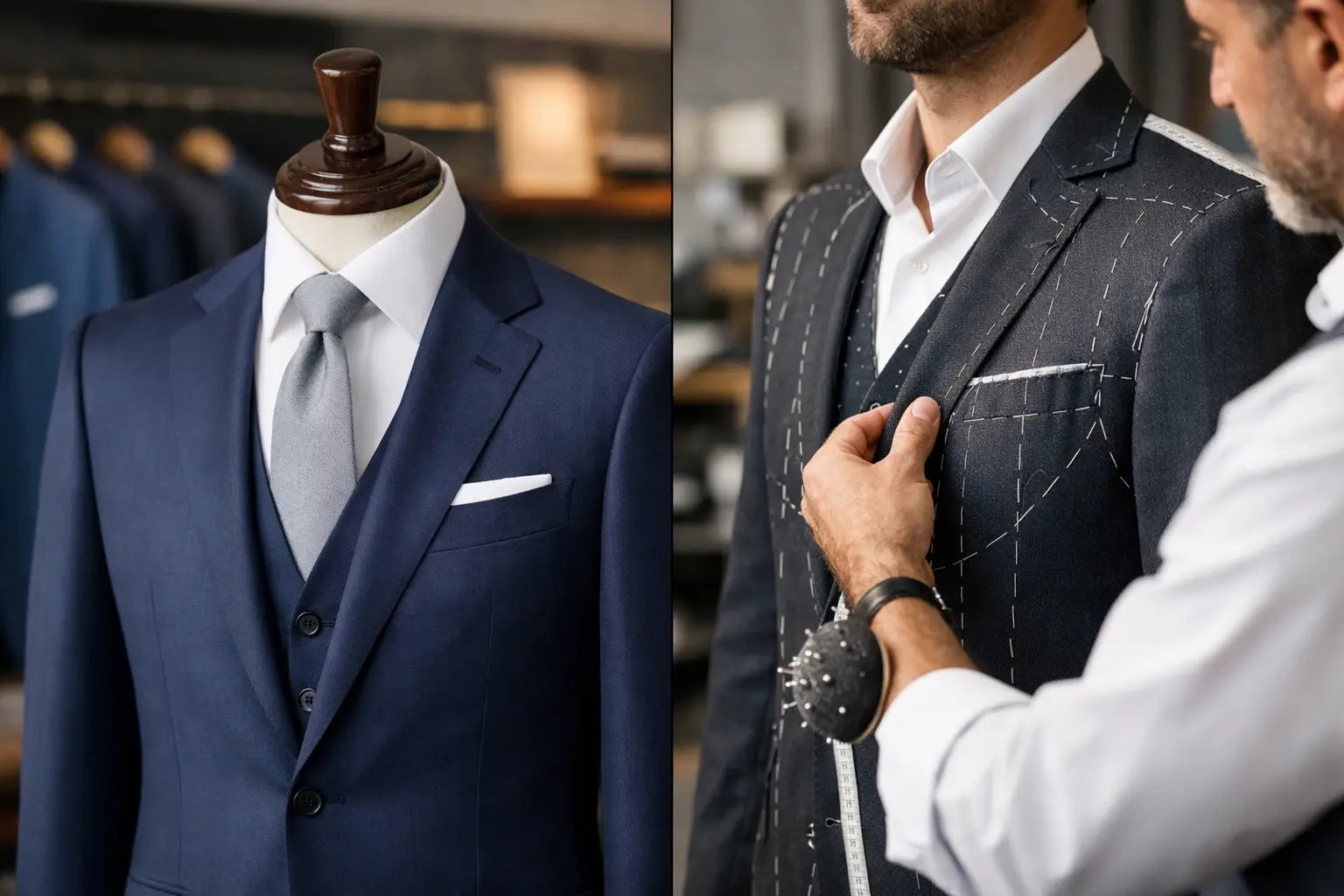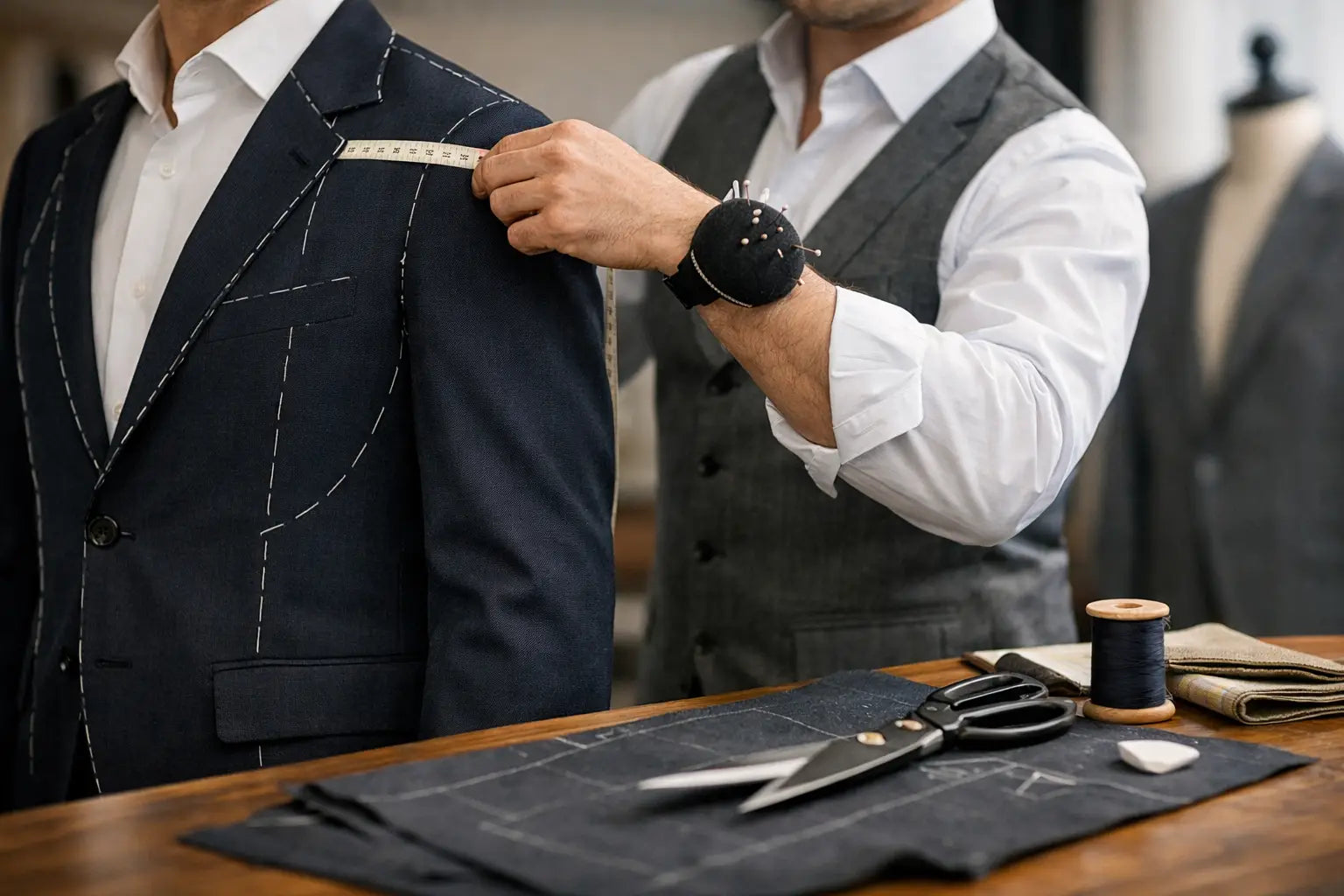
What the Bespoke Tailoring Process Involves
A suit can look expensive on the hanger and still fail the moment you put it on. The shoulder sits a fraction too wide, the collar drifts from the neck, the chest feels correct standing still but tightens when you move. The bespoke tailoring process exists to solve exactly that - not simply to make a garment, but to build one around the man who wears it.
For clients who regard dress as part of their professional language, this distinction matters. Bespoke is not a decorative upgrade to ready-to-wear. It is a method of creation rooted in precision, observation and judgement. Every stage has a purpose, and every choice affects how the finished garment will sit, move and speak on your behalf.
Why the bespoke tailoring process is different
The difference begins with authorship. In a true bespoke commission, the garment starts from an individual pattern drafted for one client alone. It is not a standard block adjusted at the margins. That means the tailor is not merely correcting fit issues after the fact. He is anticipating posture, balance, asymmetry, movement and preference from the beginning.
This is where many men discover why previous tailoring felt disappointing. They may have altered off-the-peg suits or ordered made-to-measure garments that improved sleeve length and waist suppression, yet never quite achieved ease or authority. Bespoke goes further because the coat, trousers and often waistcoat are conceived as a whole, with the client’s body and intent at the centre.
There is also an aesthetic difference. A bespoke garment should not only fit well in technical terms. It should express something precise - restraint, command, elegance, quiet confidence. The line of the shoulder, the fullness of the chest, the shape of the lapel and the break of the trouser all contribute to how a man is perceived before he speaks.
The first stage of the bespoke tailoring process
A private consultation is where the work truly starts. Measurements come later. First, there must be clarity about context. What is the suit for? Daily business wear, formal evenings, travel, boardroom presence, a wedding, or a wardrobe built to cover several demands at once? A well-run bespoke house will ask as much about your life as your size.
This conversation is not theatre. It determines the garment’s priorities. A suit for long days between meetings and flights requires different decisions from one intended for ceremonial use. A client who wants a sharper, more architectural silhouette may prefer a cleaner drape and firmer structure. Another may value softness, ease and understated refinement. Neither choice is inherently superior. The right answer depends on how you want to feel and how you wish to be seen.
At this stage, cloth selection also begins. Fabric is not merely a question of colour or pattern. Weight, weave, handle and resilience all shape the final result. A finer cloth may offer remarkable elegance but require more care. A more substantial wool may hold its form beautifully and perform better in regular use. In a place such as Dubai, climate and lifestyle deserve serious attention, particularly for men who move between air-conditioned interiors, formal engagements and frequent travel.
Measurements are only part of the craft
Clients are often surprised by how much the tailor studies beyond a tape measure. Height, shoulder expression, stance, chest prominence, seat shape, arm position and the natural balance of the body all influence the draft. Very few men are symmetrical. One shoulder may sit lower, one arm may hang differently, one side of the torso may carry more shape than the other. Bespoke respects these realities rather than forcing the body into a generic template.
Equally important are preference and habit. Some men like a close, disciplined silhouette. Others need more room through the back or thigh because of how they sit, walk or work. A gifted tailor listens for what the client says and what the body reveals. The result should never feel like a costume imposed by the workshop. It should feel instinctive, as though the garment understands you.
Pattern cutting and the first fitting
Once the consultation is complete, an individual paper pattern is drafted. This is one of the defining moments of bespoke. It translates observation into architecture. From that pattern, the first version of the garment is prepared for fitting.
The first fitting is where the commission becomes visible. At this stage, the suit is not finished and should not be judged as though it were. Its purpose is diagnostic. The tailor evaluates balance across the shoulders, the relationship of collar to neck, the line of the chest, waist and skirt, sleeve pitch, trouser rise and the way the cloth responds in motion.
This fitting often reveals the value of bespoke more clearly than any explanation could. Minor imbalances that would be ignored in ordinary tailoring become obvious when viewed with a trained eye. A small correction at the shoulder can change the entire expression of the coat. An adjustment to trouser line can transform both comfort and proportion. Precision lives in these details.
Why multiple fittings matter
One fitting is rarely enough for a truly refined result. The body is complex, and a suit has to perform in movement, not only in a still pose before a mirror. Further fittings allow the tailor to refine shape, remove tension, improve drape and settle the relationship between structure and ease.
There is a practical lesson here. Clients sometimes assume speed is a mark of excellence. In bespoke, haste usually means compromise. Time allows decisions to mature and corrections to be made with discipline. The garment becomes more exact with each stage.
That said, more fittings are not about unnecessary ceremony. They exist because excellence is cumulative. A collar that sits perfectly, a lapel that rolls cleanly, a sleeve that falls with poise, a trouser that breaks correctly over the shoe - each one may seem small in isolation. Together, they create the calm authority associated with exceptional tailoring.
Design choices that shape personal presence
A bespoke commission is also an exercise in judgement. The best results tend to avoid excess. Distinction usually comes from proportion and restraint rather than novelty.
This is where guidance matters. Lapel width should relate to the client’s frame and the coat’s balance. Button stance affects the perceived length of the torso. Pocket style, lining, fastening, pleats and cuff details all contribute to the final character of the garment. The objective is not to personalise for the sake of it. It is to create a suit that feels unmistakably yours without appearing self-conscious.
For many professionals, the ideal outcome is quiet precision. Colleagues may not identify why the suit looks exceptional, but they will notice the effect. The wearer appears more assured, more composed, more complete. That is the art behind a garment built entirely around the body it belongs to.
Final fitting and delivery
By the final fitting, the suit should feel settled rather than merely altered to fit. The difference is subtle but significant. A finished bespoke garment should follow the body cleanly, allow natural movement and maintain its line without strain. You should not need to stand artificially straight to make it work.
This final stage is also where practical refinements are confirmed. Trouser length may be adjusted to suit your preferred shoe. Sleeve length can be set according to how much cuff you like to show. The waist can be tuned for comfort across a full day rather than a brief appointment. These details matter because luxury, at its highest level, is never only visual. It is experienced through ease.
At DONFIORITO, this stage is approached with the same care as the first consultation, because delivery is not the end of a transaction. It is the point at which craftsmanship meets daily life.
What a client should expect from the experience
The bespoke journey should feel controlled, intelligent and highly personal. It is not about overwhelming the client with technical language or romantic myth. It is about confidence in process. You should understand why decisions are being made, what trade-offs exist, and how each stage contributes to the final result.
There are, of course, variables. A highly structured business suit will behave differently from a softer jacket. A frequent traveller may prioritise resilience over delicacy. A client commissioning his first bespoke garment may need stronger guidance than one refining an established wardrobe. Good tailoring accounts for all of this.
The most successful commissions share one quality: alignment. The cloth, cut, structure and finishing all serve the same idea of the wearer. When that alignment is achieved, the suit does more than fit. It reinforces identity.
A well-made bespoke garment does not ask for attention. It earns it quietly, each time you enter a room.