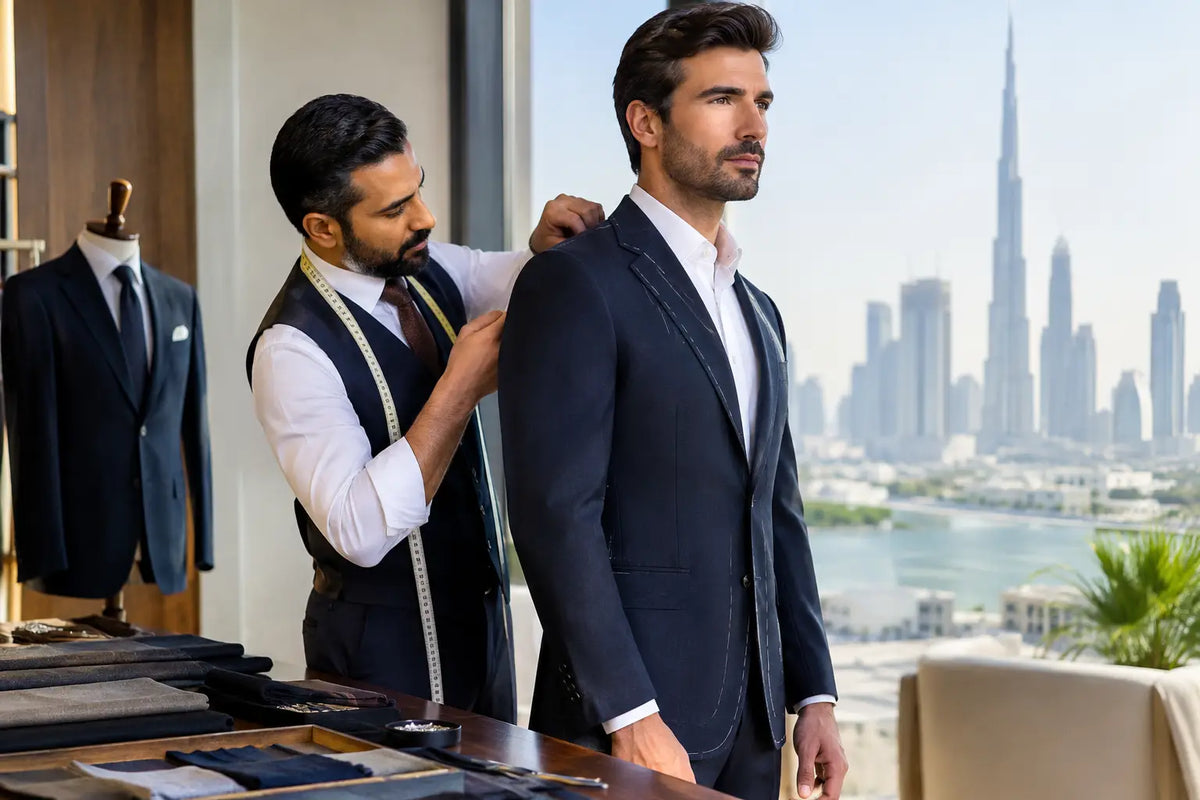
Tailored Blazers Built for Lasting Presence
A blazer is often the first garment a man reaches for when the occasion calls for polish without the formality of a full suit. Yet the difference between simply wearing one and looking genuinely composed in one is considerable. Tailored blazers are not defined by a label, a familiar colour, or an expensive cloth alone. They are defined by proportion, posture and the quiet authority created when a garment is built around the man wearing it.
For the executive moving from a morning meeting to a private dinner, or the entrepreneur whose schedule does not allow for costume changes, a well-made blazer offers uncommon range. It can sharpen a fine-gauge knit, give structure to an open-collar shirt, or lend purpose to tailored trousers. More importantly, it makes an impression before a word is exchanged.
Why tailored blazers carry more authority
An off-the-peg blazer is drafted for a statistical average. It may be close enough across the shoulders, acceptable through the chest, and slightly too long in the sleeve. Those small compromises are easy to dismiss in a fitting room. In motion, however, they become visible: a collar that sits away from the neck, lapels that bow, a button that pulls, or a hem that interrupts the leg line at the wrong point.
A tailored blazer begins with the individual rather than the sample size. The shoulder line is considered in relation to stance. The chest is shaped to allow ease without excess volume. The waist is suppressed according to the wearer’s frame and preference, not an arbitrary seasonal silhouette. Sleeve pitch is set for the natural position of the arms, while the length is judged against height, torso and the trousers with which the blazer will most often be worn.
The result should not feel restrictive or theatrical. It should feel inevitable, as though the garment belongs to the body it covers. This is the essence of personal tailoring: presence achieved through accuracy rather than display.
The silhouette comes before the details
Clients often begin by considering colour or cloth, which is understandable. A deep navy, tobacco brown or refined cream can immediately suggest a particular setting. But silhouette determines whether the blazer will continue to serve its purpose years after the first fitting.
A classic single-breasted two-button blazer remains the most adaptable choice for professional wardrobes. Its clean front works with formal trousers, dark denim in relaxed settings, and a broad range of shirts and knitwear. A three-roll-two front can bring a softer, more traditional character, while a double-breasted blazer offers greater visual authority and a stronger frame through the chest and waist.
Neither is universally superior. A double-breasted cut can be exceptionally flattering on a taller man or someone seeking a more decisive silhouette, but it requires precision to avoid appearing heavy. A single-breasted design may offer greater ease for frequent travel and more varied daily wear. The right choice depends on how a man lives, how he wishes to be perceived, and the environments in which he is most often seen.
The same judgement applies to lapels. Notch lapels are restrained and versatile. Peak lapels give the chest a more assertive line and can elevate an otherwise understated blazer. The decision should support the wearer’s proportions and character, rather than follow a passing fashion cue.
Cloth should suit the climate and the calendar
In Dubai, fabric selection carries practical weight. A blazer may need to retain its shape through a long day of meetings, travel comfortably between air-conditioned interiors and warmer arrivals, and remain elegant under evening light. Cloth must therefore be chosen for more than its appearance on a hanger.
High-twist wool is a natural choice for clients who value breathability, resilience and a clean drape. It resists creasing better than many softer cloths and carries a refined matte finish suitable for business. Wool-silk-linen blends can create a lighter, more textured expression for warmer months and social occasions, although they will crease more readily. That lived-in character is part of their appeal, but it is not for every professional setting.
For an evening blazer, a deeper texture can make a measured statement. Fine wool with a subtle basket weave, a restrained hopsack, or a silk-blend cloth can add dimension without relying on conspicuous pattern. The objective is not to make the blazer louder. It is to give it enough visual depth that it holds its own in a considered room.
Colour deserves the same restraint. Navy remains a foundation because it is versatile without being anonymous. Mid-grey offers a cooler, architectural quality. Brown, olive and muted stone can be remarkably sophisticated when the cloth, shirt and footwear are chosen with confidence. Black is generally reserved for eveningwear or very specific formal contexts; it is less forgiving as an everyday blazer than many men assume.
Construction determines how a blazer moves
The internal construction of a tailored blazer is largely unseen, yet it shapes almost everything the wearer experiences. A fully canvassed jacket uses a floating layer of canvas that gradually responds to the body. It creates a natural chest and lapel roll, with a depth that fused garments struggle to replicate over time.
A softer construction can be particularly appealing for clients who prefer an Italian ease: lighter padding, a natural shoulder and less rigid structure through the front. It offers elegance without stiffness, especially in warmer climates. A more structured chest and shoulder may be appropriate for a man who wants a sharper business presence or spends much of his time in formal boardroom environments.
There is no virtue in choosing the softest or the most structured option simply because it is fashionable. The finer decision is the one that aligns construction with purpose. A blazer intended for regular travel may benefit from resilience and lighter weight. One designed for formal client meetings may call for a firmer line. Bespoke tailoring gives these choices their proper place in the process.
Fit is refined through fittings, not guessed at once
Even the most experienced cutter cannot replace the information revealed by a fitting. A first fitting makes the pattern visible on the body and exposes nuances that measurements alone cannot communicate: one shoulder sitting lower, a forward neck, a prominent shoulder blade, a stance that changes the fall of the front.
This is where a blazer becomes truly individual. The balance is corrected so that the hem sits cleanly. The collar is adjusted to embrace the neck. The sleeve is refined to show the right amount of shirt cuff and follow the arm naturally. The waist is shaped for definition while preserving comfort when seated, driving or gesturing during conversation.
At DONFIORITO, the consultation and fitting process is designed around these details, but also around the client’s intended presence. A garment for an investor presentation should not speak in the same way as one for a private celebration. Both require precision. They simply require a different interpretation of it.
Styling a tailored blazer without diluting its effect
A beautifully cut blazer should lead the outfit, not compete with it. For business, pair navy or charcoal with a crisp white, pale blue or discreetly striped shirt, tailored trousers and well-polished leather shoes. Keep the palette controlled and let the cut create the distinction.
For less formal engagements, replace the shirt with a fine merino crew neck, a polo in a superior cotton knit, or an open-collar linen shirt when the setting allows. Trousers should retain a clean line. Pleated wool trousers, cotton drill and dark, unwashed denim can all work, provided the rise and silhouette complement the blazer rather than collapse beneath it.
Accessories deserve restraint. A pocket square can provide an elegant note of colour, but it should never look engineered. A fine watch, considered footwear and a properly proportioned belt often say more than an accumulation of visible luxury signals. The most persuasive wardrobes are not assembled to be noticed item by item. They are composed to make the wearer appear assured.
A tailored blazer earns its place through repetition. It should be the garment you choose when the day demands judgement, when the room matters, and when your appearance must carry the same clarity as your decisions.