How to Match Shirt Cuffs to Your Suit Well
A shirt cuff is a small detail with disproportionate influence. It appears at the point where a handshake is offered, a watch is revealed and a jacket sleeve ends. For a man whose wardrobe is built around presence rather than passing fashion, understanding how to match shirt cuffs is part of dressing with authority.
The right cuff should not compete with the suit. It should complete its line, suit the occasion and feel entirely natural to the wearer. This is less about rigid rules than recognising the relationship between formality, proportion and personal character.
How to Match Shirt Cuffs to the Suit
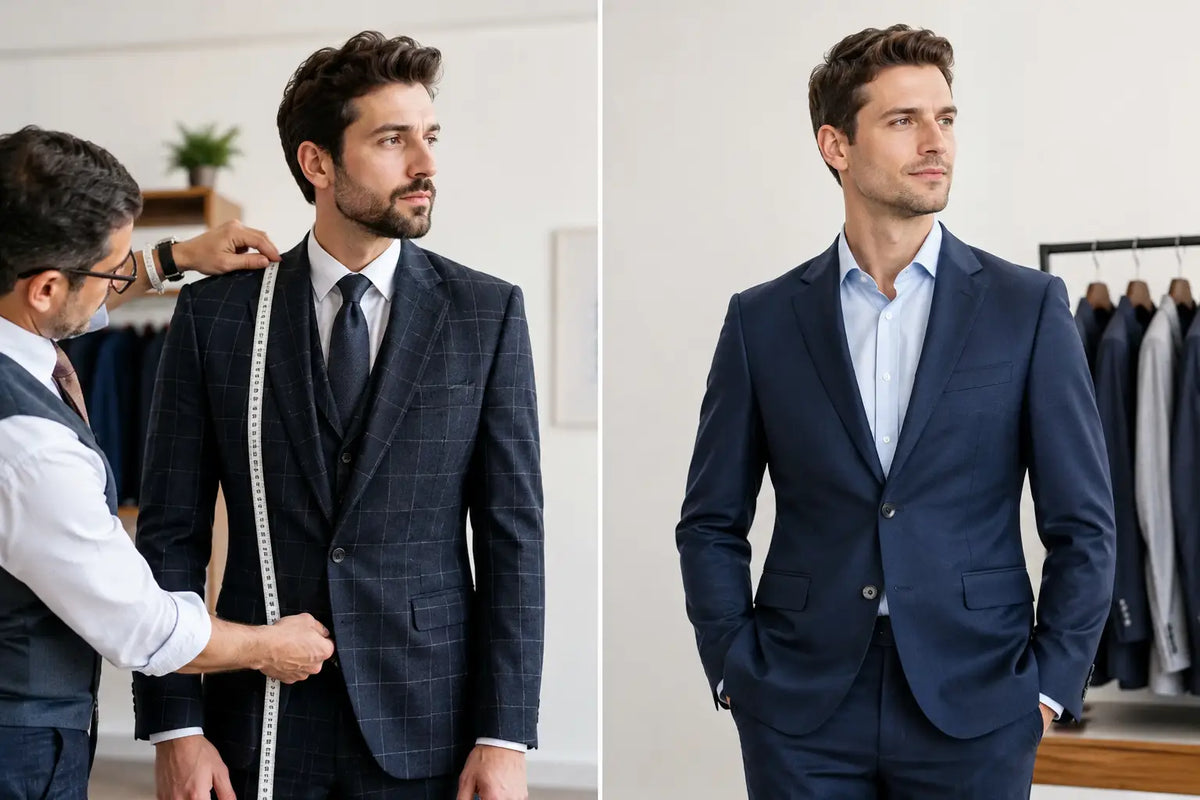
Begin with the jacket sleeve. A well-cut suit should reveal roughly 1 to 1.5 centimetres of shirt cuff when the arms are relaxed. Less can make the shirt disappear beneath the jacket; significantly more can disrupt an otherwise clean silhouette. The exact amount depends on your posture and the cut of the jacket, which is why sleeve length should always be considered during a fitting rather than guessed from a mirror at home.
A single cuff, also called a barrel cuff, is the most versatile choice for business suiting. It has a composed, practical character and works particularly well with worsted wool suits, open-collar shirts and a refined daily wardrobe. A clean white or pale blue shirt with a single cuff is the quiet foundation of many excellent boardroom combinations.
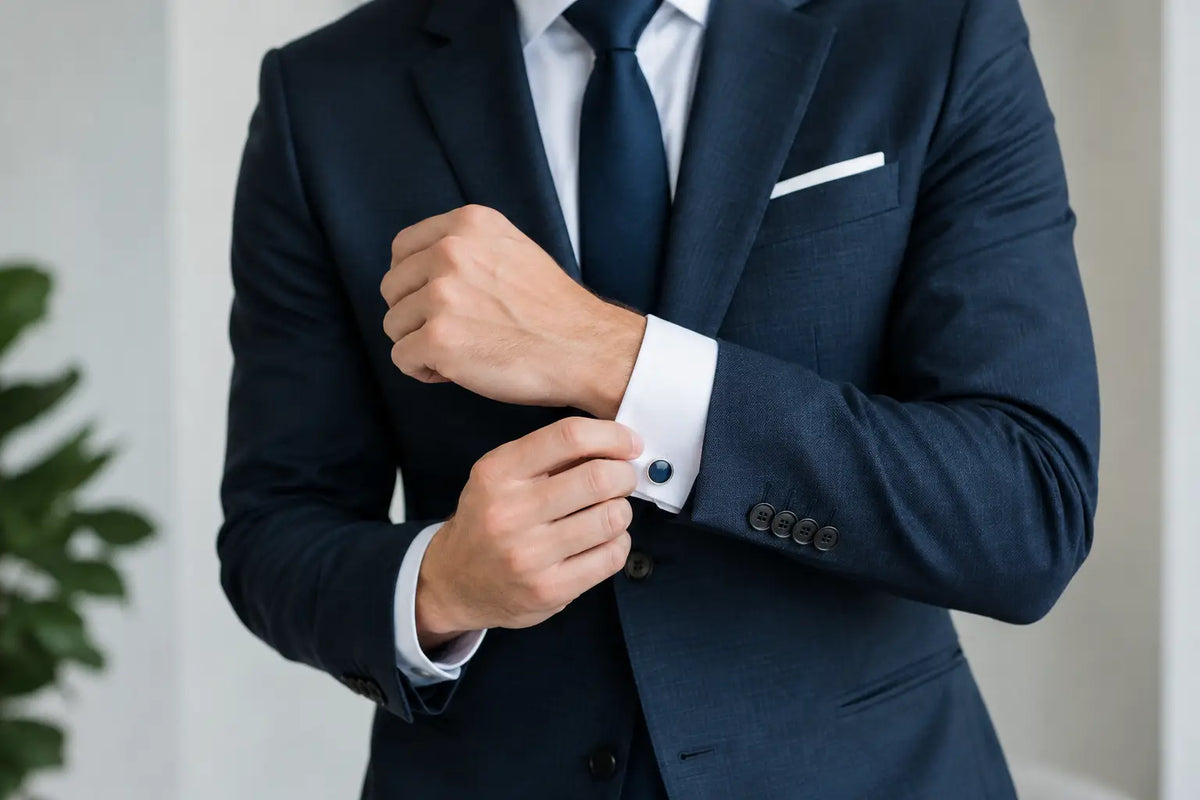
Double cuffs, commonly called French cuffs, make a more deliberate statement. Their folded construction introduces depth at the wrist and calls for cufflinks, making them naturally more formal. They are at their best with sharp tailoring, a restrained tie and occasions where the dress code warrants a degree of ceremony. A dark navy, charcoal or black suit gives double cuffs the architectural setting they deserve.
The key is balance. A softly constructed linen suit worn at a daytime gathering rarely requires elaborate double cuffs. Equally, a finely tailored evening suit can feel incomplete when paired with a casual button cuff. Let the suit's cloth, structure and purpose guide the choice.
Match the cuff to the level of formality
For business meetings, client presentations and daily professional wear, barrel cuffs offer confidence without unnecessary display. Choose a cuff with a firm but elegant shape, usually with one or two buttons. The fabric should be crisp enough to hold its line beneath the jacket sleeve, yet comfortable through a full day of movement.
For formal dinners, weddings, black-tie events and significant evening engagements, double cuffs bring appropriate distinction. They offer a measured way to introduce personality through cufflinks while preserving the discipline of tailored dress. With black tie, a white dress shirt with double cuffs is the classic choice. The cufflinks should be restrained: polished metal, mother-of-pearl, onyx or a simple precious stone rather than anything oversized or novelty-led.
There are exceptions. A double-cuff shirt can work beautifully for a high-level business occasion, particularly when the suit is impeccably cut and the cufflinks are discreet. Conversely, some men favour barrel cuffs with a dinner suit for a quieter, contemporary expression. The result depends on execution, not on a rule applied without judgement.
Consider the Watch, Cufflinks and Metalwork
The wrist is a compact composition. Your cuff, watch and cufflinks should look considered together, not assembled independently.
If you wear a watch, its case should slide beneath the cuff without forcing the cuff open or distorting the sleeve. A dress watch with a slim case is naturally suited to formal shirts and tailored jackets. Large sports watches can work with relaxed tailoring, but they often sit awkwardly with double cuffs and formal suiting. When the occasion calls for refinement, proportion matters more than brand recognition.
With double cuffs, coordinate cufflink metal with the watch case, belt buckle and any visible jewellery where possible. Silver-toned cufflinks pair easily with steel or white-gold watches; yellow gold or warm-toned metals are strongest when echoed elsewhere. Exact matching is not essential, but conflicting finishes can appear accidental.
Colour deserves the same restraint. Navy enamel, black onyx and mother-of-pearl offer depth without drawing focus away from the face. A cufflink should be noticed only after the whole outfit has made its impression. In bespoke dressing, the finest details reward a second look.
Let shirt fabric and collar set the direction
Cuffs should belong to the shirt, not simply attach to it. A formal poplin or finely woven cotton shirt supports a sharp double cuff because the cloth holds a clean edge. A softer Oxford shirt, brushed cotton or linen shirt is usually better served by a barrel cuff, especially in daylight or less formal settings.
The collar also gives a useful indication. A structured spread collar worn with a silk tie and a tailored suit can comfortably carry double cuffs. A button-down collar, by contrast, is rooted in more relaxed dress and generally sits more convincingly with a simple single cuff. These combinations are not prohibitions, but they reflect the visual language of classic menswear.
White remains the most formal shirt colour and the easiest backdrop for cufflinks. Pale blue offers a versatile business alternative, while subtle stripes can add character beneath a plain suit. With patterned shirts, keep the cuff construction and cufflinks understated. The more visual activity in the cloth, the greater the value of restraint elsewhere.
Match Cuff Proportions to Your Build
A cuff is also a matter of scale. Broad wrists and larger hands can carry a slightly deeper double cuff and cufflinks with modest presence. Slim wrists generally benefit from cleaner, narrower proportions and smaller cufflinks. Neither requires exaggeration. The aim is to make the cuff look built for the man wearing it.
Jacket sleeves should be cut with this in mind. If the sleeve opening is too narrow, a double cuff will bunch underneath and spoil the line of the arm. If it is too wide, the cuff can appear lost. A bespoke jacket is built entirely around the body it belongs to, allowing the sleeve, shirt cuff and wristwatch to work together rather than compete for space.
This is especially valuable for men who wear a watch every day. During a proper fitting, the tailor can account for the watch wrist, the desired cuff exposure and the way you naturally hold your arms. Such details seem minor until they are absent. Then the jacket feels easier, the cuff sits correctly and the entire suit carries itself with greater assurance.
Avoid the Details That Break the Line
The most common mistake is allowing too much shirt to show. An inch or more of cuff may photograph dramatically, but in real life it can look theatrical unless the suit is cut with a particular fashion-forward intention. A modest reveal is more enduring.
Another is treating cufflinks as the centrepiece. Large logos, novelty motifs and excessive sparkle distract from the quality of the tailoring. They may suit a themed celebration or a highly personal collection, but they are rarely the right choice for serious business or formal evening dress.
Finally, do not force a formal cuff into a casual setting. A double cuff with an unstructured overshirt, trainers and casual trousers often creates confusion rather than contrast. Good style can bend conventions, but it must do so with purpose.
The Bespoke Advantage at the Wrist
Off-the-rack shirts are made around average measurements, which often means cuffs that are too loose, sleeves that are too long or short, and a wrist opening that ignores the watch you actually wear. These compromises are visible when a jacket is added.
A bespoke shirt offers a more precise answer. Cuff circumference can be shaped for comfort without appearing slack. Sleeve length can be calibrated to the jacket. The depth and style of the cuff can be chosen according to how you work, travel and entertain. For clients who move between Dubai boardrooms, private dinners and international events, this versatility has real value.
At DONFIORITO, these considerations belong to the wider conversation around image and fit. The objective is not to make every detail conspicuous. It is to ensure every detail supports the same impression: a man who is composed, exacting and entirely at ease in his clothing.
Before choosing a cuff, consider where the suit will take you, what will sit at your wrist and how you want the garment to speak before you do. The best match is the one that feels inevitable.